15
EGERA Crypto Exchange Review: Is This Polish Platform Right for You?

Finding a way to move money from your bank account into the world of crypto can feel like a nightmare, especially if you're dealing with local currency restrictions or clunky international transfers. For people in Poland, EGERA is a centralized cryptocurrency exchange based in Poland that focuses on providing a seamless on-ramp and off-ramp for local users trading in Polish Złoty (PLN). Originally launched in 2019 as BitClude before rebranding in early 2022, it positions itself as a legal, licensed gateway for those who want to avoid the complexity of global giants. But does its local convenience outweigh its higher costs and low liquidity?
The Polish Advantage: BLIK and Local Banking
The biggest draw for anyone considering this platform is the integration with the Polish financial ecosystem. While most global exchanges make you jump through hoops to deposit local currency, EGERA has built its entire value proposition around making the process "unnoticeable." The standout feature here is the support for BLIK, a popular Polish mobile payment system that allows users to make instant transfers using a six-digit code. This means you can move funds from your bank to the exchange almost instantly without needing to deal with credit card blocks or slow SEPA transfers.
Beyond BLIK, the platform utilizes automated verification processes and 24/7 SEPA transfers, which is a rarity in the European space. If you are a Polish resident who finds the interface of a massive global exchange intimidating, the "entry-level" design of EGERA is a breath of fresh air. It doesn't try to be everything to everyone; it just tries to get your PLN into Bitcoin as fast as possible.
Trading Assets and Market Liquidity
If you're a professional trader looking for hundreds of altcoins, you'll find the selection here very slim. EGERA focuses on a handful of heavy hitters. You can trade Bitcoin, the first and most well-known decentralized cryptocurrency, as well as Ethereum, USDT (Tether), BNB, and Litecoin. They also support a niche asset called ARI10.
Here is where the platform hits a snag. While the interface is smooth, the actual trading volume is alarmingly low. Many industry tracking platforms list EGERA as "Untracked," and its algorithmic confidence scores are often near zero. In plain English: there aren't many people trading here. For a casual buyer purchasing a few hundred dollars of BTC, this doesn't matter. But if you're trying to execute a large order, you might experience "slippage," where you end up paying more than the current market price because there aren't enough sellers at that specific price point.

Breaking Down the Costs
Convenience always comes with a price tag, and EGERA is no exception. Their fee structure is significantly higher than what you'd find on a global platform. In the crypto world, we talk about "Makers" (people who create an order and wait for it to be filled) and "Takers" (people who buy immediately at the current price). At EGERA, Takers pay a 0.50% fee, while Makers pay 0.30%.
| Fee Type | EGERA Value | Global Average (approx.) |
|---|---|---|
| Taker Fee | 0.50% | 0.10% - 0.25% |
| Maker Fee | 0.30% | 0.02% - 0.15% |
| BTC Withdrawal | 0.0005 BTC | 0.0006 BTC |
The withdrawal fee for Bitcoin is actually quite competitive, often undercutting the global average. However, the trading fees are the real sticking point. Paying 0.50% per trade might not seem like much on a small purchase, but it adds up quickly if you're trading frequently. You're essentially paying a premium for the ability to use BLIK and PLN seamlessly.
Security and Legal Standing
One of the few areas where EGERA truly shines is its regulatory approach. Unlike many offshore exchanges that operate in a legal gray area, EGERA is run by a Polish company holding a electronic money license. This means they are subject to European financial regulations and Polish law. For users who are worried about the "wild west" nature of crypto, having a legal entity in their own jurisdiction provides a layer of psychological and legal comfort.
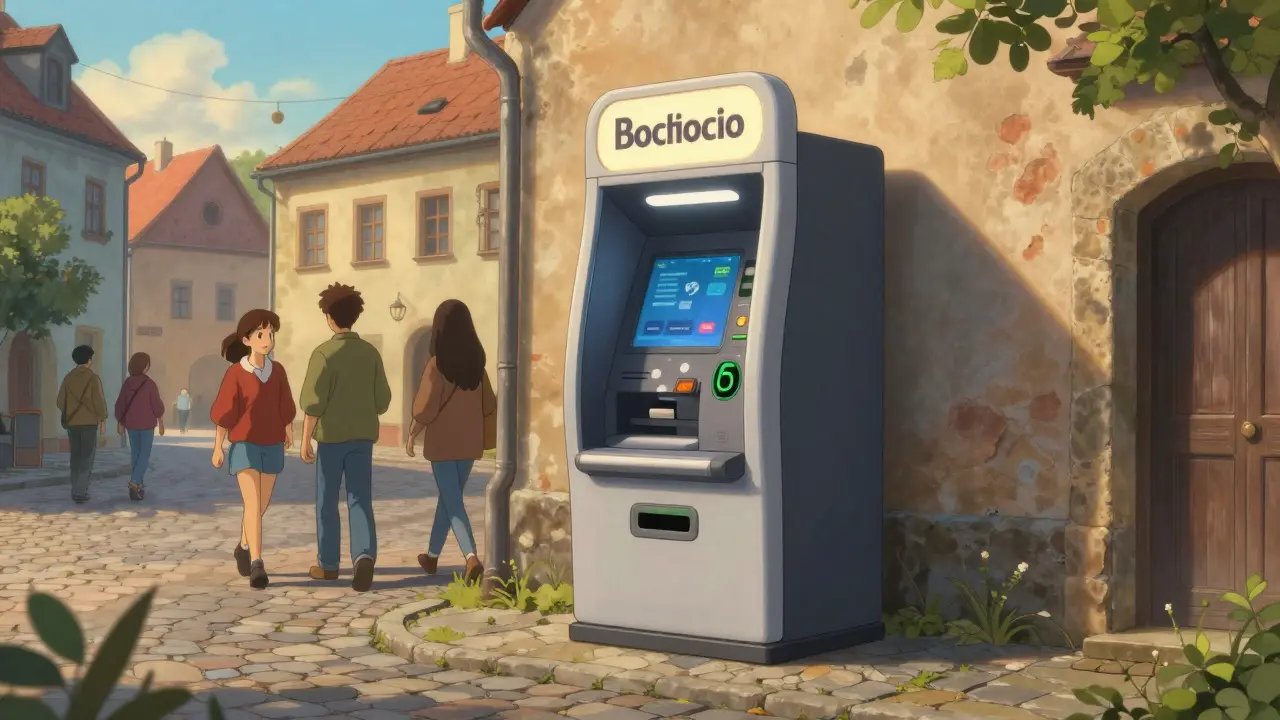
The platform also offers a physical bridge to crypto through ATM-style devices. These allow users to buy and sell the most popular coins using cash, further cementing their role as a physical and digital on-ramp for the Polish public.
Is EGERA the Right Choice?
Whether this exchange is "good" depends entirely on who you are. If you are a seasoned trader who knows how to navigate complex KYC processes and wants the lowest possible fees, you'll likely find EGERA frustrating and expensive. You'd be better off with a global giant.
However, if you are a Polish resident who just wants to buy some Bitcoin using your phone and BLIK without spending three hours reading tutorials, EGERA is a valid option. It removes the friction of the "first buy," which is often the hardest part of entering the market. Just be aware that you are trading lower costs for higher convenience.
Is EGERA a legal exchange in Poland?
Yes, EGERA operates under a Polish company that holds an electronic money license, making it one of the few legally compliant gateways for cryptocurrency trading specifically tailored for the Polish market.
Can I use BLIK to buy crypto on EGERA?
Yes, one of EGERA's primary advantages is its integration with BLIK, allowing Polish users to make instant deposits into their accounts using the mobile payment system.
How do EGERA's fees compare to other exchanges?
EGERA's trading fees are higher than global averages. Taker fees are 0.50% and Maker fees are 0.30%, whereas many international exchanges offer fees below 0.20%.
Which cryptocurrencies can I trade on EGERA?
The platform supports a limited selection of popular assets, including Bitcoin (BTC), Ethereum (ETH), Tether (USDT), BNB, Litecoin (LTC), and ARI10.
What was EGERA previously called?
EGERA was originally established in 2019 under the name BitClude before rebranding to its current name on January 13, 2022.










Michael Harms
April 16, 2026 AT 23:44Sounds like a great way for newbies in Poland to get their feet wet without getting overwhelmed by the giant platforms. Sometimes simplicity is worth the extra few cents in fees.
Shantal Sanjur
April 18, 2026 AT 02:41Oh sure, a "legal license" in Poland. That's exactly what the people running the shadow banks want you to believe. Just another way for the government to track every single satoshi you move. Wake up people, centralization is just a fancy word for a digital leash. 🙄
Robert Preston
April 18, 2026 AT 10:58The slippage mentioned here is a critical point. If you are moving more than a few thousand dollars, the lack of liquidity will eat your profits faster than the 0.50% fee ever would. I'd suggest using this only for the initial on-ramp and then moving your assets to a cold wallet or a high-volume exchange for actual trading.
Trudy Morse
April 18, 2026 AT 14:58Convenience is just the currency we trade for our autonomy. It's a classic trade-off.
Jeff Barlett
April 19, 2026 AT 07:25Who actually cares about the legal license? Crypto is about escaping that stuff! If you want a bank, go to a bank. This just sounds like a glorified banking app with a Bitcoin skin.
Thomas Jewett
April 20, 2026 AT 14:33I dont see why we are even talking about Polish platforms when the US has better systems though sure they are different but at least we dont have to deal with these weird local payment things like BLIK which sounds like a joke anyway. Its honestly embarrassing that people think a 0.5% fee is acceptable in any market when you could just use a real exchange and save your hard earned money for things that actually matter for your country.
Gaurav Undirwade
April 21, 2026 AT 23:19It is profoundly disappointing that users are willing to overlook such exorbitant fees for the sake of mere convenience. True financial discipline requires one to eschew the path of least resistance in favor of mathematical optimality. To pay 0.50% simply to avoid a few minutes of setup is a failure of character and intellect.
Alex Long
April 22, 2026 AT 05:35Trash. Low volume, high fees. Why even bother.
Vicky Duffala
April 22, 2026 AT 15:49Love the local vibe here! 🌟 It's all about accessibility and making sure everyone feels welcome in the crypto space. Who cares if it's a bit pricier if it means your grandma can buy some BTC with her phone? That's real progress! 🚀
Chintu Parikh
April 23, 2026 AT 15:47I must concur with the sentiment that accessibility is paramount for the democratization of finance. It is truly commendable that EGERA has integrated BLIK to facilitate such seamless transitions for the Polish populace. Such initiatives foster a more inclusive environment for emerging investors who might otherwise be deterred by technical complexities.
Adam Mann
April 24, 2026 AT 04:54I think it's really cool how they have those ATM-style machines too. It's like a bridge between the old world and the new world. Not everyone is tech-savvy and having a physical place to go can make a huge difference in helping people feel safe and supported while they learn how this all works. We should always try to make the entry point as friendly as possible for everyone regardless of where they are starting from in life.
Anna Grealis
April 25, 2026 AT 15:32The rebranding from BitClude was probly just to hide some old tracks. They always change names when the regulators start sniffing around too much. Trust nothing.
Mark Pfeifer
April 26, 2026 AT 17:46I wonder if they have any plans to add more assets soon. The current list is very basic. Even for casual users, having a few more options like SOL or ADA would make the platform way more attractive.
Karen Mogollon Gutierrez
April 28, 2026 AT 13:23The audacity of charging a 0.50% taker fee in this economic climate is simply appalling. It is an absolute travesty that users are expected to subsidize such inefficient liquidity with their own capital. I am utterly scandalized by the lack of competitive pricing!
Gillian Kent
April 28, 2026 AT 22:01i actually used this when i visited krakow and it worked great for a quick trade. the blik thing is super fast and i didnt have any issues with my bank blocking the transfer which usually happens with me lol
Luke George
April 30, 2026 AT 12:05Electronic money licenses are just papers that the state uses to categorize you for easier taxation and eventual seizure. If you're using a centralized exchange in your own jurisdiction, you've already lost the game. The system is designed to trap you in a loop of "compliance" while they inflate the currency into oblivion.
Sean Douglas
May 1, 2026 AT 06:33The absolute sheer vacuum of liquidity on this platform is a comedic masterpiece! It's like trying to trade in a ghost town where the only thing available is an overpriced ticket to nowhere. A complete and utter wasteland of financial efficiency!
Keri Pommerenk
May 1, 2026 AT 19:35totally agree that it is a good starting point for people who are scared of the big apps. just need to be careful with those fees if you trade a lot
Kevin Lư
May 1, 2026 AT 21:26I mean, honestly, if you're okay with being ripped off by the fees, go for it. But let's be real, laziness isn't a good reason to lose money. Just spend ten minutes learning how to use a real exchange. It's not that hard.
nathan jones
May 2, 2026 AT 21:50Nice to see local options popping up in Europe.
Mike Kempenich
May 3, 2026 AT 11:21It's all about the journey. Starting small and using a tool that makes you feel comfortable is the best way to build confidence. Once you're comfortable, you can always move to something more professional. No need to rush the process!