21
How Vietnamese Traders Access Crypto Exchanges in 2026

Over 21 million people in Vietnam - more than one in five - own cryptocurrency. Yet, the government doesn’t recognize Bitcoin or Ethereum as legal money. So how do everyday Vietnamese traders buy, sell, and trade crypto every day? The answer isn’t hidden in offshore accounts or black-market apps. It’s built into the platforms they use, the banks they trust, and the workarounds that have become routine.
Trading Crypto in Vietnam Isn’t Illegal - It’s Just Heavily Regulated
Vietnam never banned cryptocurrency. In 2014, the State Bank said crypto isn’t legal tender. That’s it. No criminal penalties. No arrests. Just a clear message: don’t use Bitcoin to pay for your pho. But for years, people kept trading anyway. Then, in January 2025, everything changed. The government passed Resolution 05/2025, launching a five-year pilot program. Only five crypto exchanges can operate legally in Vietnam. And they all have to follow strict rules: they must use Vietnamese dong (VND), limit foreign ownership to 49%, and prove they have at least VND 10 trillion (around $380 million) in capital. That’s not a small number. It’s more than most Vietnamese banks have in reserves for digital services.This wasn’t meant to stop trading. It was meant to control it. The goal? To keep the market stable, prevent fraud, and make sure the government can track where money flows. So today, if you want to trade crypto legally in Vietnam, you’re not choosing between dozens of platforms. You’re choosing from a handful of giants that made it through the filter.
The Big Five Platforms Vietnamese Traders Actually Use
You won’t find many local Vietnamese exchanges. The ones that tried to launch before 2025 got shut down or faded away. Now, the market is dominated by global players that adapted to Vietnam’s rules. Here’s who’s leading:- Binance - Handles 45% of all crypto trading volume in Vietnam. It’s the default choice. Why? It supports VND deposits from 28 Vietnamese banks, has a full Vietnamese-language app, and runs P2P trading with thousands of local vendors. Its 24/7 Vietnamese customer support gets praised - even if responses sometimes take days during market crashes.
- Bybit - The king of futures trading. Nearly 70% of Vietnamese traders on Bybit use perpetual contracts. It’s fast, has low fees, and offers up to 25x leverage (the legal limit). But withdrawal limits spike during volatility, which frustrates users.
- OKX - The most transparent. It publishes monthly proof-of-reserves audits. Fees are slightly lower than Binance’s. But its customer service is slow, and many users report KYC issues because their National ID photos don’t match the government’s database.
- MEXC and Bitget - Popular for new tokens and low fees. MEXC charges just 0.02% for spot trades. Bitget has a strong referral program and runs local influencer campaigns with Vietnamese YouTubers.
- Remitano - The beginner’s gateway. No complex charts. Just peer-to-peer trades with local sellers. But it’s less secure. There were over 4,200 reported fraud cases on P2P platforms in Q3 2025 alone.
Platforms like Kraken and Coinbase? They’re used too - but only by advanced users. Neither supports direct VND deposits. You have to buy USDT on Binance first, then send it over. That adds steps, fees, and risk.
How Do You Actually Put Money In?
You don’t wire Bitcoin to a bank account. You use VND - and there are three main ways:- Bank Transfers - 28 banks, including Vietcombank, Techcombank, and BIDV, are connected to major exchanges via NAPAS, Vietnam’s national payment network. Deposits take 2-5 minutes. But if you send more than VND 100 million ($4,000) in one go, your bank might freeze your account. Experts recommend splitting large deposits into smaller chunks.
- E-Wallets - MoMo, ZaloPay, and VNPay are everywhere in Vietnam. You can top up your crypto account directly from these apps. It’s fast, familiar, and works even if you don’t have a traditional bank account.
- P2P Trading - This is where most beginners start. You find a seller on Binance or Remitano, pay them via e-wallet, and they release the crypto. It’s simple. But it’s also risky. Scammers pose as sellers. Always use platform escrow. Never pay outside the app.
Withdrawals work the same way - back to your bank or e-wallet. But they’re slower. Expect 15-30 minutes for crypto to leave the exchange, and another 1-2 hours for VND to land in your account.

KYC: Why Your ID Card Matters More Than Your Wallet
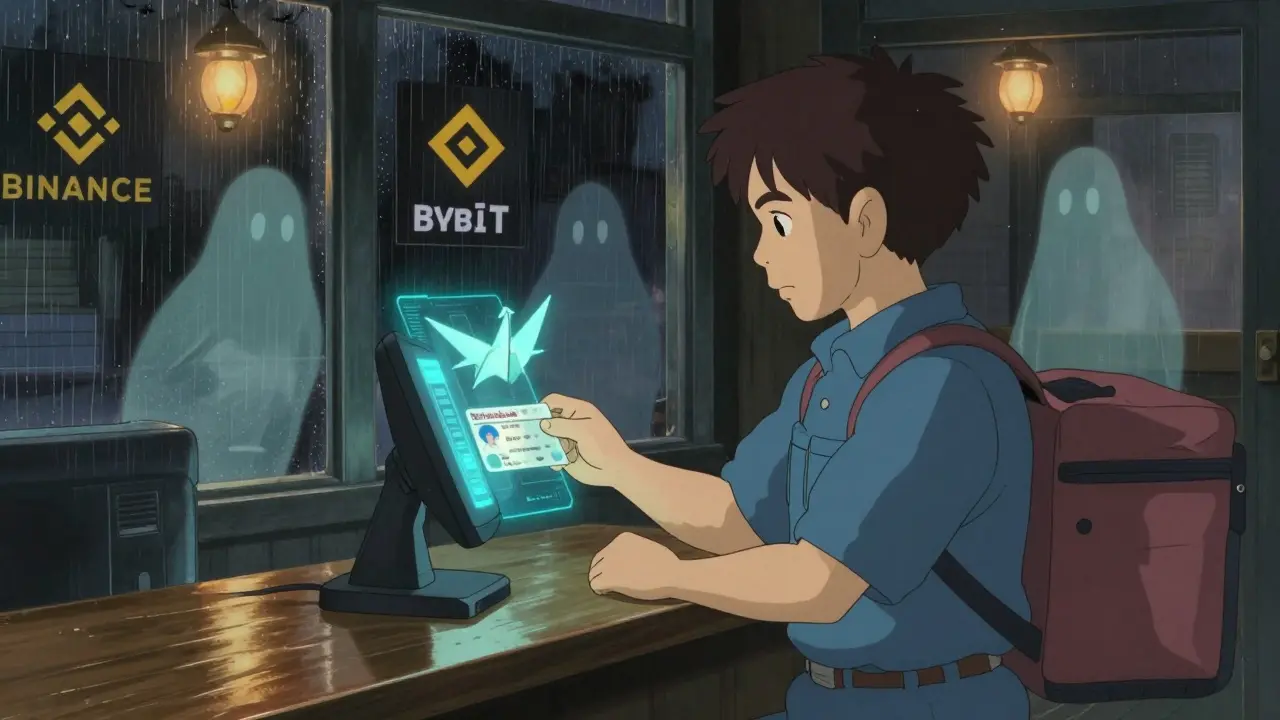
You can’t trade without verifying your identity. Vietnam’s KYC rules are strict. You need your National ID card (CMND or CCCD) and a live facial scan that matches the government’s database. No passport. No driver’s license. Just your Vietnamese ID.Most users get verified in 18-48 hours. Binance and Bybit are fastest. OKX? That’s where problems pop up. If your ID photo is blurry, or your name is spelled differently than in the government system, your application gets stuck. One Reddit user in Hanoi spent three weeks trying to verify his account because his middle name was written as “Van” on his ID but “Văn” in the database. The system doesn’t accept accents.
By 2026, this will get even tighter. Vietnam is rolling out its National Digital Identity system. Soon, you’ll log in to your crypto exchange using your government digital ID - no uploads, no photos. Just a fingerprint or face scan. It’s meant to cut fraud. But it also means less privacy.
What Traders Actually Do - And What Goes Wrong
Most Vietnamese crypto users aren’t day traders. They’re students, teachers, delivery drivers, and small shop owners. They buy Bitcoin or Ethereum as a store of value. Some trade futures for quick gains. But the system isn’t perfect.Common problems:
- Bank freezes - If you deposit VND 200 million ($8,000) in one day, your bank might flag it as suspicious. Solution? Spread deposits over multiple days.
- Tax confusion - Vietnam taxes crypto profits at 22%. But no exchange gives you a tax report. You have to track every trade manually. Many just ignore it - until the government starts auditing.
- Slow support - During market crashes, customer service drowns. Binance’s average response time jumps from 15 minutes to 72 hours.
- API delays - Due to Vietnam’s internet infrastructure, trading signals take 38% longer to reach users than in Singapore. That’s enough to lose a trade during volatility.
Still, people keep coming back. Why? Because crypto offers something traditional finance doesn’t: access. You don’t need a high-income job to buy $50 of Bitcoin. You don’t need a bank loan to invest in a new token. And with inflation hitting 5.8% in 2025, crypto feels like a hedge.
The Future: Will Vietnam Ever Build Its Own Exchanges?
Five licenses. That’s all. SSI Digital, Techcom Securities, VIXEX, VPBank’s VPCrypto, and MBBank’s MB Crypto are the only ones that applied. None are fully live yet. Even if they launch, they’ll struggle to compete. Binance already has $1.8 billion in daily trading volume from Vietnamese users. These local players have $1-2 million in capital each. The gap is massive.Analysts are split. Some say Vietnam’s strict rules will kill innovation. Since January 2025, 27% of local crypto startups have moved to Singapore. Others argue that control is the point. The government doesn’t want a wild west. It wants a controlled, trackable system.
By 2027, experts predict 30 million Vietnamese - nearly one-third of the population - will own crypto. Whether they use Binance or a homegrown platform depends on one thing: whether the government opens the door wider… or slams it shut.
What Should You Do If You’re in Vietnam?
If you’re new to crypto in Vietnam:- Start with Binance. It’s the most reliable for VND deposits and support.
- Use MoMo or ZaloPay to fund your account. Avoid large bank transfers.
- Complete KYC early. Make sure your ID photo is clear and matches your government records.
- Use P2P only with verified sellers and escrow.
- Track every trade. You’ll owe 22% tax on profits.
- Never trust “guaranteed returns” or Telegram groups promising 10x gains.
If you’re experienced and want to trade futures, try Bybit. For low fees and new tokens, use MEXC. But remember - you’re not trading in a free market. You’re trading under rules written by the state. Play smart.
Is crypto legal in Vietnam?
Yes, but not as legal tender. You can buy, sell, and trade crypto legally through government-approved platforms under Resolution 05/2025. However, using crypto to pay for goods or services is not permitted. Trading on unlicensed platforms carries legal risk.
Can I use PayPal or Western Union to buy crypto in Vietnam?
No. PayPal and Western Union are not integrated with any licensed crypto exchange in Vietnam. All deposits must be made in Vietnamese dong (VND) through approved channels: bank transfers, MoMo, ZaloPay, VNPay, or P2P trading. Using third-party services to send foreign currency for crypto is risky and often results in frozen funds.
Why do my bank transfers get flagged when buying crypto?
Banks in Vietnam flag large or frequent transfers to crypto exchanges as potential money laundering activity. To avoid this, keep individual transfers under VND 100 million ($4,000) and space them out over several days. Use e-wallets like MoMo instead of direct bank transfers when possible - they’re less likely to trigger alerts.
Do I have to pay taxes on crypto profits in Vietnam?
Yes. Vietnam taxes capital gains from crypto at 22%. Exchanges do not report this to the tax authority, so you must track every trade manually - including purchase price, sale price, and date. Failure to report could lead to penalties if audited. Keep detailed records for at least five years.
Will Vietnam ever ban crypto trading?
Unlikely in the near term. The government’s five-year pilot program (2025-2029) shows a clear intent to regulate, not ban. While the State Bank has restricted crypto-related banking services in the past (2023), the current policy focuses on control, not elimination. The real risk is tighter restrictions - not a total ban.
Which exchange has the best customer support in Vietnamese?
Binance offers the best Vietnamese-language support, with 24/7 live chat and an average response time of 15 minutes during normal conditions. Bybit is close behind, with fast replies and a dedicated Vietnamese team. OKX and Kraken offer limited or no Vietnamese support, making them harder to use for non-English speakers.
Can I use a VPN to access crypto exchanges in Vietnam?
Technically yes, but it’s not recommended. Most licensed exchanges block VPNs to comply with Vietnamese law. Using one can trigger account freezes or KYC re-verification. It also increases the risk of phishing scams. Stick to platforms that officially support Vietnam - they’re safer and more reliable.
Traders in Vietnam don’t need to break rules to play the game. They just need to understand them. The system isn’t perfect. But it works - for millions of people, every day.










steven sun
January 21, 2026 AT 20:57Jeffrey Dufoe
January 21, 2026 AT 23:25Bonnie Sands
January 23, 2026 AT 13:30Jessica Boling
January 24, 2026 AT 05:44Darrell Cole
January 24, 2026 AT 17:16Tammy Goodwin
January 26, 2026 AT 10:18katie gibson
January 26, 2026 AT 22:30Andy Simms
January 28, 2026 AT 05:00Kevin Pivko
January 29, 2026 AT 19:06Anna Topping
January 31, 2026 AT 10:55Abdulahi Oluwasegun Fagbayi
January 31, 2026 AT 18:52MOHAN KUMAR
February 1, 2026 AT 11:00Andy Marsland
February 2, 2026 AT 04:52Chidimma Catherine
February 3, 2026 AT 13:58Shamari Harrison
February 5, 2026 AT 11:56Mike Stay
February 6, 2026 AT 15:15Nadia Silva
February 8, 2026 AT 09:05Harshal Parmar
February 9, 2026 AT 12:26Mathew Finch
February 10, 2026 AT 14:54Dave Ellender
February 10, 2026 AT 15:31Jennifer Duke
February 11, 2026 AT 08:26