17
Token Supply and Distribution: A Guide to Crypto Tokenomics

Imagine buying into a project where you own 1% of the total coins, but the founders hold 70% and can sell them all tomorrow. Your 1% suddenly becomes much less valuable as the market is flooded with new tokens. This is the reality of bad tokenomics. Whether you are a casual investor or a developer, understanding how tokens enter the market and who holds them is the only way to tell the difference between a sustainable project and a ticking time bomb.
The Three Pillars of Token Supply
When you look at a price chart, you see the current value, but that number means nothing without the context of supply. In the world of blockchain, Token Supply is the total amount of a cryptocurrency's digital assets that exist or can ever exist within its network . To get a clear picture, you have to break it down into three specific metrics.
- Circulating Supply: This is the amount of tokens currently available and trading in the open market. It excludes tokens that are locked in smart contracts, held in reserves, or kept in a project's treasury. This is the number used to calculate current market cap.
- Total Supply: This includes all tokens that have already been created, even those that aren't trading yet (like those held by the team during a lock-up period).
- Maximum Supply: The hard ceiling. This is the absolute limit of tokens that can ever be minted. For example, Bitcoin has a legendary max supply of 21 million.
Why does this distinction matter? Because of dilution. If a project has a circulating supply that is only 10% of its total supply, there is a massive amount of "hidden" tokens waiting to hit the market. When those tokens are released, they can drive the price down if demand doesn't keep pace.
How Tokens are Issued and Controlled
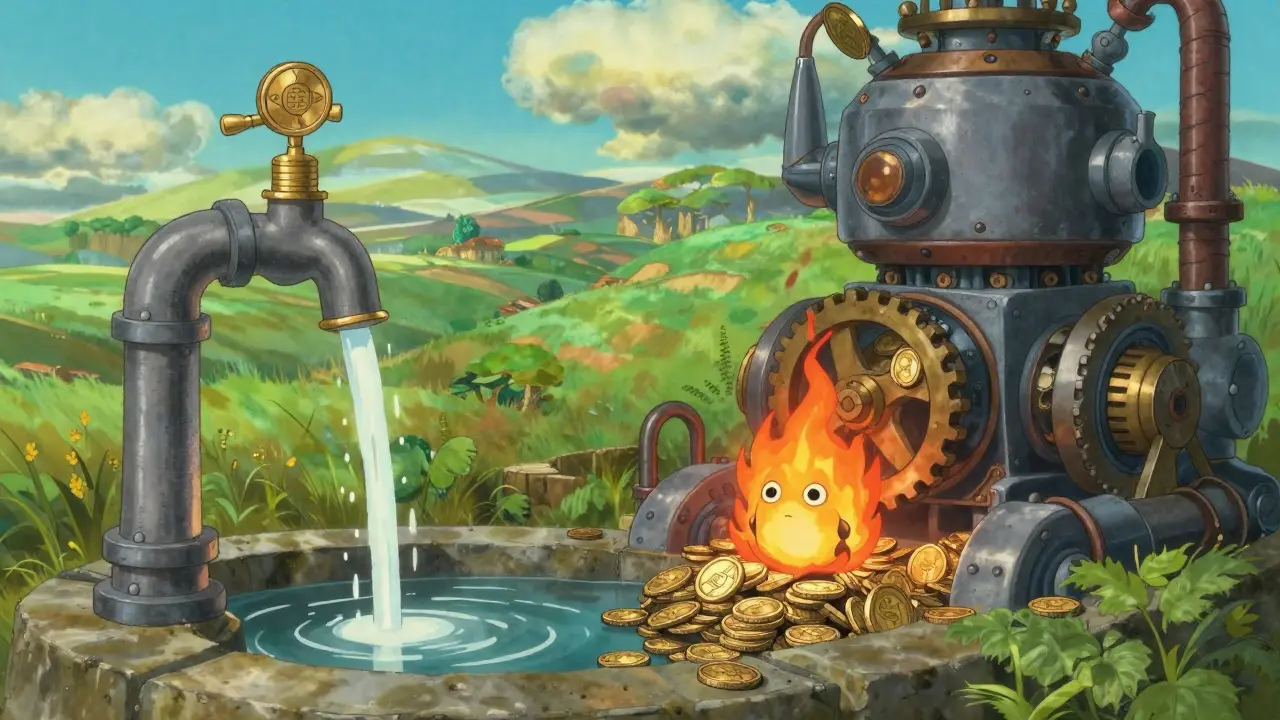
Different blockchains use different "faucets" to put tokens into the world. The method of Token Issuance is the process of creating and distributing new tokens, which dictates how an asset enters circulation and influences its long-term value .
Bitcoin uses a fixed-supply model. It starts with block rewards that decrease every four years-an event known as a "halving." This creates a predictable, scarcity-driven environment. On the other hand, Ethereum uses a more dynamic approach. After moving to Proof-of-Stake, it creates new ETH to reward validators, but it also uses a "burn" mechanism (via EIP-1559) that destroys a portion of transaction fees. During busy times, Ethereum can actually become deflationary, meaning more tokens are destroyed than created.
| Feature | Fixed Model (e.g., Bitcoin) | Dynamic Model (e.g., Ethereum) |
|---|---|---|
| Hard Cap | Yes (21 Million) | No (Uncapped) |
| Primary Driver | Scarcity/Halving | Network Utility/Burning |
| Price Risk | Deflationary Spiral | Inflationary Pressure |
| Supply Control | Algorithmic/Hardcoded | Adaptive/Governance-led |
The Art of Token Distribution
Distribution is where most projects succeed or fail. It's not just about how many tokens exist, but who owns them. A healthy project balances the needs of founders, investors, and the community. If too many tokens go to the "insiders," the project looks like a cash grab. If too many are sold to the public immediately, the project may lack the funds to actually develop its technology.
A common red flag is an insider allocation exceeding 30% of the total supply. When the team owns too much, they have an incentive to pump the price and exit. Data from the 2022 bear market showed that projects with more than 35% insider allocation and short lock-up periods had failure rates 83% higher than balanced projects. The most successful models typically keep insider holdings below 20% to ensure the community has a real stake in the network.
To prevent the "dump" that happens when a token first launches, projects use Vesting Schedules. A contractual agreement that releases tokens to stakeholders gradually over a set period rather than all at once . For instance, a team might have a 12-month "cliff" (where they get nothing) followed by a 24-month linear release. This forces the team to stay committed to the project for years, not weeks.
Analyzing Market Cap and Dilution
Most people check the Market Cap on a site like CoinMarketCap and assume that's the whole story. But there's a trap: the difference between Market Cap and Fully Diluted Valuation (FDV). Market Cap is just Current Price × Circulating Supply. FDV is Current Price × Max Supply.
If a coin has a Market Cap of $1 billion but an FDV of $10 billion, it means 90% of the supply is still waiting to enter the market. This is a massive dilution risk. In general, projects that have more than 80% of their total supply in circulation tend to have more stable price action because the "shock" of new tokens hitting the market is already gone. Conversely, when a project like Crypto.com burns a large chunk of its supply, it effectively reduces that dilution, often leading to a quick price bump because the available supply suddenly shrinks.

Red Flags and Green Flags for Investors
How do you actually apply this when looking at a new project? You need to look for a transparent token roadmap. If a project refuses to disclose its unlock schedule, walk away. Transparency is a direct correlate to investor retention; projects with clear schedules see roughly 37% higher long-term retention from their initial backers.
Green Flags:
- Graded vesting schedules of 12-36 months for the team.
- A circulating-to-total supply ratio between 50% and 70% in the first 18 months.
- Clear burning mechanisms that tie token scarcity to network usage.
- Public allocations capped at 15-25% of the total supply to prevent early volatility.
Red Flags:
- Immediate full unlocks for founders and seed investors.
- Insider allocations over 30% with no clear lock-up period.
- A massive gap between Market Cap and FDV without a documented release plan.
- Lack of a specified maximum supply in a project that claims to be "scarce."
The Future of Tokenomics: Adaptive Models
We are moving past the era of static spreadsheets. The next wave is "Tokenomics 3.0," which focuses on dynamic supply. Instead of a hard-coded number, these models adjust the supply based on network metrics. If usage spikes, the system might increase issuance to reward more validators; if usage drops, it might accelerate burning to maintain value.
We are also seeing the rise of specialized tokenomics designers. This isn't just about math; it's about behavioral economics. They design systems that reward long-term staking over short-term speculation. As institutional money flows into the space, these buyers are demanding a "token supply roadmap" as a prerequisite for investment. They aren't buying a coin; they are buying a monetary policy.
What is the difference between total supply and max supply?
Total supply is the number of coins that have already been created, minus any that have been burned. Max supply is the absolute limit of coins that can ever exist. For example, if a project has a max supply of 100 million but has only minted 60 million so far, the total supply is 60 million, while the max supply remains 100 million.
Why do vesting schedules matter for the price?
Vesting schedules prevent "market dumping." If a team or early investor receives 100% of their tokens on day one, they might sell them all for a quick profit, crashing the price. Gradual vesting forces them to hold the tokens over months or years, aligning their success with the long-term growth of the project.
Does a lower circulating supply always mean a higher price?
Not necessarily. While low supply can create scarcity, it also means liquidity is low. This can lead to extreme volatility where a single large trade swings the price wildly. The key is a balance between enough liquidity for trading and enough scarcity to drive value.
What is a token burn and how does it affect supply?
A token burn happens when tokens are sent to an "eater address"-a wallet that no one has the keys to. This permanently removes those tokens from the circulating and total supply. By reducing the supply while demand stays the same or grows, the value of the remaining tokens typically increases.
How can I find the token distribution of a project?
The best place to look is the project's whitepaper or their official documentation (docs) page. Look for a section called "Tokenomics." Reputable projects also provide a detailed breakdown of allocations (e.g., Team: 15%, Ecosystem: 40%, Public Sale: 20%) and the specific vesting periods for each group.