9
What Are NFT Tickets for Events: A Guide to Blockchain Event Admission
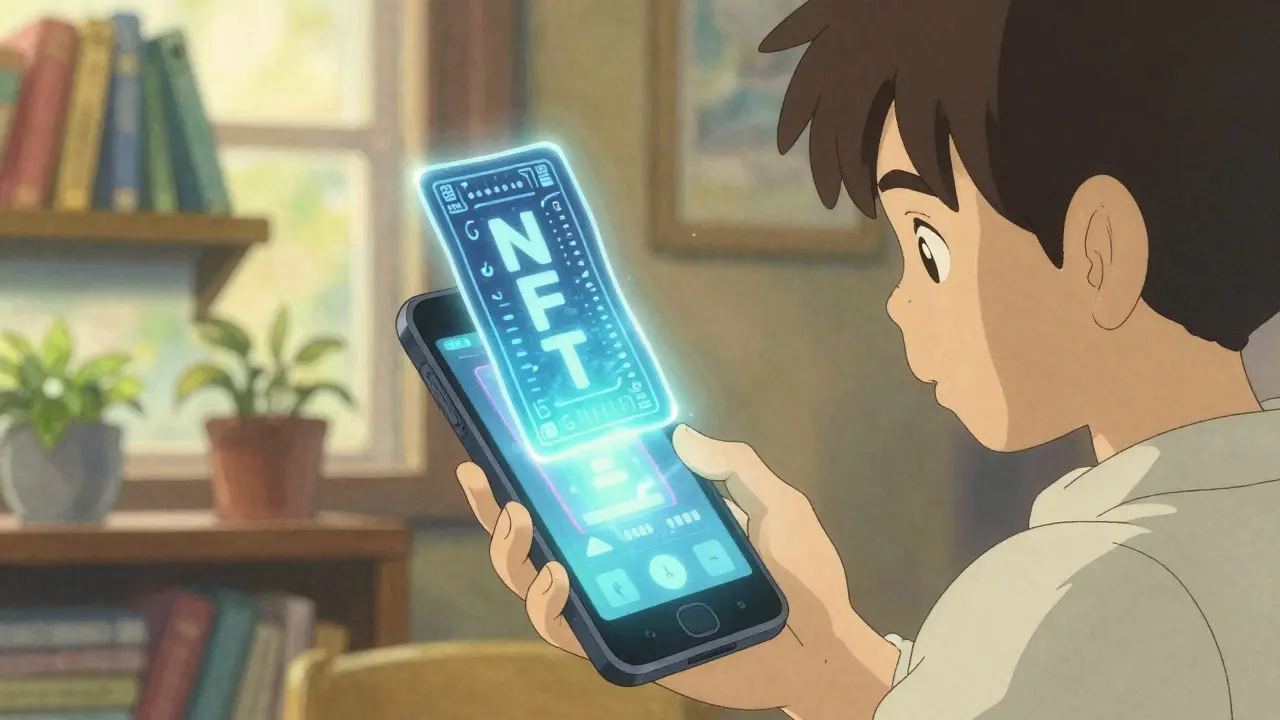
Imagine buying a concert ticket that doesn't just get you into the venue but also becomes a permanent piece of your digital collection. That is the promise of NFT tickets, which are digital admission passes stored on a blockchain that verify ownership and authenticity through cryptographic methods. These tokens represent a major shift in how we handle event access. Unlike traditional paper or PDF tickets, these unique digital assets cannot be duplicated. They link directly to a specific blockchain address, ensuring only the rightful owner can enter.
The idea isn't new, but it gained serious traction after high-profile failures in conventional systems. The Ticketmaster disaster during Taylor Swift's Eras Tour sale in November 2022 showed everyone the cracks in the old model. Bot attacks overwhelmed servers, and fans were left empty-handed. This chaos pushed the industry to look at blockchain solutions more seriously. According to Grand View Research, this technology represents a $5.8 billion market opportunity. Major players like Live Nation, the NBA, and Coachella have already tested or implemented these systems. They aim to solve three big problems: counterfeiting, scalping, and the lack of value after the event ends.
How NFT Tickets Work Technically
To understand why these tickets are different, you need to look under the hood. Blockchain networks like Ethereum and Polygon serve as the foundation. When an organizer creates an NFT ticket, they "mint" it on one of these chains. Each ticket contains metadata. This includes the event date, venue coordinates, seat number, and rules about who can transfer it later.
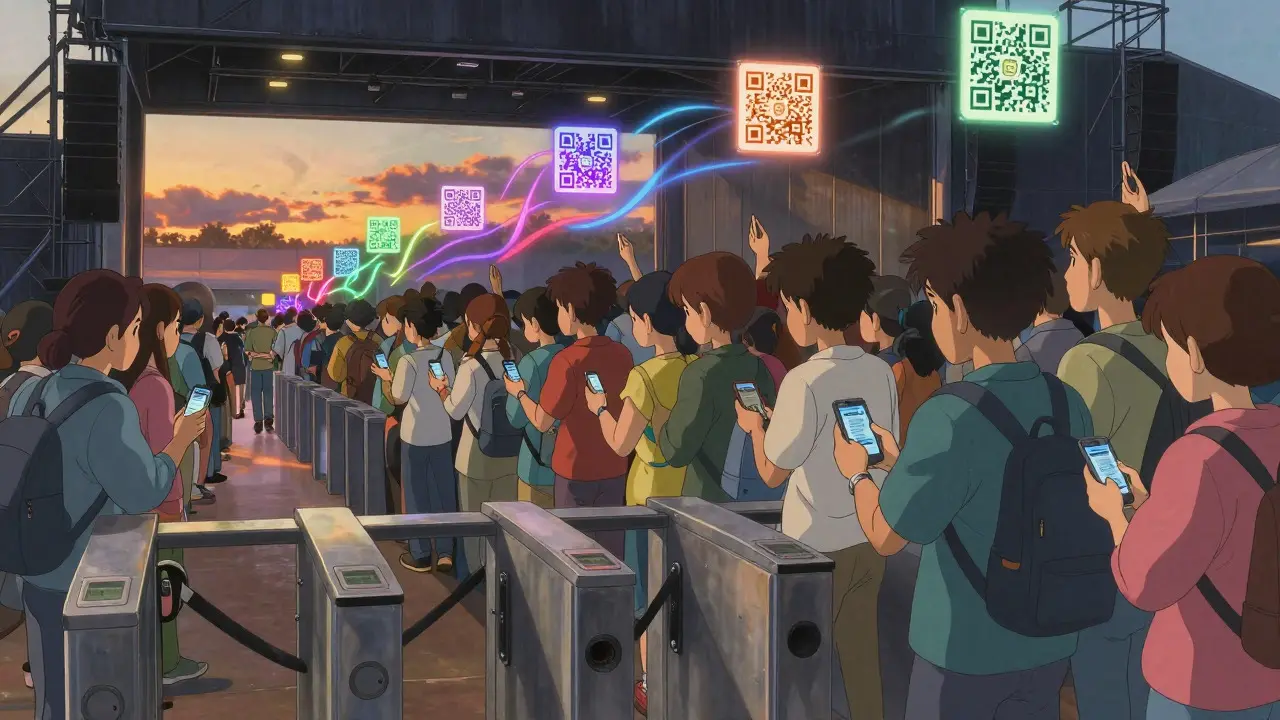
The most visible difference for you as a user is the QR code. Traditional tickets use static codes that can be screenshotted and shared with hundreds of people. NFT tickets use dynamic QR codes. These refresh every 30 seconds. If someone tries to screenshot yours, the image becomes useless almost immediately. At the gate, staff scan your phone. The system checks your digital wallet against the blockchain ledger. Verification takes about 2.4 seconds on average, according to Queue-it case studies. Compare that to 4.7 seconds for traditional paperless systems. It’s faster and much harder to fake.
You don’t need to be a coder to use them, but you do need a few tools. You’ll need a cryptocurrency wallet like MetaMask. You also need internet connectivity at the venue. Some platforms, like MoonPay, have built simplified interfaces to make this easier. However, there is still a learning curve. If you’ve never held crypto before, setting up a wallet feels like a hurdle. But once you’re in, the process is secure. The smart contract behind the ticket enforces the rules automatically. No human intervention is needed to check if a ticket is valid.
Benefits Over Traditional Ticketing
The main selling point of NFT ticketing is security. Counterfeiting has long been a plague for event organizers. The National Association of Ticket Brokers reported counterfeit rates between 12% and 18% in 2022. With blockchain, duplication is mathematically impossible. Each token is unique. If you own the private key to the wallet holding the ticket, you own the ticket. Period.
Scalping is another huge issue. Bots buy up thousands of tickets in seconds and resell them at inflated prices. During the Taylor Swift sale, Ticketmaster faced 4.5 billion bot requests. NFT platforms fight this by using verifiable delay functions. These require small intervals of human interaction, slowing down bots. Additionally, smart contracts can limit transfers. An organizer can set a rule that says a ticket can only be sold back to the original price, or that it can’t be transferred until a certain date. This keeps prices fairer for real fans.
There’s also money in the secondary market. In traditional ticketing, once you sell your ticket, the artist sees nothing. With NFTs, organizers can program royalties. Platforms like ComeTogether allow artists to take 5-15% of every resale. If a ticket goes for $500 on the secondary market, the artist gets their cut automatically. This turns a one-time sale into a recurring revenue stream. Plus, the ticket itself can become a collectible. After the show, it might unlock exclusive content, photos, or future presale access. This adds long-term value beyond the night of the event.
Challenges and Barriers to Adoption
Despite the benefits, not everyone is ready to jump on board. Complexity is the biggest enemy. A survey by Eventbrite found that 68% of concertgoers were reluctant to use crypto-based systems. Why? Because it feels complicated. Setting up a wallet, managing seed phrases, and paying gas fees (transaction costs) can scare off casual fans. For a teenager used to tapping a phone at a store, it’s easy. For older generations, it’s a barrier.
Cost is another factor. While Polygon offers low fees-averaging $0.02 to $0.50 per transaction-Ethereum can spike to $1.50-$15 during peak times. If you’re buying a $20 ticket, a $5 fee stings. Organizers often absorb these costs, but it cuts into margins. There’s also the issue of regulation. The U.S. Federal Trade Commission noted in April 2023 that consumer protection frameworks for digital assets are still developing. The SEC has raised questions about whether some NFT tickets could be considered securities. This legal gray area makes big companies cautious.
User experience varies wildly. Reddit users report mixed results. Some praise the instant verification at Coachella’s 2023 event. Others share horror stories of missing shows because they couldn’t figure out their wallet. Trustpilot reviews for NFT ticketing platforms average 3.7 out of 5 stars. People love the fraud prevention but hate the customer support wait times, which average 58 hours compared to 12 hours for traditional sites. Until the tech becomes invisible-like how credit cards work now-adoption will remain slow among the general public.
| Feature | NFT Tickets | Traditional Tickets |
|---|---|---|
| Fraud Resistance | High (Dynamic QR, Blockchain Verified) | Low (Static QR, Easy to Duplicate) |
| Scalping Control | Programmable Limits & Royalties | Limited Enforcement |
| User Setup | Requires Wallet & Crypto Knowledge | Email Confirmation Only |
| Post-Event Value | Collectible, Access Perks | None (Disposable) |
| Transaction Fees | $0.02 - $15 (Varies by Chain) | Standard Service Fees ($5-$15) |

Who Should Use NFT Tickets?
Not every event needs this technology. NFT ticketing shines in specific scenarios. Music festivals are the biggest adopters, making up 39% of implementations. Sports events follow at 28%. These sectors deal with high demand, high scalping risks, and fan bases that appreciate memorabilia. If you’re organizing a premium experience where controlling the secondary market matters, NFTs are a strong choice.
Conferences and theater events lag behind. Conferences make up only 19% of adoption, while theater is at 14%. These audiences tend to be older or less tech-focused. For a local community play, asking attendees to set up a MetaMask wallet is overkill. The friction outweighs the benefit. However, for corporate events targeting professionals aged 25-44, the stats look better. CoinDesk data shows this demographic makes up 73% of early adopters. They are comfortable with digital wallets and value the exclusivity.
Organizers should also consider their technical capacity. Implementing NFT ticketing takes time. White-label solutions from platforms like Tokenproof or GUTS Tickets take 3-6 weeks to set up. Custom builds can take 12-16 weeks. Staff need training. Queue-it estimates 8-12 hours of training for entry teams. If your team isn’t ready to support confused guests at the door, stick to traditional methods for now. Hybrid models are emerging too. Ticketmaster’s “Token Tix” allows both NFT and standard tickets for select events. This bridges the gap while the industry matures.
The Future of Event Admission
The trajectory points toward wider adoption, but not overnight. Gartner predicts NFT ticketing will reach its “plateau of productivity” by 2026. By then, the clunky parts-wallet setup, gas fees-should disappear. Biometric integration is coming. Companies like Civic are working on fingerprint-verified wallet access. Imagine walking up to a scanner, scanning your face, and entering without pulling out your phone. That removes the biggest friction point.
Regulations will also clarify things. The EU’s MiCA regulations, effective June 2024, provide clearer rules for digital assets. This may boost adoption in Europe, which currently trails North America by 15 percentage points. As laws settle, big brands will feel safer investing. We’re likely to see cross-chain interoperability too. Right now, a ticket on Polygon might not talk to a wallet on Ethereum easily. Standards from the World Wide Web Consortium aim to fix this, creating a seamless web of digital assets.
For now, NFT tickets are a powerful tool for specific niches. They offer unmatched security and new revenue streams. But they aren’t a magic bullet for every event. As a fan, you might encounter them more often at major festivals and sports games. Keep an eye on your wallet options. The future of going out is becoming more digital, more secure, and more valuable than ever before.
Do I need cryptocurrency to buy an NFT ticket?
Not necessarily. Many platforms now allow you to pay with a credit card. The platform handles the conversion to crypto and mints the ticket for you. However, you will still need a digital wallet to store the ticket and present it at the event. The complexity lies in managing the wallet, not always in buying the asset itself.
Can NFT tickets be lost?
Yes, if you lose access to your wallet. Since NFTs are tied to private keys, losing your password or seed phrase means losing the ticket. Unlike email tickets, there is no "forgot password" reset with a central company. Always back up your wallet details securely. Some platforms are introducing recovery methods, but self-custody remains the standard.
Are NFT tickets environmentally friendly?
It depends on the blockchain used. Ethereum previously used energy-intensive proof-of-work mining, but switched to proof-of-stake in 2022, reducing energy use by 99.95%. Other chains like Polygon are even more efficient. Compared to printing millions of paper tickets and shipping them, digital NFTs generally have a lower carbon footprint, especially on eco-friendly chains.
How do organizers prevent bots from buying NFT tickets?
Organizers use several methods. Smart contracts can limit the number of tickets per wallet. Verifiable Delay Functions (VDFs) force a short wait time between purchases, slowing down automated scripts. Some platforms require identity verification (KYC) before allowing a purchase, ensuring each buyer is a real person.
What happens if my phone dies at the venue?
This is a current risk. Most systems require a live device to generate the dynamic QR code. However, some platforms allow you to export a static backup code or use a secondary device linked to your account. Always check the specific platform’s emergency procedures before heading to the event. Charging stations are usually available at venues.
Is it legal to resell NFT tickets?
Legality varies by region and platform rules. In many places, yes, you can resell them on secondary markets like OpenSea. However, the smart contract may restrict sales. For example, it might cap the resale price or block transfers until after the event. Always read the terms of service for the specific ticket. Regulations are still evolving, so keep an eye on local laws regarding digital assets.






![What is [Fake] PENGU Crypto? Warning Signs of the Pudgy Penguin Scam Token](/uploads/2026/06/thumbnail-what-is-fake-pengu-crypto-warning-signs-of-the-pudgy-penguin-scam-token.webp)