26
What is Web3 and How It Works: A Clear Breakdown of the Decentralized Web

Web3 Gas Fee Estimator
Web3 isn’t just another tech buzzword. It’s a complete rethink of how the internet works - and who controls it. Right now, when you post on social media, shop online, or even save your photos, you’re handing over your data to companies like Meta, Google, or Amazon. They own it. They decide how it’s used. And if they shut down your account? You lose everything. Web3 flips that model. It’s not about companies owning your digital life - it’s about you owning it. No middlemen. No centralized servers. Just you, your private key, and a network of computers working together to keep things running.
How Web3 Is Different From Web 2.0
Think of the internet in three stages. Web 1.0 was the early web - static pages you could read but not interact with. Think of it like a digital library. Then came Web 2.0: the interactive web. You could post, comment, like, share. But here’s the catch: every time you did, you gave your data to a company. Your photos on Instagram, your tweets on X, your search history on Google - they’re stored on their servers. They sell your attention. They control your account. And if they change the rules? You have no say. Web3 changes that. Instead of relying on a single company’s server, data is stored across thousands of computers around the world. These aren’t owned by one corporation - they’re run by regular people running software. This is called decentralization. And instead of logging in with a username and password, you use a crypto wallet. That wallet holds your digital identity and assets. No one else can take it. Not even the platform you’re using.How Web3 Actually Works: The Core Pieces
Web3 doesn’t work like a normal website. It’s built on a few key technologies that work together:- Blockchain: This is the backbone. Think of it as a public digital ledger that records every transaction. Once something is written, it can’t be changed. Ethereum is the most popular blockchain for Web3, hosting over half of all decentralized apps.
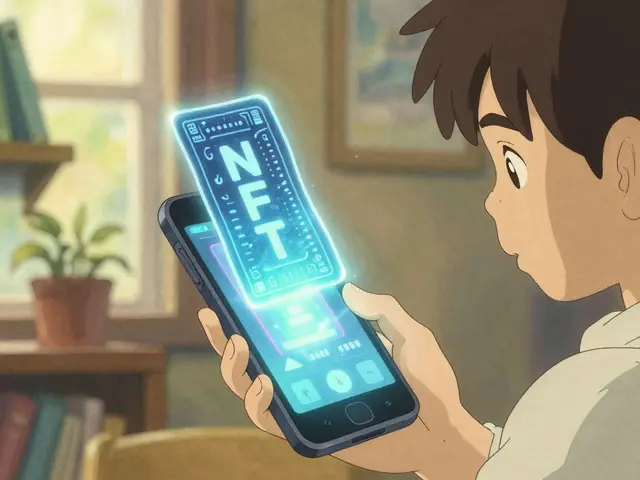
- Smart contracts: These are self-executing programs stored on the blockchain. They run automatically when certain conditions are met. For example, if you send $100 to a smart contract to buy an NFT, it sends the NFT to your wallet - no human needed. Ethereum runs about 1.1 million smart contracts every day.
- Crypto wallets: Your digital ID. MetaMask is the most common one. It generates a public address (like an email) and a private key (like a password you never share). If you lose your private key, you lose access forever. There’s no ‘forgot password’ button in Web3.
- Decentralized storage: Instead of storing files on Amazon’s servers, Web3 uses systems like IPFS. Files are broken into pieces and spread across thousands of computers. You get back the same file every time, even if some nodes go offline.
When you use a Web3 app - say, a decentralized marketplace - you’re not connecting to a company’s server. You’re connecting directly to the blockchain through your wallet. The app runs on code that’s open for anyone to see. You pay a small fee (called gas) to execute actions on the network. That fee goes to the people running the computers, not to a corporation.
What You Can Do With Web3
Web3 isn’t just about money. It’s about ownership and control:- Own your digital stuff: NFTs (non-fungible tokens) prove you own a unique digital item - like art, music, or even a virtual sneaker. Nike’s .Swoosh platform has sold $185 million in NFTs. Unlike a screenshot, an NFT is verifiably yours on the blockchain.
- Get paid for your data: Some Web3 apps let you earn tokens just for using them. Instead of Facebook making money off your attention, you get a share.
- Join community-run projects: DAOs (Decentralized Autonomous Organizations) let token holders vote on decisions. Want to change how a platform works? Propose it. If enough people agree, it happens - no CEO needed.
- Access finance without banks: DeFi (decentralized finance) lets you lend, borrow, or earn interest without a bank. In 2022, DeFi platforms handled $6.7 trillion in transactions. That’s a lot - but still tiny compared to traditional finance.

Why Web3 Still Feels Like a Work in Progress
Web3 sounds great on paper. But in practice, it’s messy. Here’s why most people still stick with Web 2.0:- It’s hard to use: Setting up a wallet, buying crypto, paying gas fees - it’s confusing. A 2023 study found 87% of new users quit within 24 hours. One wrong click, and you can lose money forever.
- Costs are unpredictable: Ethereum gas fees can jump from $1.78 to over $50 in minutes during busy times. That’s not practical for buying a coffee.
- It’s not fast: Ethereum handles 15-30 transactions per second. Visa handles 24,000. If you’re trying to stream video or play a game, Web3 is too slow.
- Regulations are unclear: The SEC charged Coinbase for selling unregistered securities. In the U.S., there’s no clear rulebook. That scares off big companies.
- Security risks: In 2022, hackers stole $1.8 billion from DeFi apps. If you send crypto to the wrong address? Gone forever. No one can reverse it.
Even big names are skeptical. Tim Berners-Lee, who invented the web, says Web3 is just a branding trick. Jack Dorsey called it a venture capital scheme. But others, like former Coinbase CTO Balaji Srinivasan, believe it’s the only way to fix the internet’s power imbalance.
Who’s Actually Using Web3 Right Now?
Despite the hype, adoption is still small. Only 1.7 million people use decentralized apps daily. Compare that to 4.9 billion internet users worldwide. But some real use cases are growing:- Starbucks Odyssey: 225,000 users collect digital collectibles and earn rewards - no crypto needed to join.
- Visa: Uses stablecoins to settle $300 million in payments monthly.
- Walmart: Tracks 2.3 million food products on a blockchain to trace contamination faster.
- Mastodon: After Nigeria banned Twitter in 2021, Mastodon’s user base grew 2,300%. It’s decentralized, so no government can shut it down.
These aren’t crypto fanatics. They’re companies testing Web3 for real benefits: transparency, security, and resilience. But they’re not replacing their existing systems - they’re adding Web3 as a layer.

The Future of Web3: Realistic Expectations
Web3 won’t replace Google tomorrow. But it’s already changing parts of the internet:- Layer-2 upgrades: Ethereum’s upcoming ‘Dencun’ update will cut transaction costs by 90%. That could make Web3 apps usable for everyday tasks.
- Institutional adoption: BlackRock’s Bitcoin ETF has $10.5 billion in assets. Fidelity serves 1.2 million crypto customers. Big money is watching.
- Regulation is coming: The EU’s MiCA law (starting in 2024) will set clear rules. The U.S. might follow. That could bring stability.
- Enterprise pilots: Over 80% of corporate blockchain projects are still tests. But if even 5% succeed, it could reshape supply chains, digital IDs, and more.
The real question isn’t whether Web3 will work. It’s whether it will work for regular people - not just investors and developers. Right now, it’s a tool for the tech-savvy. But if it becomes easier, cheaper, and safer, it could become the foundation of a more open internet.
What You Should Know Before Getting Involved
If you’re curious about Web3, here’s how to start smart:- Don’t invest money you can’t afford to lose. The market is volatile.
- Use trusted wallets like MetaMask or Coinbase Wallet. Never share your private key.
- Start small. Try earning a free NFT from a reputable project like Starbucks Odyssey.
- Learn one thing at a time. Understand wallets before you try DeFi.
- Remember: if it sounds too good to be true, it probably is. 95% of ICOs from 2017-2018 turned out to be scams.
Web3 isn’t magic. It’s code. And like any tool, it can be used well or poorly. The internet didn’t become what it is overnight. Web3 won’t either. But if you want to own your digital life instead of letting corporations control it, it’s worth paying attention to.
Is Web3 the same as cryptocurrency?
No. Cryptocurrency is just one part of Web3. Web3 is the whole system - including decentralized apps, smart contracts, digital ownership, and user-controlled data. Crypto (like Bitcoin or Ethereum) is the money that powers many Web3 apps, but you can have Web3 without crypto - and crypto without Web3.
Can I use Web3 without buying crypto?
Yes. Some Web3 apps, like Starbucks Odyssey, let you earn digital collectibles without touching crypto. You sign up with your email and don’t need a wallet. But to truly own your data, interact with DeFi, or trade NFTs, you’ll eventually need crypto and a wallet.
Is Web3 safe?
It’s secure in theory - blockchain is tamper-proof. But human mistakes are the weak point. Losing your private key means losing everything. Scams are common. Hacks happen. Web3 doesn’t have customer service. If you mess up, there’s no one to call. Always double-check addresses, use hardware wallets for big amounts, and never trust unsolicited links.
Why is Web3 so slow and expensive?
The Ethereum blockchain, which powers most Web3 apps, was designed for security and decentralization - not speed. It can only process 15-30 transactions per second. Gas fees spike when lots of people use it at once. New upgrades (like Layer-2 solutions and proto-danksharding) are coming to fix this, but right now, it’s a bottleneck.
Will Web3 replace my social media and online shopping?
Not soon. Web2 platforms are too fast, too easy, and too familiar. Web3 will likely complement them first - think of it like adding a blockchain-backed loyalty program to your favorite app. Full replacement? Maybe in 10-15 years, if Web3 solves its usability and cost problems. For now, it’s a parallel system, not a replacement.










Grace Zelda
November 27, 2025 AT 12:55Web3 isn't magic, it's just code with a cult following. I get the theory - ownership, decentralization, no middlemen - but in practice, it's like handing your house keys to 10,000 strangers and hoping none of them sell your couch.
And don't even get me started on gas fees. I tried buying a $5 NFT once. Paid $42 in fees. That's not innovation, that's digital robbery.
Meanwhile, my Spotify playlist still works fine. My photos are still safe. And I didn't need to learn blockchain to do it. Maybe the real problem isn't centralized platforms... it's our expectation that every new tech should fix everything.
I'm not anti-Web3. I'm pro-common-sense.
SARE Homes
November 29, 2025 AT 01:07Oh please. You people are so naive. Web3? More like Web3.0: The Scam Edition. You think you 'own' your NFT? LOL. The metadata is hosted on a centralized server. The image? Probably on IPFS but half the nodes are dead. You're not owning anything - you're just holding a digital receipt for a JPEG that someone else uploaded.
And don't tell me about DAOs. I've seen the governance votes. 0.3% of token holders make all the decisions. The rest? Chanting in Discord while their tokens crash 90%.
It's not decentralization. It's just Wall Street with a blockchain tattoo. And you're the sucker buying the hype.
Stop pretending this isn't a pyramid scheme with a whitepaper.
Rachel Thomas
November 29, 2025 AT 16:04Web3 is just crypto bros trying to look smart. I tried to use MetaMask once. I clicked the wrong button and lost $200. No one helped me. No customer service. No refund. Just a blank screen and a sad face.
Why would anyone choose this over Amazon? I click buy, I get my stuff. Done.
Web3 is a glitch in the matrix. And I'm not rebooting my life for it.
Sierra Myers
November 30, 2025 AT 13:14Look, I get the appeal. No middlemen. True ownership. But let’s be real - most people don’t care. They just want their TikTok to load and their Uber to show up.
Web3 is like trying to teach a 70-year-old to code. It’s not that it’s impossible. It’s that the cost of learning isn’t worth the payoff for 99% of users.
And the ‘you own your data’ thing? If you lose your seed phrase, you’re not just locked out - you’re erased. No reset. No recovery. That’s not freedom. That’s digital suicide.
So yeah, cool tech. But it’s not for the average person. And pretending it is? That’s the real scam.
SHIVA SHANKAR PAMUNDALAR
November 30, 2025 AT 23:24Web3 is just capitalism with a new suit. The same people who owned your data on Web2 are now selling you tokens to own a piece of the same system. It’s not liberation - it’s rebranding.
And the gas fees? That’s just a tax on hope. You pay to participate in a game where the house always wins.
I’ve seen this before. Dot-com bubble. Bitcoin mania. Now Web3. The pattern is clear: hype, then crash, then silence.
Don’t mistake volatility for innovation. And don’t mistake desperation for progress.
Shelley Fischer
December 1, 2025 AT 03:11While the conceptual framework of Web3 presents an intriguing philosophical counterpoint to the monopolistic architecture of Web 2.0, its practical implementation remains fraught with systemic fragility. The notion of user sovereignty is theoretically elegant, yet practically undermined by the cognitive burden of private key management, the opacity of gas fee structures, and the absence of recourse mechanisms in the event of error or malfeasance.
Moreover, the current infrastructure is neither scalable nor sustainable for mass adoption. The environmental cost of proof-of-work consensus, the legal ambiguity surrounding token classification, and the prevalence of exploitative smart contracts collectively render Web3 an immature paradigm - not a revolution.
One cannot dismantle centralized power by replacing it with decentralized chaos.
Puspendu Roy Karmakar
December 1, 2025 AT 11:40I’ve been working in tech for 15 years. I’ve seen every new thing come and go. Web3? It’s not the future. But it’s not the end either.
Look at Starbucks Odyssey. People are collecting digital stamps. No crypto. No wallet. Just fun. That’s the real win - making Web3 feel like a game, not a bank.
And Walmart tracking food? That’s real. That’s useful. That’s quiet progress.
Don’t get caught up in the noise. The quiet wins are the ones that last. Web3 isn’t about getting rich. It’s about building systems that don’t break when a CEO gets bored.
Michael Fitzgibbon
December 2, 2025 AT 15:39I used to be skeptical. Then I saw a farmer in Kenya use a blockchain-based loan app to get credit without a bank account. No collateral. No paperwork. Just a phone and a wallet.
That’s not hype. That’s human impact.
Yeah, the UX is trash. Yeah, gas fees are insane. Yeah, there are scams. But the potential? It’s real. We don’t throw out the baby because the bathwater’s dirty.
Web3 isn’t ready for your grandma. But it might be ready for someone who’s been left out of the system for too long.
That’s worth fighting for.
Komal Choudhary
December 3, 2025 AT 17:15Wait so if I don’t have a crypto wallet, I’m not part of Web3? That’s weird. So I’m not allowed to own my data unless I buy Bitcoin? That’s not freedom, that’s a membership fee.
And why do I need to understand blockchain to post a meme? This feels like a cult. You have to drink the kool-aid just to use the internet now.
Also, I tried to send ETH to my friend and sent it to a scam address. I cried for an hour. No one helped. No one even replied. So now I just use Venmo. It’s easier. And I get texts when I mess up.
Web3 is cool in theory. But in practice? It’s a nightmare with a whitepaper.
Tina Detelj
December 5, 2025 AT 14:46Web3 is the only thing keeping the internet from becoming a corporate theme park where every click is monetized, every thought is tracked, and every voice is algorithmically filtered into oblivion.
Yes, it’s messy. Yes, it’s confusing. Yes, you can lose everything with one typo. But what’s the alternative? Letting Meta, Google, and Amazon decide what you see, what you buy, and who you can be?
At least with Web3, you’re not a product - you’re a participant. Even if you’re a dumb, confused, gas-fee-paying participant.
The internet was meant to be open. Web2 stole it. Web3? It’s trying to give it back. Even if it’s doing it with duct tape and hope.
Wilma Inmenzo
December 5, 2025 AT 17:18Web3 is a CIA psyop. They need you to think you’re in control so you’ll give them your seed phrase. The blockchain? It’s a honeypot. Every wallet you create is logged. Every transaction? Tracked. The ‘decentralized’ network? Run by a handful of mining pools in China and the U.S.
And the NFTs? Just digital QR codes that link to servers owned by the same companies you’re trying to escape.
They’re not giving you freedom. They’re giving you a new cage… with a fancy lock you have to pay to open.
Wake up. This isn’t the future. It’s the final stage of surveillance capitalism.
Martin Doyle
December 6, 2025 AT 21:18Guys, I get it. Web3 is confusing. But you’re all missing the point.
It’s not about replacing Instagram. It’s about giving people a way to own their digital lives without begging for permission from a billionaire’s boardroom.
Yes, it’s broken. Yes, it’s expensive. But the alternative is worse: a world where your voice, your art, your data - all owned by someone who doesn’t care about you.
Let’s fix the UX. Let’s lower the fees. But don’t throw the baby out with the bathwater. We need this. Even if it’s ugly right now.
Susan Dugan
December 8, 2025 AT 08:43My friend’s kid is 12. He made a game on Web3. He earned $800 in tokens last month. He didn’t need a bank. Didn’t need permission. Just a laptop and a wallet.
That’s not hype. That’s opportunity.
Yeah, it’s rough around the edges. But imagine if every kid with a cool idea could build something and get paid for it - without a VC in the middle.
Web3 isn’t perfect. But it’s the first time in 20 years that the internet gave power back to the creator. That’s worth fighting for.
Kristi Malicsi
December 8, 2025 AT 19:20Web3 is just a way to make rich people richer while making everyone else feel stupid for not understanding it
It’s like if your car had a manual that only engineers could read and the only way to fix it was to buy a new engine every time you got a flat
Why do we call this progress