2
What is CyberDragon Gold (GOLD)? Tokenomics, Risks, and Verdict
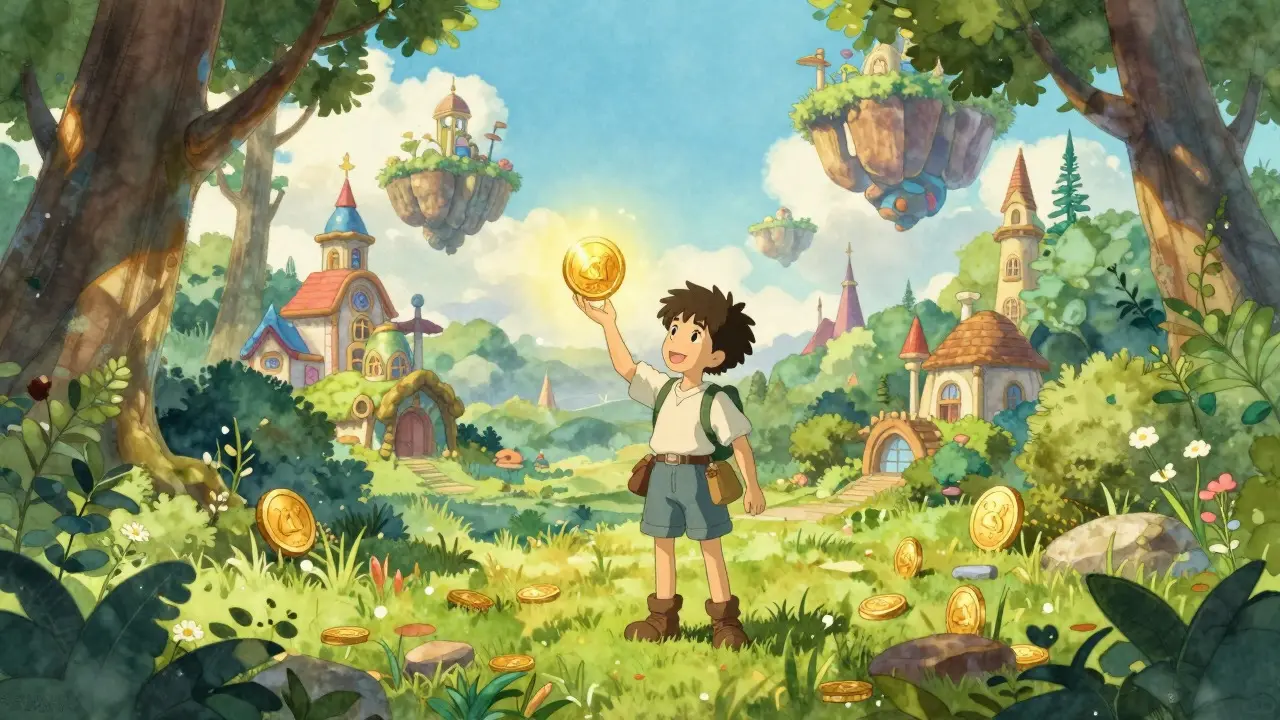
Imagine finding a shiny coin in a video game that promises to make you rich. That was the hook for CyberDragon Gold, also known as GOLD, which is a BEP-20 utility token on Binance Smart Chain designed for the Cyber Dragon play-to-earn game. Launched by the BinaryX team, this token was supposed to be the lifeblood of a dungeon-crawling adventure where players earn rewards by challenging bosses. But if you are looking at the charts today, you might be scratching your head. The price is hovering around fractions of a cent, trading volume is practically non-existent, and the project feels like a ghost town.
So, what exactly is CyberDragon Gold? Is it a hidden gem waiting to explode, or is it a digital relic from a forgotten era of crypto gaming? Let's break down the reality behind the hype, the numbers, and the risks involved with holding this specific asset in 2026.
The Basics: What Is CyberDragon Gold?
At its core, GOLD is a utility token. This means it isn't designed to be a currency like Bitcoin or a store of value like Ethereum. Instead, it has a specific job within an ecosystem. In this case, that ecosystem is the Cyber Dragon game. Players use GOLD to upgrade heroes, prepare equipment for dungeon runs, and hire other players' characters.
Technically, it lives on the Binance Smart Chain (BSC), now often referred to as BNB Chain. It follows the BEP-20 standard, which makes it compatible with wallets like MetaMask and exchanges like PancakeSwap. The contract address, which you can verify on block explorers like BscScan, is 0xb3a6381070b1a15169dea646166ec0699fdaea79. Always double-check this address before interacting with any token, as scammers love to copy names.
The total supply is fixed at roughly 73.8 billion tokens. However, here is where things get weird. Major tracking platforms report a circulating supply of zero or near-zero, yet there are reportedly over 30,000 holders. This discrepancy usually suggests one of two things: either the data aggregators are failing to track the liquidity pools correctly, or the vast majority of tokens are locked in developer wallets or staking contracts that aren't being reported as "circulating." For an investor, this lack of transparency is a major red flag.
Market Reality: Price, Volume, and Liquidity
Let's talk about the money side of things, because that’s why most people click on these titles. As of early 2026, GOLD is ranked outside the top 6,000 cryptocurrencies by market capitalization. Its price hovers around $0.001 USD. While that sounds cheap, remember the supply is in the billions. The Fully Diluted Valuation (FDV)-what the market cap would be if every single token were traded-is theoretically close to $100 million. But the actual market cap is effectively zero because so few tokens are actively changing hands.
| Metric | Value / Status | Context |
|---|---|---|
| Current Price | ~$0.001062 | Extremely low; down >97% from all-time high |
| 24h Trading Volume | $1 - $98 | Negligible liquidity; high slippage risk |
| Market Cap Rank | #6,112+ | Micro-cap status; not in mainstream indices |
| Total Supply | 73.8 Billion | Fixed supply; no inflation mechanism mentioned |
| Primary Exchange | PancakeSwap (v2) | Decentralized only; no major CEX listings |
The trading volume is the biggest issue here. On days when volume hits $100, that’s considered a "busy" day for this token. Compare that to established gaming tokens like Axie Infinity’s AXS or The Sandbox’s SAND, which move millions daily. With such thin liquidity, trying to sell even a modest amount of GOLD can crash the price. Users have reported slippage rates over 99% when attempting to sell larger batches. Essentially, you might own tokens worth $100 on paper, but you could only sell them for $1 because there are no buyers at that price point.
The Play-to-Earn Context: Why Did It Fail?
To understand GOLD, you have to look at the broader trend of Play-to-Earn (P2E) games. Between 2021 and 2023, this sector saw massive growth, fueled by the promise of earning real money while playing. Projects like Axie Infinity drew in millions of users. However, many of these models were unsustainable. They relied on new players bringing in more money than old players were taking out-a classic Ponzi-like structure disguised as gameplay.
Cyber Dragon launched into this cooling market. By late 2025, the P2E sector had contracted by over 60%. Players became more discerning, demanding actual fun and sustainable economics rather than just yield farming mechanics. Cyber Dragon struggled to retain users. Without active players earning and spending GOLD, the token loses its utility. A utility token without users is just a number on a blockchain.
Data from DappRadar shows that the smart contracts associated with Cyber Dragon have seen fewer than 50 daily active wallets since Q3 2025. That’s not a community; that’s a handful of bots or die-hard holders checking their balances. The BinaryX team, who developed the game, has shifted focus to other projects, leaving GOLD in a state of neglect. There are no recent updates, no roadmap milestones, and no marketing push.
Risks and Red Flags You Should Know
If you are considering buying GOLD, or if you already hold some and are wondering what to do, you need to weigh these specific risks:
- Liquidity Trap: The primary risk is getting stuck. Because there are so few buy orders on PancakeSwap, selling becomes expensive or impossible without accepting a massive loss. This is known as a liquidity trap.
- Data Discrepancies: The conflict between "zero circulating supply" and "30,000 holders" indicates poor data hygiene or potential manipulation. When you can’t trust the basic metrics, how can you trust the valuation?
- Developer Abandonment: The BinaryX team has not released significant updates for the Cyber Dragon game or the GOLD token in over a year. In crypto, silence from developers usually spells trouble. Active projects communicate constantly.
- No Institutional Interest: No major exchanges (like Binance, Coinbase, or Kraken) list GOLD. It remains confined to decentralized swaps. This limits exposure and keeps it out of the eyes of serious investors.
- High Slippage Costs: Even if you want to trade small amounts, the gas fees on BSC combined with the slippage required to execute a trade can eat up a large percentage of your capital.
Analysts from firms like Delphi Digital have categorized similar micro-cap gaming tokens as "critical risk" assets. One Reddit user noted in late 2025 that tokens showing zero circulating supply but active trading are often controlled entirely by insiders, making retail investors vulnerable to sudden dumps.
How to Buy or Sell GOLD (If You Must)
If you still decide to interact with this token, here is the practical process. Keep in mind that this is not financial advice, but a technical guide on how the mechanism works.
- Set Up a Wallet: You will need a Web3 wallet like MetaMask or Trust Wallet. Ensure it is configured for the Binance Smart Chain network.
- Fund with BNB or BUSD: Since GOLD trades against BUSD (Binance USD) on PancakeSwap, you need stablecoins or BNB to swap. Transfer funds to your wallet address.
- Connect to PancakeSwap: Go to the official PancakeSwap interface. Connect your wallet.
- Import the Token: Paste the contract address (0xb3a6381070b1a15169dea646166ec0699fdaea79) into the search bar. Double-check the name matches "CyberDragon Gold."
- Adjust Slippage: This is crucial. Due to low liquidity, you may need to set slippage tolerance to 15-20% to ensure the transaction doesn't fail. Be aware this means you accept a worse price if the market moves during the transaction.
- Execute Swap: Confirm the transaction in your wallet. Pay attention to the estimated output-it might be significantly lower than the current price suggests due to impact costs.
There is no customer support for GOLD. If something goes wrong, you are on your own. There are no help desks, no refund policies, and no recourse.
Comparison: GOLD vs. Established Gaming Tokens
To put GOLD’s position in perspective, let’s compare it to tokens that have survived the P2E winter and maintained relevance.
| Feature | CyberDragon Gold (GOLD) | Axie Infinity (AXS) | The Sandbox (SAND) |
|---|---|---|---|
| Market Cap Rank | #6,112+ | Top 100 | Top 100 |
| Daily Volume | <$100 | $10M+ | $5M+ |
| Active Development | Inactive/Stagnant | Active | Active |
| Exchange Listings | DEX Only | Major CEXs | Major CEXs |
| Community Size | Minimal | Large Global Base | Large Global Base |
The gap is stark. AXS and SAND have pivoted, updated their games, and built partnerships. They have liquidity deep enough for institutional traders. GOLD has none of these advantages. It serves as a cautionary tale of what happens when a utility token outlives its underlying product’s popularity.
Final Verdict: Is It Worth Your Time?
For the average investor, CyberDragon Gold offers little more than a lesson in risk management. It lacks liquidity, developer support, and a clear path to recovery. The "play-to-earn" dream that fueled its creation has largely evaporated, leaving behind tokens with no functional purpose outside of speculative gambling.
If you are a collector of obscure crypto artifacts or believe in a miraculous revival of the BinaryX team’s interest in this specific project, you might keep a small bag. But for anyone seeking growth, stability, or genuine utility, GOLD does not check the boxes. The opportunity cost of tying up capital in a token with $1 daily volume is high, especially when better opportunities exist in the broader crypto ecosystem.
Always do your own research (DYOR). Look at the code, check the active users, and read the latest developer announcements. In this case, the silence speaks volumes.
Is CyberDragon Gold (GOLD) a scam?
While not necessarily a "rug pull" in the traditional sense where developers drained the liquidity pool immediately, GOLD exhibits many characteristics of abandoned projects. The lack of development, negligible volume, and data discrepancies suggest it is a "zombie token." Whether it’s a scam depends on your definition, but it certainly carries extreme risk and low viability.
Where can I buy CyberDragon Gold?
GOLD is primarily traded on PancakeSwap (v2), a decentralized exchange on the Binance Smart Chain. You will need a Web3 wallet like MetaMask and BUSD or BNB to perform the swap. There are no listings on major centralized exchanges like Binance or Coinbase.
Why is the circulating supply of GOLD listed as zero?
This is likely a reporting error by data aggregators like CoinMarketCap or CoinGecko, or it reflects that most tokens are locked in staking contracts or developer wallets. Despite the "zero" listing, there are reported holders and minimal trading activity, indicating some tokens are indeed in circulation but not being tracked correctly by automated systems.
What is the future price prediction for GOLD?
Most credible analysts view the future of GOLD as bleak. With no active development and minimal user base, price predictions are largely speculative. Some automated sites might show random upward trends, but without fundamental drivers like new users or partnerships, sustained price growth is highly unlikely. Treat any positive prediction with extreme skepticism.
Is it safe to hold GOLD long-term?
Holding GOLD long-term is risky due to the lack of liquidity and developer engagement. If you cannot sell the token easily, its value is theoretical. Additionally, if the smart contract has vulnerabilities or if the team decides to abandon the project entirely, the value could drop to absolute zero. It is generally considered safer to invest in tokens with active communities and transparent teams.






Marcia Albert
August 2, 2026 AT 12:48honestly this whole p2e craze was just a shiny object for people who didnt understand basic economics. its like finding a penny in the ocean and thinking you struck gold.
i remember when everyone was talking about axie infinity like it was the future of work. now? ghost town. cyberdragon is just another grave in the graveyard of dead games.
Ed Mitchell
August 2, 2026 AT 18:11the fact that they claim zero circulating supply but have 30k holders proves my theory that the entire bsc ecosystem is rigged by insiders.
they lock the tokens in dev wallets so retail can't see them, then dump on you when liquidity is thin. it's not a game, it's a pump and dump scheme with extra steps. binaryx are criminals plain and simple. wake up sheeple.
Erica Johnson
August 4, 2026 AT 10:56:) well if you actually read the contract address provided you'd know it's verifiable. but sure, blame the conspiracy instead of your own lack of due diligence. most people here just want free money without doing the homework. classic.
Ed Mitchell
August 5, 2026 AT 21:15verifiable doesn't mean safe miss johnson. it means you can verify exactly how much they stole from you. the data discrepancy is intentional obfuscation. nobody falls for that twice except the gullible masses who keep buying these micro-caps hoping for a miracle. there is no miracle. only math.
Earl Kott65
August 7, 2026 AT 06:41lol imagine still holding this garbage in 2026 🤡
slippage over 99%? that's not investing, that's donating to the devs. i saw someone try to sell $50 worth and get back $0.40. literally burning money. why do people do this to themselves? 😂
Amor Jordan
August 9, 2026 AT 03:34it is really sad to see how many people lost their savings chasing this dream. i feel for those who put in real time playing the game only to find out the token had no value.
we need more transparency in these projects before we let them run wild again. empathy for the holders is necessary because crypto preys on hope.
Lorraine Surringer
August 9, 2026 AT 18:29omg stop being so dramatic amor. if you bought into a play-to-earn scam you deserve what you got. its not a victim situation its a stupid situation.
also your spelling is fine but your logic is flawed. nobody forced you to buy gold. grow up.
Amor Jordan
August 10, 2026 AT 16:07lorraine please tone it down. kindness costs nothing. these were regular people trying to make ends meet during tough times. judging them won't bring their money back. lets focus on learning from the mistakes rather than shaming the victims. boundaries matter even online.
Emma Smith
August 12, 2026 AT 14:31the ontological status of the token is irrelevant when the epistemological framework of the market is broken. liquidity is an illusion constructed by high-frequency trading bots creating fake volume.
we are trapped in a simulacrum of value where the signifier (gold) has no signified (utility). post-structuralist nightmare fuel really.
Ethan Yuwono
August 13, 2026 AT 04:27emma you're overthinking it. it's just a dead token. no need for philosophy class.
just check the chart. line goes down. end of story. simple as that.
Emma Smith
August 14, 2026 AT 17:14simplistic reductionism ethan. the chart is merely a symptom of deeper systemic rot. the absence of active wallets signifies the death of community consensus which is the bedrock of any decentralized protocol. without consensus it is just code running in a void. existential dread ensues.
Jack Delasquez
August 14, 2026 AT 17:47yo i tried to swap some gold yesterday and my wallet almost froze lol. gas fees were weird too.
definitely staying away from anything on bsc right now unless its pancake itself. this stuff is risky af. dont touch it fam.
Michael Mostyn
August 14, 2026 AT 20:55the fundamental issue lies in the unsustainable economic model inherent in early play-to-earn designs.
when rewards exceed organic growth, inflation destroys purchasing power. cyberdragon gold is a textbook case of hyperinflation within a closed loop. the market corrected efficiently by reducing valuation to near zero. rational actors should avoid such assets entirely.
Harman Singh
August 15, 2026 AT 20:22my friend lost all his money in this. he cried every day for weeks.
now he hates everyone who talks about crypto. its tragic how these projects destroy lives. why do developers care so little about the humans behind the wallets? selfish greedy bastards.
Ken G
August 16, 2026 AT 06:27its always the same story. rich guys make poor guys poor. binaryx took our money and ran.
no regulation no justice. just silence. they think they are above the law because they hide behind code. fools. we will remember this betrayal. stay pure stay skeptical.