10
CPR Cipher [Old] 2021 Airdrop: What Happened and Is It Safe?
![CPR Cipher [Old] 2021 Airdrop: What Happened and Is It Safe?](/uploads/2026/06/cpr-cipher-old-2021-airdrop-what-happened-and-is-it-safe.webp)
Remember the days when getting free crypto felt like finding money in an old coat pocket? Back in 2021, many users received notifications about a Cipher (CPR) utility token project that launched on April 9, 2018 airdrop via CoinMarketCap. If you are checking your wallet today, wondering if those tokens have turned into gold or if they are just digital dust, you are not alone. The reality of the CIPHER (CPR) ASSET AIRDROP 2021 CONDUCTED ON CMC is far less glamorous than the hype suggested at the time.
This article breaks down exactly what happened with this specific distribution, why the token is now labeled "Cipher [Old]," and whether there is any remaining value for holders. We will look at the technical shift from Ethereum to Polygon, the current market status, and the red flags that every crypto user should recognize.
The Quick Summary
- The Airdrop Was Real but Low Value: The 2021 distribution via CoinMarketCap was a marketing tactic, not a wealth-generating event.
- Token Status: CPR is now listed as "Cipher [Old]" on major trackers, indicating the original project has likely been abandoned or superseded.
- Network Migration: The token moved from Ethereum to the Polygon PoS network a layer-2 scaling solution for Ethereum, using contract address 0xaa404804ba583c025fa64c9a276a6127ceb355c6.
- Current Worth: As of mid-2026, CPR trades near zero, with an all-time high of only $0.004065 reached in early 2024.
- Safety Warning: Be extremely cautious of new messages claiming this airdrop is still active or offering "claim bonuses." These are likely scams.
What Was the Cipher (CPR) Project?
To understand the airdrop, we first need to understand what Cipher actually was. Launched in April 2018, Cipher positioned itself as a utility token designed to bring transparency and accountability to business practices within the cryptocurrency space. The team, which claimed members across India, the United Kingdom, and New Zealand, promised to build mobile applications that offered personalized content and secured data access.
The core idea was simple: instead of selling tokens through expensive Initial Coin Offerings (ICOs), they would distribute them to users who engaged with their services. This "non-ICO" model sounded innovative at the time. The token was meant to represent partial ownership, similar to stocks. However, the execution never matched the ambition. While the roadmap promised "faster interactive capabilities" and "high scalability," the actual deliverables were vague. Most projects from this era relied heavily on community hype rather than functional software.
The 2021 CoinMarketCap Airdrop Explained
In 2021, the cryptocurrency market was booming. Projects desperately needed visibility, and CoinMarketCap (CMC) the leading cryptocurrency price tracking platform became the go-to stage for these announcements. The "CIPHER (CPR) ASSET AIRDROP 2021 CONDUCTED ON CMC" was part of this trend.
Here is how it typically worked for users:
- Notification: Users browsing CoinMarketCap saw a banner or notification about the Cipher airdrop.
- Eligibility: Often, simply having an account or viewing the page was enough to qualify. Some versions required connecting a wallet.
- Distribution: Tokens were sent directly to eligible wallets. There was no complex staking or locking period required for the initial drop.
The goal was clear: increase circulation. By spreading millions of CPR tokens to thousands of wallets, Cipher created the illusion of widespread adoption. But here is the catch: sending tokens costs very little, especially compared to the effort required to make those tokens valuable. For most recipients, the amount received was negligible-often worth less than a cent at the time. It was a classic marketing play, not a charitable gift.
The Shift to Polygon and the "Old" Label
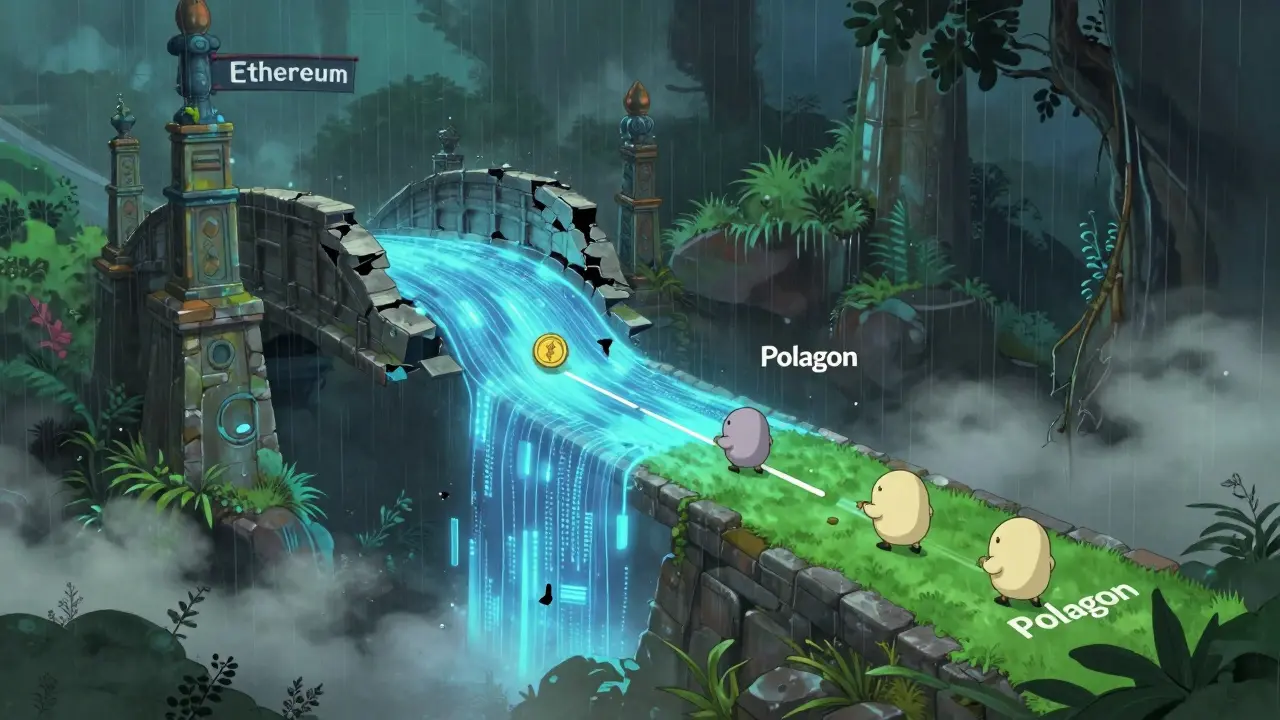
A critical piece of the puzzle is the network migration. Originally, CPR lived on the Ethereum blockchain the decentralized network that hosts smart contracts. In 2021, amidst rising gas fees on Ethereum, many projects migrated to cheaper alternatives. Cipher moved to the Polygon PoS network.
This migration introduced significant confusion. The new contract address became 0xaa404804ba583c025fa64c9a276a6127ceb355c6. Users holding the old Ethereum-based tokens had to interact with the new contract to access their assets, if they could at all. Many did not bother. Others got locked out due to technical errors during the bridge process.
Today, if you search for Cipher on major platforms, you will see "Cipher [Old]." This designation is crucial. It means the original entity is no longer actively maintained or considered relevant by data aggregators. It suggests that either the team abandoned the project, rebranded entirely without migrating the community properly, or the project failed to meet its development goals. The "Old" tag is a warning sign: it indicates a lack of ongoing support, updates, or liquidity management.
Is CPR Still Worth Anything?
Let’s look at the hard numbers. As of June 2026, the economic reality of CPR is stark.
| Metric | Value | Context |
|---|---|---|
| Total Supply | 1.08 Billion | Fixed supply cap set at launch |
| Circulating Supply | ~186.28 Million | Tokens actively in trade |
| All-Time High (ATH) | $0.004065 | Reached Feb 3, 2024 |
| All-Time Low (ATL) | ~$0.000001 | June 2022 crash |
| Current Price Range | $0.000047 - $0.000068 | Mid-2026 trading data |
Even at its peak in February 2024, CPR never broke the half-cent barrier. To put that in perspective, you would need over 200,000 CPR tokens just to equal one US dollar. Given that typical airdrop amounts ranged from 10 to 100 tokens per user, the total value for most participants remains effectively zero. The volatility mentioned in reports-from near-zero lows to the 2024 spike-reflects low liquidity rather than genuine demand. When few people are buying or selling, small trades can cause large percentage swings, but the absolute dollar value stays microscopic.
Red Flags and Security Warnings
If you still hold CPR tokens from the 2021 airdrop, you might be tempted by new messages promising to "activate" or "claim" hidden value. Please exercise extreme caution. Here is why:
- Abandoned Projects: The "Cipher [Old]" label confirms the project is inactive. No team is working on upgrades, security patches, or marketing.
- Phishing Scams: Scammers often target holders of old, forgotten tokens. They send emails or DMs claiming you must connect your wallet to a specific site to receive a "bonus." These sites steal your private keys or drain other assets in your wallet.
- No Liquidity: Even if you wanted to sell, finding a buyer is difficult. Major exchanges have delisted CPR, leaving only obscure decentralized pools with minimal depth.
The lesson here is universal: if a project goes silent for years, it does not suddenly become valuable again. The 2021 airdrop was a snapshot in time-a marketing experiment that has long since concluded. Holding onto hope for a revival is emotionally costly and financially futile.
Lessons from the Cipher Case Study
The story of Cipher (CPR) mirrors hundreds of other projects from the 2018-2021 boom. They shared common traits: ambitious roadmaps, vague utility, heavy reliance on airdrops for growth, and eventual fade into obscurity. What can we learn?
First, airdrops are not investments; they are samples. Just because you received a free sample of a product doesn't mean the product is good. Second, always check the current status of a token. Labels like "[Old]" or "[Delisted]" are critical indicators. Third, network migrations are risky. Moving from Ethereum to Polygon sounds efficient, but if the team doesn't communicate clearly, users lose access to their assets. Finally, focus on projects with active development, transparent teams, and real-world usage-not just token distribution metrics.
Did I miss out on big gains from the Cipher CPR airdrop?
No. The maximum price CPR ever reached was approximately $0.004. With typical airdrop amounts being very small, the total value for most users never exceeded a few dollars at best. It was a marketing tool, not a lucrative investment opportunity.
Is the Cipher [Old] token safe to keep in my wallet?
Keeping the tokens themselves poses no direct risk to your wallet's security, as they are just data entries. However, interacting with any new links or claims related to CPR is dangerous. Do not connect your wallet to unknown sites claiming to manage these old tokens.
Why is it called Cipher [Old]?
The "[Old]" suffix is used by data platforms like CoinMarketCap to distinguish inactive or abandoned versions of a project from newer iterations or to indicate that the original listing is no longer relevant due to lack of activity or development.
Can I convert my old Ethereum CPR to Polygon CPR?
Likely not. The migration occurred years ago, and the official bridges or tools may no longer be functional. Attempting to move funds now carries a high risk of losing them permanently due to broken contracts or lack of support.
Are there any legitimate ways to earn CPR tokens today?
There are no known legitimate programs currently distributing CPR. Any offer claiming to provide new CPR tokens is almost certainly a scam. The project appears to be defunct.








Mauricio Contreras Loredo
June 11, 2026 AT 16:45lol i still have 500 of these sitting in my metamask from back when i thought crypto was gonna save the world. turns out it just saved me a few cents on gas fees if i ever bothered to move them which i didnt because why bother. digital dust indeed.
Grace Newman
June 13, 2026 AT 06:47It is imperative that we scrutinize the underlying mechanisms of such distributions with extreme prejudice. The notion that this was merely a "marketing tactic" is a convenient narrative designed to obscure the deeper, more sinister coordination between centralized exchanges and regulatory bodies to dilute individual asset ownership. One must ask: who benefits from labeling legitimate assets as "[Old]"? It is not mere abandonment; it is a systematic erasure of historical financial records to prevent accountability for the initial misappropriation of funds during the ICO era. We are being gaslit by the very platforms that claim to provide transparency.
Benjamin Eisen
June 14, 2026 AT 12:50hey guys i think its cool u posted this but like honestly who cares about a token thats worth less than a penny? i mean sure its funny looking at old wallets but its kinda sad how many people got hooked on these hype cycles. maybe next time we can focus on projects that actually do stuff instead of just sending freebies to get attention. also typo alert but whatever lol
Suman Patil
June 16, 2026 AT 02:12Look, let's keep the vibes positive here folks! The migration to Polygon was a smart move technically speaking, even if the execution left much to be desired for the average holder. It shows an attempt to adapt to scaling solutions which is crucial for any L1 or L2 ecosystem trying to remain relevant in today's high-throughput environment. While the liquidity is dried up, the technical architecture remains sound for potential future forks or community takeovers. Let's not dismiss the engineering effort entirely just because the market cap evaporated. HODLers need hope, right? Keep building and stay resilient against the FUD!
Kumaran sowkarpet
June 16, 2026 AT 02:33haha nice one man :) i remember those days well. lots of scams and bad code. good thing we learned some lessons i guess. dont click any links bro :)
sreeja boora
June 16, 2026 AT 13:55This article fails to acknowledge the significant contributions made by Indian developers in the early blockchain space. Many of these projects were initiated by talented engineers from India who sought global recognition. Dismissing them as mere marketing tactics overlooks the genuine innovation and hard work invested by our community members worldwide. We should respect the efforts rather than mock the outcomes.
Annemarie Fitzgerald
June 16, 2026 AT 22:01The existential dread of holding worthless tokens is truly the modern condition. We create value through consensus, yet the consensus dissolves like morning mist. Is the token real if no one believes in it? Perhaps the true value lies in the memory of what could have been. A poignant reminder of our collective delusion. Also i think i lost my keys somewhere.
Abby Sivertsen
June 18, 2026 AT 16:49i feel you on the frustration but seriously just ignore it. its done. moving on is key. dont let dead coins drag your mental health down. life is too short for crypto regret.
Kenneth Riley
June 20, 2026 AT 15:29you idiots really fell for this? its obvious they rug pulled the moment they migrated. classic scam playbook. stop pretending its complicated. they stole your attention and now they want your wallet seed phrase. wake up sheeple. this whole post is just fear mongering to keep you engaged while they drain the last drops of liquidity. pathetic.
ravi mahla
June 21, 2026 AT 15:15oh come on chill out everyone. its just a lesson in history. no need to get so dramatic. besides sarcasm is the highest form of wit right? glad i didn't invest much then either way.
Mark Brunschwiler
June 22, 2026 AT 03:54i feel empty inside when i look at my portfolio. why did i trust them? i gave them my hope and they gave me nothing. please tell me there is still a chance. i need something to believe in. talk to me. make me feel alive again. why is everything so cold and digital?
Sonya O'Brien
June 23, 2026 AT 03:52I completely agree with the assessment provided in the article regarding the marketing nature of the airdrop, and I think it is important to consider the broader context of the 2021 bull run where many projects utilized similar strategies to gain visibility without necessarily delivering substantial utility to their user base, which ultimately leads to a situation where holders are left with tokens that have negligible value and little to no prospect of recovery, thereby serving as a cautionary tale for future investors who might be tempted by free distributions that lack fundamental backing or long-term development roadmaps.
Filbert Reeves
June 24, 2026 AT 10:30nah i think the government is behind this. they want us to think its worthless so we sell low and they buy high. its all connected. the polygon migration was a cover up for money laundering. dont listen to these mainstream narratives. they are lying to you. i know things you dont know. trust me. also my spelling is bad cause i type fast.
Nick Rice
June 25, 2026 AT 12:04Listen up team! We need to learn from this. Failure is part of the journey. But don't let it define you. Get out there and find better opportunities. Be aggressive in your research. Don't settle for mediocrity. You can do better. Stay focused and keep pushing forward. No excuses.
Amit Thakur
June 26, 2026 AT 15:01Brother you need to understand the liquidity crunch dynamics here. The slippage on these DEX pools is insane. When volume drops below a certain threshold the spread widens exponentially making any exit strategy practically impossible without destroying the price further. Its basic market microstructure theory applied to illiquid altcoins. Stop expecting miracles from broken contracts.
Eric Scheinberg
June 26, 2026 AT 22:03The analysis presented herein is accurate. The designation of "Cipher [Old]" serves as a definitive indicator of project cessation. Users should exercise due diligence. Do not engage with unsolicited communications. Protect your private keys.
pankaj chawla
June 28, 2026 AT 10:06I agree with the points raised. It is important to stay informed about such developments. Let us collaborate to share knowledge and avoid similar pitfalls in the future. Your input is valuable.
Jessica Lane
June 30, 2026 AT 01:47This is a fascinating case study in project lifecycle management. It raises important questions about sustainability and community engagement in decentralized networks. How can we ensure better outcomes for participants in future initiatives? What metrics should we prioritize when evaluating new opportunities? These are critical considerations for anyone involved in the cryptocurrency space.
Charles Pawlikowski
July 1, 2026 AT 05:29typical foreign scam. always happening. we should ban these sites. protect american jobs and wallets. stupid people falling for this crap every day. shame on you all. :(
Andrea Burd
July 2, 2026 AT 08:04boring article. expected more depth. typical reddit fluff. waste of time. probably written by someone who never held a real coin. pathetic.
Akeem Whittaker
July 2, 2026 AT 16:51Let's break this down simply. The token is dead. The team is gone. The value is zero. Any interaction now is a risk. Avoid it. Focus on active projects with clear utility. Do not fall for nostalgia traps. Stay safe and secure your assets properly.