5
How to Set Up a Multi-Signature Wallet: A Step-by-Step Security Guide
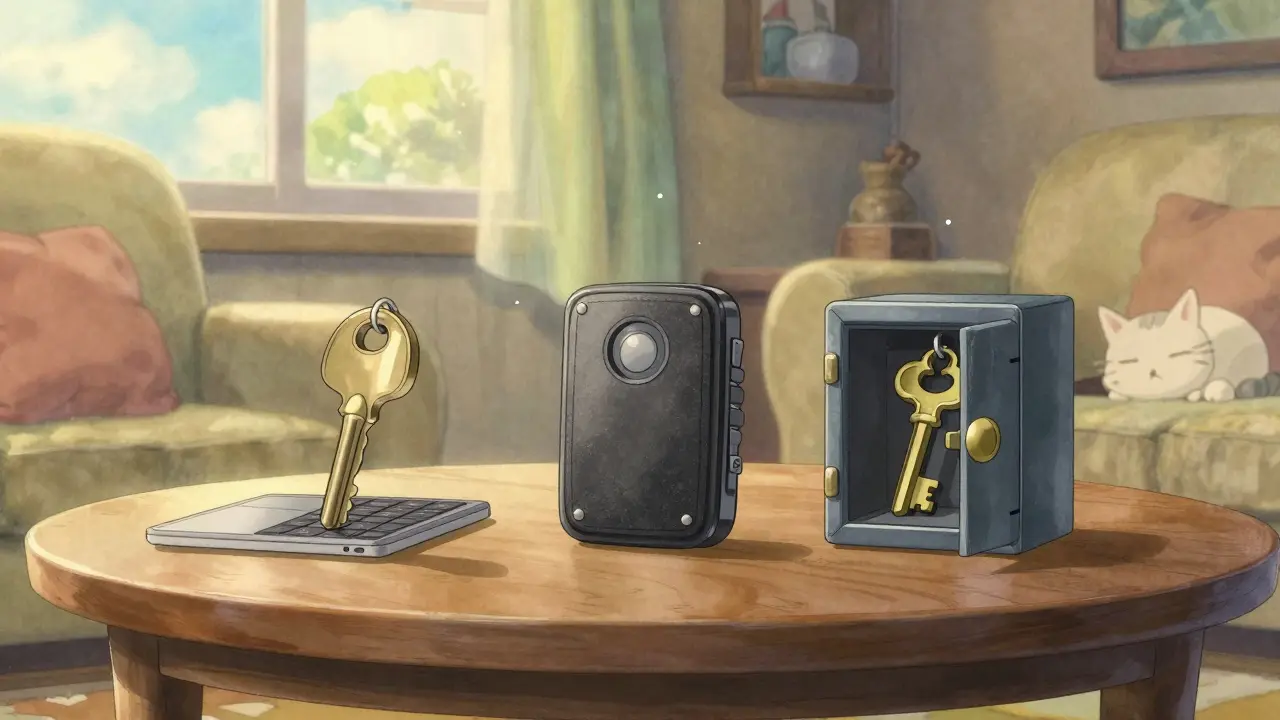
Imagine handing over the keys to your house to just one person. If that person loses them, gets robbed, or decides to sell your furniture without asking, you’re out of luck. That is exactly how most people store their cryptocurrency today-using a single private key. One mistake, one hacked device, and everything is gone. But there is a better way. By setting up a multi-signature wallet, you can require multiple approvals before any money moves. It’s like needing two out of three board members to sign off on a major purchase. This guide will walk you through why this matters, how it works, and exactly how to build one yourself.
What Is a Multi-Signature Wallet?
A multi-signature (or multi-sig) wallet is a type of cryptocurrency storage that requires more than one cryptographic signature to authorize a transaction. In traditional banking, you might need a manager and a teller to approve large withdrawals. In crypto, this concept translates to requiring multiple private keys to unlock funds.
The technology isn’t new. It originated with Bitcoin’s protocol in 2012 when the CHECKMULTISIG opcode was implemented in Bitcoin Core version 0.3.10. Since then, it has become the gold standard for securing high-value assets. Unlike a standard wallet where one key rules all, a multi-sig wallet distributes authority. This means no single point of failure exists. If one key is stolen or lost, your funds remain safe as long as the required number of other keys are intact.
Think of it as a safety net. For individuals holding significant amounts of Bitcoin or Ethereum, or for businesses managing treasuries, this extra layer of security is non-negotiable. It prevents theft from compromised devices and protects against accidental loss if one backup phrase goes missing.
Understanding M-of-N Configurations
The core of any multi-sig setup is the "M-of-N" structure. Here, M represents the minimum number of signatures needed to spend funds, and N is the total number of keys available. Choosing the right configuration depends on your balance between security and convenience.
| Configuration | Use Case | Security Level | Convenience |
|---|---|---|---|
| 2-of-3 | Personal savings, couples | High | Medium |
| 3-of-5 | Businesses, DAOs, institutions | Very High | Low |
| 2-of-2 | Joint accounts, escrow | Medium | Low |
The 2-of-3 setup is the most popular for individuals. You create three keys. You keep one on your laptop, one on a hardware wallet, and one in a safe deposit box. To send money, you only need two of these three. If your laptop is hacked, the thief still needs one of the other two keys. If you lose the safe deposit box key, you can still access your funds with the other two. It offers a perfect balance: you can recover from one loss, but an attacker must compromise two separate locations to steal your money.
For organizations, a 3-of-5 setup is common. Five executives hold keys. Any three must agree to move funds. This prevents rogue employees from stealing company assets and ensures democratic decision-making. While Bitcoin supports up to 15-of-15 configurations, larger numbers make transactions cumbersome and slow, so most practical implementations stick to smaller groups.
Choosing Your Tools: Software vs. Hardware
You cannot set up a multi-sig wallet with just any app. You need software that natively supports the protocol. The choice of tools significantly impacts your experience and security.
Casa is a leading provider specializing in Bitcoin multi-sig wallets. Founded by Jeremy Welch in 2017, Casa offers a user-friendly interface specifically designed for 2-of-3 setups. Their HODL Pack, priced at $399 annually, includes physical devices pre-configured for multi-sig, which simplifies the technical process for beginners. However, it locks you into their ecosystem.
For those who prefer open-source solutions, Electrum is a free, lightweight Bitcoin client with robust multi-sig support. Version 4.4.5, released in March 2024, allows you to create multi-sig wallets without paying fees. The downside? It requires more technical know-how. You’ll be manually exchanging public keys via QR codes, which can be error-prone if you’re not careful.
If you use hardware wallets, Ledger Live integrated multi-sig functionality directly into its platform in version 2.35.1, released in January 2024. This makes it easier for Ledger users to participate in multi-sig setups without switching to third-party apps. Similarly, Trezor devices support multi-sig, though the setup often involves coordinating with Electrum or other compatible software.
When choosing, consider your technical comfort level. If you want simplicity and don’t mind paying, Casa is a strong contender. If you value control and cost-efficiency, Electrum paired with hardware wallets like Ledger or Trezor is the professional route.

Step-by-Step Setup Guide
Setting up a multi-sig wallet takes time-expect around 60 minutes for your first attempt. Rushing leads to mistakes, and mistakes with crypto can mean permanent loss. Follow these steps carefully.
- Prepare Your Devices: Install compatible wallet software on all participating devices. Ensure they are updated to the latest versions. Use clean, secure computers to avoid malware.
- Generate Individual Keys: On each device, generate a new wallet instance. Write down the 12 or 24-word recovery phrase for each. Store these phrases securely in different physical locations. Never digitize them.
- Select Configuration: Decide on your M-of-N structure. For personal use, start with 2-of-3. Enter this configuration into your chosen software.
- Exchange Public Keys: This is the critical step. Each device generates a public key. You must share these keys with the other devices. Most modern apps allow this via QR code scanning. Scan Device A’s public key into Device B and C, and so on, until every device holds the public keys of all others.
- Verify the Setup: Once all keys are exchanged, the wallet address is generated. Send a small test amount (e.g., $10 worth of Bitcoin) to this address. Confirm receipt on all devices.
- Test a Transaction: Attempt to send the test amount back to yourself or another wallet. You will need to co-sign the transaction on the required number of devices (e.g., two out of three). Ensure the process works smoothly before funding the wallet with significant assets.
During the key exchange phase, double-check every character. A single wrong digit in a public key will render the wallet unusable. If using QR codes, ensure good lighting and stable camera focus. BitPay reports that 31% of support tickets in early 2024 were due to QR code scanning failures, so patience here pays off.
Security Best Practices and Pitfalls
Having a multi-sig wallet doesn’t automatically make you secure. How you manage the keys matters more than the technology itself.
Diversify Storage Locations: Don’t keep all three recovery phrases in the same fireproof safe. If your house burns down, you lose everything. Store one phrase at home, one in a bank safe deposit box, and one with a trusted family member or lawyer. Geographic separation is key.
Regular Testing: Technology changes. Devices fail. Perform a quarterly "dry run." Open your wallet software, check that the balance is visible, and verify that you can access the recovery phrases. Do not broadcast a transaction, just ensure the keys work.
Beware of Social Engineering: Attackers may try to trick you into signing a malicious transaction. Always review the recipient address and amount meticulously on each device before confirming. Multi-sig slows you down, which is a feature, not a bug-it gives you time to think.
A common pitfall is losing track of which device holds which key. Label your hardware wallets clearly. Keep a master document (offline) that lists which device corresponds to which recovery phrase location. Without this map, recovering from a lost device becomes a nightmare.

Multi-Sig vs. Single-Sig and MPC
Why bother with the complexity? Let’s compare.
Single-Signature Wallets: These are easy to set up (8 minutes on average) and fast to transact. However, they have a single point of failure. If your private key is leaked, your funds are gone. Ledger’s 2024 analysis shows a 97% failure rate for single-sig wallets when the key is compromised. Multi-sig reduces this risk to approximately 19% in a 2-of-3 setup.
MPC (Multi-Party Computation): MPC wallets split the private key into shards rather than using multiple full keys. They are faster and offer a smoother user experience because they mimic single-sig transactions on-chain. However, multi-sig is native to Bitcoin’s protocol, making it more transparent and auditable. For Bitcoin holders, multi-sig remains the preferred choice for cold storage. For Ethereum and newer chains, smart contract-based multi-sig or MPC is increasingly common.
Institutional data supports this trend. Coinbase Custody reported that 68% of institutional clients use 3-of-5 multi-sig configurations as of Q1 2024. The regulatory push for "distributed control mechanisms" has made multi-sig the compliance standard for qualified custodians.
Future Trends and Upgrades
The landscape is evolving. Bitcoin’s Taproot upgrade, activated in November 2021, introduced Schnorr signatures. This allows multi-sig transactions to appear as single-signature transactions on the blockchain. This improves privacy and reduces fees by about 25%. You get the security of multi-sig without revealing to the world that you’re using it.
We are also seeing hybrid solutions emerge. Fireblocks announced in 2024 their Multi-Party Computation Wallet Cloud, which supports both multi-sig and MPC paradigms. This flexibility allows enterprises to choose the best tool for specific tasks. For now, multi-sig remains the bedrock of Bitcoin security, with Gartner predicting 41% of institutional Bitcoin holdings will use multi-sig by 2026.
Is a multi-signature wallet safer than a hardware wallet?
Yes, in terms of resilience. A standard hardware wallet uses a single private key. If that key is somehow extracted or the device is coerced under duress, funds are at risk. A multi-sig wallet requires compromising multiple independent keys stored in different locations, making successful attacks exponentially harder.
Can I recover my funds if I lose one recovery phrase in a 2-of-3 setup?
Absolutely. That is the primary benefit. As long as you retain access to any two of the three recovery phrases, you can reconstruct the wallet and access your funds. You would need to re-import the remaining two keys into a new wallet application.
Do multi-signature wallets cost more to use?
Historically, yes, because multi-sig transactions are larger in size and consume more block space. However, with Bitcoin’s Taproot upgrade, many multi-sig transactions now look like single-signature ones on-chain, reducing fees by approximately 25%. Still, expect slightly higher fees than simple single-sig transfers.
Which cryptocurrencies support multi-signature wallets?
Bitcoin has native support since 2012. Ethereum supports it via smart contracts (like Gnosis Safe). Many other UTXO-based coins like Litecoin and Dash also support it. Account-based chains usually implement it through smart contract logic rather than protocol-level opcodes.
How long does it take to set up a multi-sig wallet?
For an experienced user, it takes about 45-60 minutes. For a beginner, it could take longer due to learning the terminology and troubleshooting QR code scans. Coinbase’s 2024 study found the average setup time for experienced users was 63 minutes compared to 8 minutes for single-sig wallets.

![What is [Fake] PENGU Crypto? Warning Signs of the Pudgy Penguin Scam Token](/uploads/2026/06/thumbnail-what-is-fake-pengu-crypto-warning-signs-of-the-pudgy-penguin-scam-token.webp)









Hazel Fruitman
July 6, 2026 AT 03:34its actually kind of sad how many people just leave their crypto on exchanges like its a savings account. you are basically begging to get rug pulled. multi-sig is the only way if you care about your own security and not trusting some faceless corp with your life savings. stop being lazy.
Autumn Story
July 6, 2026 AT 09:29Oh my gosh!! This is such a great guide!!! I have been so scared to move my coins off the exchange because I was worried I would lose them forever... but this makes it sound so much safer??!! Like, having three keys is like having a safety net for your money!! I really think everyone should try this, it feels like taking control back in a very empowering way!! Thank you for sharing this knowledge!!
Mark Tuason
July 7, 2026 AT 03:02I appreciate the detailed breakdown of the M-of-N configurations. It is often overlooked that convenience must be balanced against security protocols. For institutional clients, the 3-of-5 setup is indeed the standard, as it mitigates insider threat risks effectively while maintaining operational continuity.
Ella Collinson
July 9, 2026 AT 02:43The article glosses over the significant UX friction inherent in CHECKMULTISIG implementations. While the theoretical security model is robust, the practical application introduces latency and complexity that most retail users find prohibitive. The reliance on QR code scanning for key exchange is a critical failure point, as evidenced by the high volume of support tickets cited. Furthermore, the assertion that MPC is inferior ignores the advancements in threshold cryptography which offer comparable security guarantees with superior usability metrics. The dichotomy presented is reductive.
Ray Arney
July 9, 2026 AT 05:15i use electrum for my multisig setup. works fine for me. just takes a bit longer to send stuff out but i dont mind since i hold long term anyway. good read.
Andrew Schneider
July 10, 2026 AT 02:01Wait wait wait... so you're telling me I need THREE devices just to buy coffee? 😱🤯 That sounds like absolute nightmare fuel! 🚫☕️ Who has time for that?! I mean, sure, hackers are scary 👻 but come on! My current wallet is secure enough (I changed my password once in 2018 🔒). Plus, what if I lose one key? Do I have to perform a ritual dance? 💃🕺 This whole multi-sig thing seems like over-engineering for normal people who just want to HODL without doing paperwork! 📄🙅♂️ #KeepItSimple
Eric Braddock
July 10, 2026 AT 22:43You think this is security? Please. The entire blockchain infrastructure is compromised at the protocol level. These 'keys' are just digital shackles designed to track your movements for the central bank digital currency rollout. Multi-sig is a honeypot to make you feel safe while they harvest your metadata. Wake up sheeple. The real security is air-gapped cash buried in the backyard. 🚩👁️
Nick G
July 11, 2026 AT 20:09In many cultures, the concept of shared responsibility is deeply ingrained, much like the communal management of resources in traditional societies. When we look at the implementation of multi-signature wallets, we can see a parallel to these ancient practices of collective decision-making. It is fascinating how technology mirrors social structures, allowing us to distribute trust among multiple parties rather than placing it solely in the hands of one individual or entity, which fosters a sense of community and mutual accountability in the digital realm.
Nick Wengel
July 12, 2026 AT 07:47Good info. I set up a 2-of-3 with my brother. We keep one key each and one in a safe. Works well for our joint investment fund. Simple enough.
Natalie Lucas
July 12, 2026 AT 18:39omg this is so helpful!! i was totally confused about all the tech jargon before but now i get it. im gonna try setting this up this weekend. feeling empowered already!! ✨
Steven Briggs
July 14, 2026 AT 13:01electrum is solid. just be careful with the qr codes. lighting matters.
Kim Kay
July 14, 2026 AT 17:23I tried setting this up last year and got stuck on the public key exchange part. It felt overwhelming. Does anyone have tips for beginners who aren't super tech savvy? I want to learn but the instructions seem a bit dense sometimes.
Brad Semp
July 15, 2026 AT 04:55One might argue that the average user lacks the cognitive capacity to manage such complex cryptographic structures without succumbing to user error. The suggestion that individuals should self-custody via multi-sig is akin to suggesting an amateur perform open-heart surgery. Casa’s premium model exists precisely because the masses require hand-holding, a testament to their inherent incompetence in securing their own assets.
Korn Arrieta
July 16, 2026 AT 02:51The article fails to address the attack surface expansion introduced by coordinating multiple devices. Each additional device is a potential vector for compromise. If you are using three laptops to generate keys, you have tripled your exposure to malware compared to a single hardware wallet. The assumption that geographic separation equals security is flawed if the generation environment is insecure. You are trading single-point failure for distributed vulnerability.
Jackie D
July 16, 2026 AT 15:44I love the idea of splitting keys like puzzle pieces! 🧩 But honestly, the part about scanning QR codes made me nervous. What if my camera is blurry? Is there a backup way to share those keys? Maybe email? Or is that too risky? I just want to make sure I don't lock myself out of my own money. Any colorful metaphors for keeping things safe?
Ruth Williams
July 17, 2026 AT 06:51It is disheartening to observe the proliferation of such elementary guides aimed at an audience clearly unprepared for the responsibilities of self-custody. The notion that a 'step-by-step' tutorial can compensate for a lack of fundamental understanding of cryptographic principles is absurd. True security requires discipline, not convenience. Those who cannot grasp the nuances of M-of-N configurations are simply not suited for holding significant value in decentralized systems.
Sophie Nakasako
July 17, 2026 AT 14:42This raises an interesting philosophical question about trust. In a world where we delegate so much authority to institutions, does taking back control through multi-sig represent a shift towards true autonomy? Or does it merely complicate our lives unnecessarily? I think it empowers us to define our own security boundaries rather than relying on others. What do you all think about the balance between ease and control?
Kristy Morrow
July 19, 2026 AT 03:48multi sig is for people who dont trust themselves. which is fair. but also kinda pathetic. why do you need three people to agree to spend your own money? sounds like a dysfunctional family dynamic. just use a hardware wallet and stop making excuses for being paranoid. life is short. enjoy your crypto.
Kristine Lawson
July 19, 2026 AT 21:09It is morally imperative that individuals take responsibility for their own financial security. Relying on centralized exchanges is akin to negligence. One must strive for excellence in safeguarding assets. The complexity of multi-signature wallets is a necessary price for integrity and independence in the digital age. Do not let laziness dictate your security posture.
Tawny Holmes
July 19, 2026 AT 23:13MPC is better. Multi-sig is outdated tech from 2012. Stop using legacy systems.