22
Famous Rug Pull Examples and Losses: How Scammers Steal Millions in Crypto
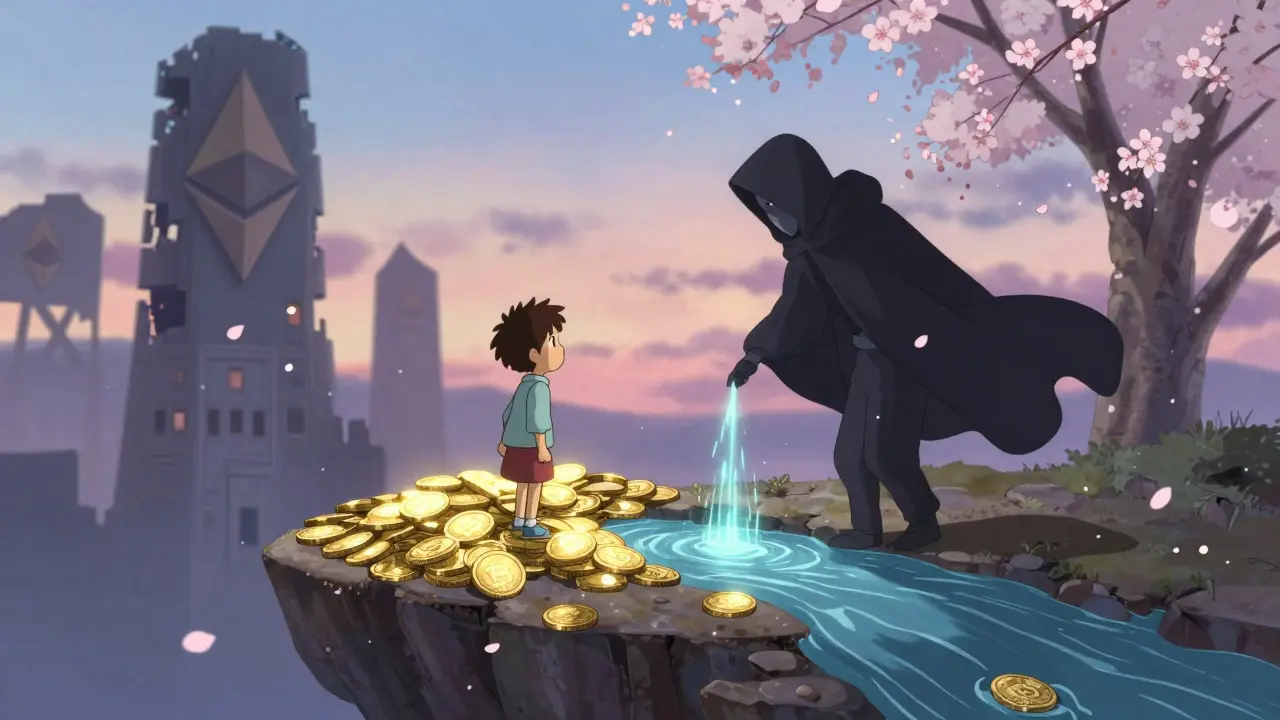
Thousands of people lose millions every year because they trusted a crypto project that didn’t exist. A rug pull isn’t just a scam-it’s a well-planned theft disguised as an investment opportunity. Scammers create a token, flood social media with hype, lure in investors, then vanish with all the money. No warning. No second chance. Just empty wallets.
Since 2020, over 300,000 scam tokens have been launched. More than 2 million people have been defrauded. The total losses from rug pulls alone exceed the combined collapse of FTX, Celsius, and Voyager. This isn’t about risky bets-it’s about outright theft.
The Thodex Collapse: A $2 Billion Exit Scam
In April 2021, Thodex, one of Turkey’s largest crypto exchanges, suddenly froze withdrawals. Users couldn’t access their Bitcoin, Ethereum, or altcoins. Then the CEO, Faruk Fatih Özer, disappeared. His passport was found in Albania. He was later arrested in Greece.
Thodex wasn’t a DeFi project. It was a centralized exchange-trusted by hundreds of thousands. Users thought they were storing assets safely. Instead, the platform had been running a classic exit scam: collecting deposits, pretending to trade, then walking away with $2 billion. That’s the largest single rug pull in crypto history. Not because it was complex. But because it was believable.
AnubisDAO: A Token That Vanished in 20 Hours
On October 28, 2021, a new token called ANKH launched. No website. No whitepaper. Just a DOGE-style logo and a promise: a free-floating currency backed by real assets. It raised nearly $60 million in hours. Investors sent wrapped Ethereum (wETH) to a liquidity pool, expecting returns.
Twenty hours later, every single dollar was gone. The developers drained the liquidity pool. The token price crashed to zero. No one knew who the team was. No one could contact them. The entire project was built on anonymity and speed. It was designed to disappear before anyone could react.
AnubisDAO showed how fast a rug pull can happen today. You don’t need years to build trust. Just a viral tweet, a Discord server, and a smart contract that lets the creators withdraw funds at will.
Squid Game Token: When Pop Culture Becomes a Trap
The Netflix show Squid Game was a global hit. So someone created a token called SQUID-claiming it was a play-to-earn game tied to the show. The token started at $0.01. In less than a week, it hit $2,861. People were making 100x, 500x, even 1,000x returns. Social media exploded. YouTube influencers promoted it. Reddit threads filled with excitement.
Then, on November 1, 2021, the rug was pulled. The token crashed 99% in one day. Investors couldn’t sell. The smart contract was a honeypot-designed to let people buy, but not sell. The team vanished. Their LinkedIn profiles were fake. Their Telegram and Discord groups shut down. The whitepaper was nonsense: claiming the game would run on a “blockchain-based metaverse” with no technical details.
Investigators found the team had sold over 3.38 million in SQUID tokens before the crash. The project had no real game. No team. No future. Just a clever name and a lot of hype.
Bored Bunny NFT: Celebrity Endorsements That Were Faked
In December 2021, the Bored Bunny NFT project launched with a bang. They claimed celebrity backing from Floyd Mayweather, Jake Paul, and David Dobrik. They promised branded merch, a private metaverse, and 10x returns in days. The NFTs sold out in hours-raising 2,000 ETH (over $7 million at the time).
But the endorsements were fake. Blockchain analysis showed the NFTs supposedly owned by celebrities were actually held in wallets linked to the project’s developers. The “celebrity” photos were stolen. The “metaverse” didn’t exist. The project had no roadmap. No team. No code.
Today, the floor price of Bored Bunny NFTs is 0.085 ETH-down over 95% from launch. Investors who bought in thinking they were getting a rare collectible now own digital art with no value, no utility, and no legitimacy.
Froggy (FROGGY): The 2024 Meme Token That Crashed
In early 2024, a new meme coin called FROGGY appeared on X and Reddit. It had a cute frog logo, funny memes, and promises of “community-driven wealth.” Developers created hype with bots, fake trading volume, and influencer shoutouts. Investors poured in, believing they were part of something organic.
Within days, liquidity was drained. The token price collapsed from $0.00001577 to $0.0000000073964-a 99.95% drop. The developers disappeared. The website went offline. The Twitter account was deleted. The smart contract had no restrictions. Anyone could withdraw funds at any time.
FROGGY was textbook: low barrier to entry, high emotional appeal, zero substance. It didn’t need a whitepaper. It didn’t need a team. It just needed people to believe.
Hawk Tuah: A Celebrity’s Meme Coin Backfires
On December 4, 2024, TikTok star Hailey Welch launched HAWK, a meme coin tied to her viral phrase “hawk tuah.” Within 20 minutes, the token’s market cap plunged from $500 million to $60 million. Investors panicked. The price kept falling.
Within days, U.S. law firm Burwick Law filed a federal lawsuit against Welch and three others behind the project. The complaint accused them of securities fraud, false advertising, and market manipulation. The token’s price settled at $0.0006404-down 71% from its peak.
This was different. It wasn’t just a faceless team. It was a public figure with millions of followers. People trusted her. She used her platform to promote a project she had no technical knowledge of. And when it collapsed, she was held accountable.

How Rug Pulls Work: The Two Main Methods
There are two ways scammers pull off rug pulls:
- DeFi Smart Contract Scams - The code is rigged. The token can’t be sold. Or the devs can mint unlimited new tokens. Or they can drain the liquidity pool at will. These are hidden in the code. Most retail investors never check it.
- Exit Scams - No code trickery. Just promotion. Fake partnerships. Fake team members. Fake whitepapers. Then, after raising millions, the team vanishes. No smart contract needed-just a good story and a lot of hype.
The most dangerous rug pulls use both. Squid Game had a honeypot contract AND a viral marketing campaign. Thodex had fake customer support AND a centralized exchange facade.
How to Spot a Rug Pull Before It Happens
You can’t avoid every scam-but you can avoid the big ones. Here’s what to check:
- Team anonymity - If the founders use pseudonyms, have no LinkedIn, or no past projects, walk away.
- No audit - If the project hasn’t been audited by a reputable firm (like CertiK or PeckShield), treat it as a red flag.
- Liquidity locked - Is the liquidity pool locked for months? If not, the devs can pull the plug anytime.
- Token distribution - If more than 20% of tokens are held by the dev wallet, they control the market.
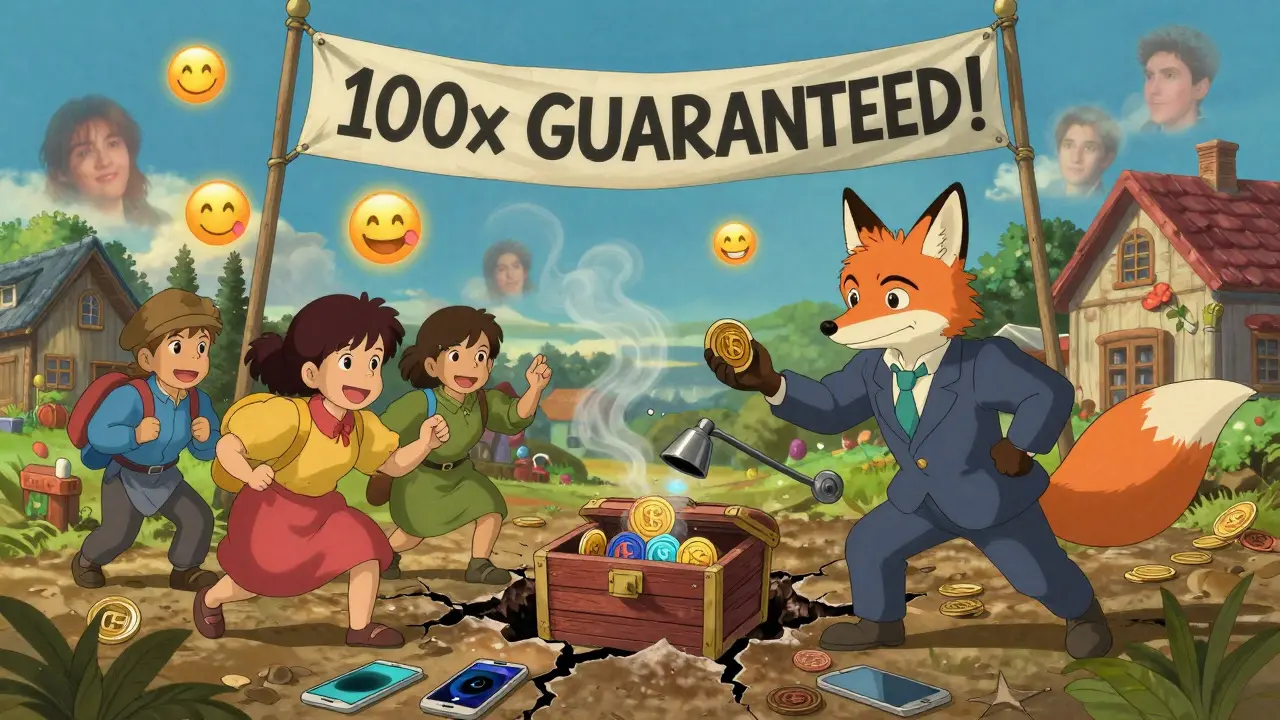
- Overhyped social media - If every post is “100x GUARANTEED” or “BUY NOW,” it’s a scam. Real projects don’t need to scream.
- Whitepaper nonsense - If it reads like sci-fi with no technical specs, it’s fake.
Ask yourself: If this project was real, why would the team need to convince you so hard?
Why Rug Pulls Keep Happening
Because new investors keep joining. Every year, millions of people enter crypto with no experience. They see a meme coin spike 500% and think, “I missed Bitcoin-I won’t miss this.” They don’t check the code. They don’t research the team. They follow influencers.
Scammers know this. They don’t need to be smart. They just need to be loud. And they’re getting better at it. New tools let them create fake websites in minutes. AI generates fake whitepapers. Bots create fake trading volume. Celebrity endorsements are bought and faked.
Regulators are catching up. The Hawk Tuah lawsuit is a sign. But crypto is global. Scammers operate across borders. Prosecution is slow. And the tools to protect yourself? Still mostly on you.
The truth is simple: If it sounds too good to be true, it is. And if you didn’t build it, you don’t own it. Not really.
What exactly is a rug pull in crypto?
A rug pull is a scam where developers create a cryptocurrency or NFT project, convince investors to buy in, then suddenly disappear with the funds. They drain the liquidity pool, disable selling, or shut down all communication, leaving investors with worthless tokens.
Can you recover money lost in a rug pull?
Almost never. Crypto transactions are irreversible, and most rug pull teams operate anonymously across borders. Legal action is possible in rare cases (like Hawk Tuah), but recovery rates are extremely low. Prevention is the only real protection.
Are all meme coins rug pulls?
No. Some meme coins like Dogecoin have survived for years with real communities and no exit. But the vast majority of new meme coins launched with viral hype and no team are rug pulls. If there’s no audit, no locked liquidity, and no team info, assume it’s a scam.
How do I check if a token’s smart contract is safe?
Use tools like Etherscan to view the contract. Look for functions like ‘setSellFee’ or ‘setBuyFee’ that can be changed by the owner. Check if liquidity is locked via a service like Unicrypt or Team Finance. If the contract hasn’t been audited by a known firm, don’t invest.
Why do celebrities get involved in rug pulls?
They’re often paid to promote a project without knowing it’s a scam. Some don’t care. Others are misled by fake documents. Either way, their endorsement gives the scam legitimacy. Once the token crashes, they face backlash-and sometimes legal consequences, as seen with Hawk Tuah.
Is it possible to have a legitimate DeFi project with anonymous developers?
Yes, but it’s rare. Projects like Uniswap started anonymously and gained trust through transparent code, audits, and community governance. The difference? No one could withdraw funds. No one controlled the liquidity. The code was open, and the community ran it. Anonymity alone isn’t a red flag-but anonymity + no audit + unlocked liquidity = danger.





Ashok Sharma
January 22, 2026 AT 14:16It’s important to remember that crypto is still new, and many people are learning as they go. The best thing you can do is educate yourself before investing. Read the whitepaper, check the team, and never put in more than you can afford to lose.
Knowledge is your best defense.
Stay safe out there.
Margaret Roberts
January 24, 2026 AT 03:59They’re all controlled by the Fed anyway. You think these ‘decentralized’ projects are real? Nah. The same banks that crashed in 2008 are behind most of these tokens. They let you win at first to trap you. Then they pull the rug. It’s not crypto-it’s a psychological weapon.
And don’t even get me started on the AI-generated whitepapers. That’s all state-sponsored disinformation.
They want you broke and distracted.
Tselane Sebatane
January 24, 2026 AT 07:40Look I’ve been through this before-2017, 2021, now 2024-and every time it’s the same story. People see a frog logo or a celebrity tweet and suddenly they’re convinced they’re about to retire.
But here’s the truth: no one ever got rich from a meme coin. Not really. The only ones getting rich are the ones who created it and vanished before the first 100 people even bought in.
And yet, here we are again. Same energy. Same hope. Same heartbreak.
I don’t blame the investors. I blame the system that lets this keep happening. We need better education. We need real regulation. We need to stop treating finance like a TikTok dance challenge.
It’s not too late to wake up. But you have to want to.
And if you’re still holding SQUID? Please. Just sell. And take the loss. You’ll thank yourself later.
Jonny Lindva
January 25, 2026 AT 06:56Big respect to the author for laying this out so clearly.
I’ve seen so many friends get burned by these scams-especially the ones with fake celebrity endorsements. One guy I know lost $12k on Bored Bunny because he saw Jake Paul post about it.
My advice? Always check the contract on Etherscan. Look for the ‘owner’ wallet. If it can drain liquidity, run.
And if someone says ‘this is the next Bitcoin’? Just laugh and walk away.
There’s no shame in missing out. Only in losing everything because you trusted a meme.
Jen Allanson
January 26, 2026 AT 17:24It is an egregious failure of regulatory oversight that such fraudulent schemes continue to proliferate with impunity.
The absence of enforceable standards for token issuance, coupled with the complete lack of accountability for influencer marketing in decentralized finance, constitutes a systemic vulnerability.
One cannot reasonably expect retail investors-many of whom possess minimal financial literacy-to discern between legitimate blockchain innovation and outright criminal enterprise.
It is imperative that international financial authorities establish binding protocols for liquidity locking, team transparency, and third-party audit certification.
Until such measures are implemented, the crypto space will remain a lawless frontier where predatory actors thrive.
Harshal Parmar
January 28, 2026 AT 00:37Man, I feel you. I remember when I jumped into Squid Game token thinking I was gonna be rich by Friday. I even told my mom about it. She just looked at me and said, ‘Why would a TV show need a coin?’
Turns out, she was right.
I lost everything. But I didn’t give up on crypto. I just changed how I look at it.
Now I only invest in projects that have real code, real audits, and real people behind them-even if they’re anonymous. Like Uniswap. No names, but the code is open. No one can steal it.
And I never, ever follow hype.
If it’s too loud, it’s probably a trap.
But hey, at least I’m smarter now. And that’s worth more than any token.
Darrell Cole
January 29, 2026 AT 12:50Most of these so called rug pulls are just market corrections disguised as fraud
People lose money because they dont understand volatility
Thodex wasnt a rug pull it was a Ponzi that got exposed
AnubisDAO was just a bad idea with good marketing
Squid Game token was a liquidity grab not a scam
And dont even get me started on hawk tuah that was a publicity stunt not a crime
You think the market is rigged well its not its just that most people are too dumb to read a whitepaper
Stop blaming the system and start learning
Its not the devs its the investors who are the problem
Matthew Kelly
January 30, 2026 AT 09:15So many people don’t realize that the real scam isn’t the rug pull-it’s the belief that you can get rich quick.
I lost my first $5k on a dog coin. Felt like crap.
But I kept learning. Read contracts. Checked audits. Asked questions.
Now I only invest in projects with locked liquidity and real teams.
It’s slower. It’s boring.
But I still have my money.
And that’s the win 😊
Dave Ellender
January 31, 2026 AT 18:31Well written. Clear examples. No drama.
Just facts.
That’s what’s missing from most crypto content.
Thanks for keeping it real.
Adam Fularz
February 1, 2026 AT 08:57Most of these examples are just FOMO fuel. People think they’re investing but they’re just gambling with meme names.
And dont even get me started on the ‘community driven’ bs. There is no community. Its just bots and paid shills.
And the whitepapers? Written by AI in 10 minutes.
Its all a circus.
And the people who lose money? They deserved it.
Because they didnt do the work.
Simple as that.
Linda Prehn
February 1, 2026 AT 20:01Can we just talk about how toxic this entire space is
Everyone is screaming BUY NOW or YOU’RE A LOST CAUSE if you don’t follow their coin
And then when it crashes they disappear like ghosts
And the influencers? They just post another one next week
Its not crypto its a cult
And we’re all just brainwashed sheep waiting for the next sacrifice
And I’m so tired of it
Adam Lewkovitz
February 2, 2026 AT 09:27These scams are why America needs to ban crypto
It’s not a currency. It’s not an investment. It’s a playground for criminals and idiots.
Thodex? Turkish scam.
Squid Game? Chinese bots.
Hawk Tuah? TikTok trash.
And you people still think this is the future?
We’ve got real problems like inflation and housing. But no-everyone wants to gamble on a frog coin.
It’s embarrassing.
And I’m sick of it.
Clark Dilworth
February 2, 2026 AT 17:03The structural vulnerabilities in DeFi protocols are exacerbated by the absence of on-chain governance mechanisms that enforce liquidity permanence and ownership constraints.
Smart contracts with minting privileges and unrestricted withdrawal functions represent an existential risk vector for retail participants who lack the technical capacity to perform formal verification.
The phenomenon of ‘exit scams’ is not merely a failure of ethics-it is a failure of protocol design.
Until we implement time-locked multisig liquidity pools and mandatory KYC for team wallets, this cycle will persist.
Regulation is not the enemy. Negligence is.
Brenda Platt
February 3, 2026 AT 10:17To everyone who lost money: I’m so sorry. I’ve been there. It hurts.
But please don’t give up on crypto.
Just change how you play.
Start small. Learn the code. Use tools like Etherscan. Check audits. Look for locked liquidity.
And if someone says ‘100x guaranteed’? Block them.
You’re not dumb for believing. You’re brave for trying.
But now? You’re wiser.
And that’s the real win 💪❤️
Barbara Rousseau-Osborn
February 3, 2026 AT 19:22Of course people get scammed. They’re too lazy to read the contract. Too dumb to check the team. Too desperate to believe in magic.
And now they want the government to fix it?
Grow up.
If you don’t understand how a smart contract works, you shouldn’t be investing.
It’s not rocket science. It’s basic due diligence.
And if you’re still holding FROGGY? You deserve to lose everything.
Just stop pretending you’re a crypto investor.
You’re a gambler.
And casinos don’t refund losers.
Arnaud Landry
February 4, 2026 AT 16:58Let me tell you something dark.
These rug pulls aren’t random.
They’re designed by people who know exactly how the human brain works.
They use FOMO. They use celebrity worship. They use fake urgency.
And the worst part? You feel smart when you jump in.
Like you’re part of the elite.
Then-bam.
You’re left holding a token worth nothing.
And the devs? They’re already on a beach somewhere with your money.
It’s not a scam.
It’s psychological warfare.
And we’re all losing.
But at least now… we know how they do it.