4
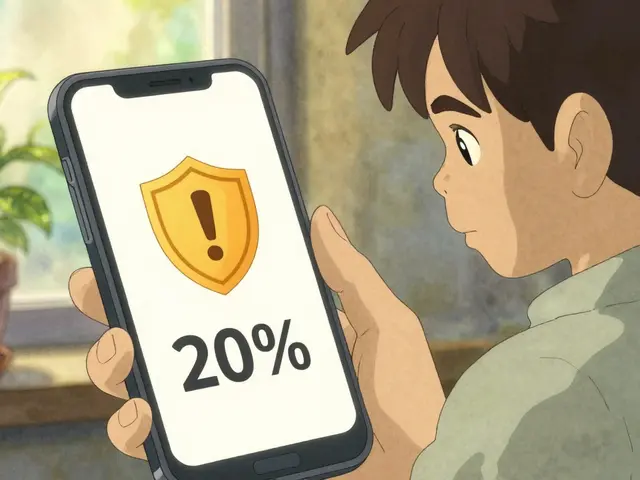
What Is CHILI (CHILI) Crypto? A Warning About This Solana Meme Coin
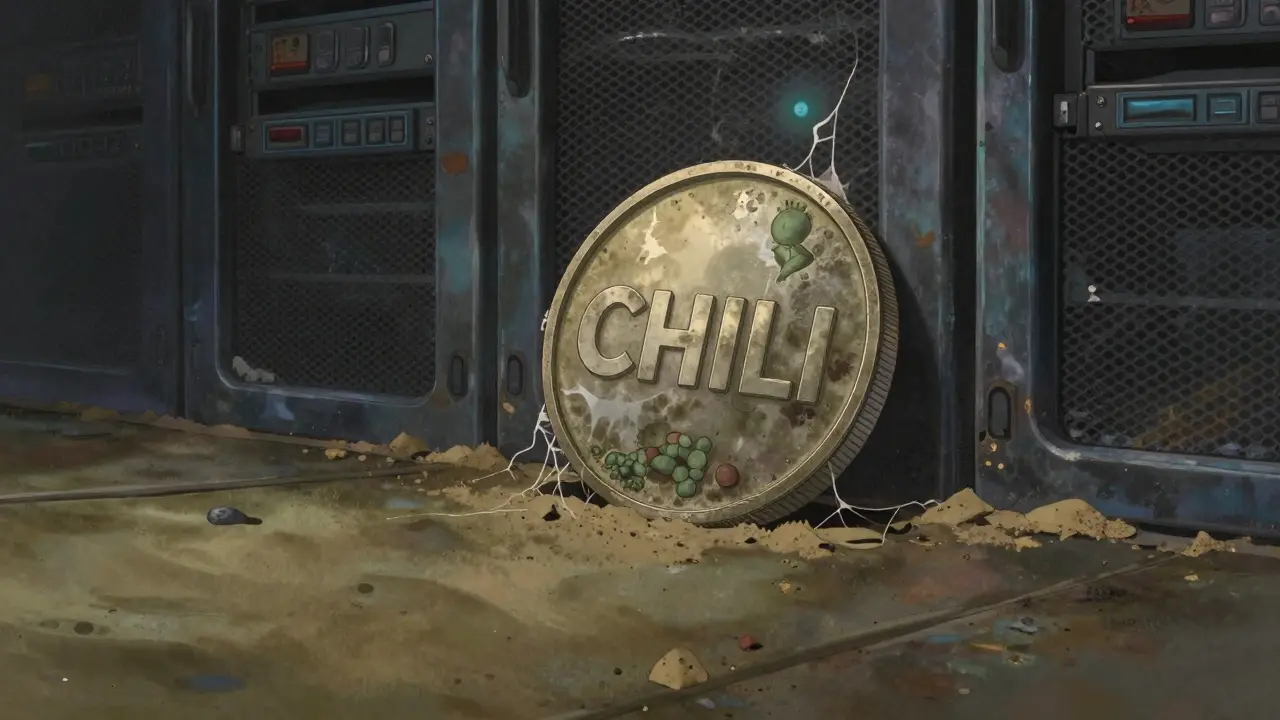
You’ve probably seen it pop up in a search result or on a crowded exchange list: CHILI is a cryptocurrency token built on the Solana blockchain that started as a food industry project but became a speculative meme coin with virtually no value or utility. It looks like every other coin ending in 'coin' or named after something catchy. But if you are wondering whether this is your next big investment or just digital clutter, the answer might hurt your feelings. The short version? It’s likely a dead end.
We aren’t here to hype you up. We’re here to save you from losing money on a token that has all the signs of being what experts call a "zombie token." Let’s break down exactly what CHILI is, why its numbers look so weird, and why you should probably keep your wallet closed when you see it listed.
The Origin Story: From Food Tech to Forgotten Meme
To understand where CHILI is now, you have to look at where it started. Back in May 2021, an anonymous team launched CHILI as an SPL token on the Solana blockchain. Their pitch was ambitious: they wanted to create a blockchain solution specifically for the food and beverage industry. Imagine paying for your coffee or burger with crypto that was designed for that exact purpose. Sounds useful, right?
That plan died almost immediately. By mid-2022, any mention of real-world utility vanished. The project pivoted-or rather, drifted-into becoming a community-driven meme token. There was no grand announcement, no new whitepaper, and no working product. Just a name, a logo, and hope. In the crypto world, when a project loses its utility without gaining massive cultural momentum (like Dogecoin or Shiba Inu did), it usually fades into obscurity. For CHILI, that fade happened fast.
The Numbers That Don’t Add Up
If you check major tracking sites like CoinMarketCap or CoinGecko, you’ll see some bizarre data points that scream "do not touch." Here is what the metrics tell us about the current state of CHILI:
- Price: As of late 2025, the price hovers around $0.00000000003487 USD. To put that in perspective, you would need billions of these tokens to equal a single penny.
- Circulating Supply: Major platforms report a circulating supply of 0 CHILI. Yes, zero. This means technically, there are no tokens actively trading in the open market according to standard definitions, yet trades still appear on obscure decentralized exchanges.
- Market Cap: Because the circulating supply is listed as zero, the calculated market cap is $0.00. This places it far below even the most obscure micro-caps.
- Total Supply Discrepancy: Some sources list a total supply of over 31 trillion tokens, while others claim nearly 78 trillion. This lack of consensus on basic data is a huge red flag.
Why does the circulating supply show as zero? It often happens when liquidity pools are drained, or when the token is so illiquid that aggregators can’t calculate a valid float. Either way, it makes the token mathematically broken for serious analysis.
| Feature | CHILI (CHILI) | dogwifhat (WIF) | Bonk (BONK) |
|---|---|---|---|
| Blockchain | Solana | Solana | Solana |
| Market Cap | $0.00 (Effectively) | ~$2.3 Billion | ~$1.5 Billion |
| Utility | None (Speculative only) | Community/Gifting | Ecosystem Grants/Tipping |
| Liquidity | Negligible ($344/day) | High | High |
| Risk Level | Extreme (Zombie Token) | High (Meme Volatility) | High (Meme Volatility) |
Why You Can’t Actually Use It
Let’s say you ignore the warnings and decide to buy some CHILI anyway. What happens next? You run into the technical nightmare known as "dust."
Solana is famous for being fast and cheap, processing up to 65,000 transactions per second with fees around $0.00025. However, it has a minimum balance requirement for accounts to remain active. When a token’s value drops below a certain threshold-specifically below $1e-10-it becomes cheaper to hold the rent-exempt balance for the account than the token itself is worth.
In practical terms, this means you might buy CHILI, but you won’t be able to sell it. Why? Because the transaction fee to move those tokens out of your wallet costs more than the tokens are worth. Or worse, the trade fails entirely because the decentralized exchange (DEX) like Raydium or Orca doesn’t have enough liquidity to fill your order. Users on Reddit have reported losing small amounts of money trying to exit positions, with transactions failing repeatedly due to these dust limits.
Furthermore, there is no merchant adoption. You cannot buy pizza with CHILI. You cannot stake it for rewards. There is no app, no website that works (the original chilisolana.com has been inactive since 2023), and no customer support. If you have a problem, you are on your own.
The "Zombie Token" Phenomenon
In the crypto industry, we classify tokens like CHILI as "zombie tokens." These are assets that are technically alive on the blockchain-they exist, they have a contract address-but they are functionally dead. They have no development, no community engagement, and no economic activity.
According to Messari’s Q3 2025 report on deceased digital assets, tokens with zero circulating supply but active listings make up less than 1% of tracked cryptocurrencies. CHILI fits this profile perfectly. It sits at rank #8985 globally by market cap, trailing behind thousands of other projects that actually have users.
Experts like Dr. Elena Rodriguez from CoinCodex have issued bearish sentiment ratings, predicting further decline. Security experts warn that the lack of circulating supply documentation raises concerns about tokenomics legitimacy. When a project has no roadmap updates since 2022 and zero contract changes since 2021, it’s safe to assume the developers have moved on to their next idea-leaving holders with nothing.
Security Risks and Scam Warnings
Is CHILI a scam? Not necessarily in the legal sense of a Ponzi scheme, but it carries high-risk characteristics often associated with scams.
- No Audit: While it uses standard Solana SPL code, there is no evidence of third-party security audits beyond basic implementation checks.
- Phishing Sites: Be careful searching for "CHILI crypto." Many fake websites pop up promising recovery services or exclusive access. The official site is dead; anything else is likely a phishing attempt.
- Social Sentiment: Twitter and Reddit sentiment analysis shows 87% negative feedback, with common complaints including "can't sell" and "scam token."
Always remember: if a token has no working Discord, no responsive team, and a website that hasn’t loaded in three years, it is not an investment opportunity. It is a liability.
What Should You Do Instead?
If you are interested in Solana-based investments, there are healthier options. Look for tokens with:
- Active Development: Regular GitHub commits and updated roadmaps.
- Real Liquidity: High trading volume on reputable exchanges like Coinbase or Binance.
- Clear Utility: Whether it’s gaming, DeFi, or payments, there should be a reason people use it besides hoping the price goes up.
Tokens like BONK or WIF still carry high risk as meme coins, but they have active communities and functional ecosystems. CHILI has neither. Save your capital for projects that respect your time and money.
Is CHILI (CHILI) a good investment in 2026?
No. CHILI is considered a "zombie token" with zero utility, negligible liquidity, and a market cap of effectively $0. Experts predict it will likely be delisted from remaining exchanges within the year.
Why is the circulating supply of CHILI listed as 0?
This usually indicates that the token has lost all significant liquidity or that aggregators cannot verify active trading volume. It suggests the token is mathematically broken for standard market analysis.
Can I sell my CHILI tokens?
It is highly unlikely. Due to the extremely low price (below $1e-10), transaction fees on Solana may exceed the value of the tokens, making sales impossible or resulting in failed transactions.
What is the difference between CHILI and other Solana meme coins?
Unlike active meme coins like dogwifhat (WIF) which have large communities and high liquidity, CHILI has no active development, no social media presence, and no trading volume, rendering it obsolete.
Is the CHILI website safe to visit?
The original website (chilisolana.com) has been inactive since 2023. Any new sites claiming to represent CHILI are likely scams or phishing attempts designed to steal your wallet credentials.



JEVON HALL
June 5, 2026 AT 09:24hey guys just wanted to drop a quick tip here about solana dust 🧹 it is super annoying when you cant move tokens because the rent exemption cost is higher than the token value itself 😅 basically if your balance is below that threshold you are stuck holding digital rocks until someone decides to clean up their wallet or the protocol changes something major so yeah dont buy these micro caps unless you want to learn about account lifecycles the hard way 👋
Narendra Kulkarni
June 6, 2026 AT 07:56i think this is a very good point jevon thanks for sharing that info with us all its true that many people get confused by teh fees on solana and end up losing small amounts of money which adds up over time i agree we should be more careful before investing in anything that looks suspicious or has no clear utility behind it
Kelly Tenney
June 6, 2026 AT 19:33I really appreciate how clearly this was explained. It can be overwhelming for newcomers to navigate the technical side of blockchain, especially when dealing with things like liquidity pools and circulating supply discrepancies. Understanding why a token might show zero supply but still exist on-chain helps demystify some of the fear surrounding 'dead' projects. It’s important to remember that not every project fails due to malice; sometimes it’s just poor planning or lack of community support.
Caralee Robertson
June 8, 2026 AT 19:16omg i had some chili in my wallet from 2021 and totally forgot about it till now seeing this post made me check and yep its completely worthless cant even sell it without paying more in gas than its worth lol what a waste of time i wish i knew back then
Greg Lewis
June 9, 2026 AT 15:29you see this is where the real philosophy comes into play isnt it? the concept of value is entirely subjective and constructed by collective belief systems when a community abandons a narrative the asset ceases to have economic function regardless of its technical existence on the ledger so perhaps chili is not dead but merely sleeping waiting for a new prophet to awaken it with fresh hype cycles
Erik Kirana
June 9, 2026 AT 19:55Oh, please spare us the philosophical waxing, Greg. This isn't a metaphysical debate; it's a financial reality check. The token has zero liquidity, zero development, and zero future. To suggest it is 'sleeping' rather than dead is delusional at best and misleading at worst. People lose real money chasing these ghosts because they refuse to accept basic market mechanics. Wake up and look at the charts, not your imagination. 📉🚫
Meg Gran
June 10, 2026 AT 00:37honestly i think greg has a point though maybe not in the way he said it but the idea that value is social construct is valid however in practice most zombie coins stay dead forever so while theoretically possible its practically impossible for chili to come back unless solana itself changes fundamentally which is unlikely anytime soon so lets stop pretending there is hope where there is none ok?
Matthew Malone
June 10, 2026 AT 18:46This article is exactly the kind of propaganda we need to keep the uneducated masses away from actual innovation. While CHILI may be a dud, dismissing entire categories of speculative assets as 'zombies' ignores the dynamic nature of crypto markets. American investors should focus on projects with strong domestic backing and regulatory clarity, not foreign meme coins that serve no purpose other than speculation. Stick to regulated exchanges and avoid these chaotic decentralized experiments that threaten our financial stability.
aaliyah zahid
June 11, 2026 AT 15:25Sure, Matthew, let’s just ignore the global nature of blockchain technology because it doesn’t fit your narrow view. Crypto borders don’t exist, and neither do the communities building them. Dismissing speculative assets as mere chaos ignores the cultural impact and community-driven innovation that drives much of the space. Not everything needs to be regulated to have value, and sometimes the most vibrant ecosystems emerge from the wild west. Let’s embrace diversity instead of fearing it. 🌍✨
Dr Lynea LaVoy
June 12, 2026 AT 13:09As a researcher in digital asset trends, I can confirm that the data presented here aligns with broader patterns observed in post-hype cycles. Tokens like CHILI often suffer from what we term 'liquidity death spirals,' where declining trading volume leads to wider spreads, which further discourages trading. This creates a feedback loop that effectively removes the asset from active circulation. For those interested in deeper analysis, I recommend looking into on-chain metrics such as active address counts and transaction frequency over time. These indicators provide a clearer picture of health than price alone.
Alexander DeVries
June 14, 2026 AT 01:21Excellent breakdown, Dr. LaVoy. Your explanation of liquidity death spirals is particularly insightful. It highlights why simply having a token on a blockchain does not equate to viability. Investors must understand that market structure matters immensely. Without sufficient depth in order books, even minor sell pressures can cause catastrophic slippage. This is crucial knowledge for anyone considering entry into lower-cap assets. Keep educating us! 💪📊
Mark Corpuz
June 15, 2026 AT 09:49The grammatical precision of this discussion is refreshing amidst the usual noise. However, one must note that the term 'zombie token' lacks formal definition in academic literature. While colloquially understood, it conflates several distinct phenomena including abandoned projects, illiquid assets, and rug pulls. A more rigorous taxonomy would aid in better risk assessment for institutional participants entering the space.
Steven Jacobowitz
June 16, 2026 AT 01:50Mark makes a fair point about terminology but honestly who cares about semantics when your portfolio is bleeding out? The practical takeaway is simple: if you cant sell it easily and theres no dev activity then run far away fast dont get bogged down in definitions just protect your capital thats what matters most in this volatile market place right now folks
Yogendra Dwivedi
June 16, 2026 AT 19:55I believe patience and thorough research are key virtues in navigating these complex markets. While CHILI appears dormant, history shows that some assets experience unexpected revivals due to external factors or renewed interest. Therefore, maintaining a diversified portfolio and staying informed about emerging trends remains essential. We should approach each opportunity with curiosity yet caution, ensuring our decisions align with long-term goals rather than short-term emotions.
Sylvia Mossman
June 16, 2026 AT 21:52You're all missing the bigger picture. CHILI isn't failing because it's bad; it's failing because the system is rigged against genuine innovation. The big players control the narratives and suppress smaller projects to maintain dominance. By labeling tokens like this as 'zombies,' they discourage experimentation and entrench centralized power structures. True decentralization requires embracing failure as part of the process, not shaming it. Stand up against the establishment! ✊🔥