15
What is Overnight.fi USD+ (Optimism)? A Guide to the Yield-Bearing Stablecoin

Imagine leaving your savings in a bank account that pays you interest every single day, but without the hassle of monthly statements or waiting periods. Now imagine doing that on the blockchain, where your balance grows automatically while staying pegged to the US dollar. That is exactly what Overnight.fi USD+ is designed to do. Specifically, the version deployed on the Optimism network allows users to hold a stablecoin that earns yield through a daily rebasing mechanism, turning idle capital into active income.
If you are new to decentralized finance (DeFi), this might sound too good to be true. But for treasury managers, DAOs, and savvy crypto investors, USD+ on Optimism offers a compelling alternative to holding plain USDC or DAI. It acts like a digital money-market fund, aiming to preserve your principal while generating returns from low-risk strategies. Let’s break down how it works, why it matters, and whether it fits your portfolio.
How Does USD+ Actually Work?
To understand USD+, you first need to grasp the concept of a "yield-bearing" stablecoin. Most stablecoins, like USDT or standard USDC, sit dormant in your wallet. They maintain their value, but they don’t grow. USD+ changes that dynamic by using a feature called rebasing.
Here is the simple version: when you mint USD+ by swapping your USDC on the Optimism network, you get tokens worth $1 each. Every day, Overnight.fi calculates the profit generated by its underlying investment strategies. Instead of sending you separate reward tokens, the protocol increases the number of USD+ tokens in your wallet. If you held 100 USD+ yesterday and the daily yield was 0.03%, you will wake up with approximately 100.03 USD+. The price stays near $1, but your quantity increases.
This design removes the friction of claiming rewards. You do not need to interact with a contract daily to harvest yields. Your balance just grows. This makes it incredibly efficient for long-term holders who want passive income without constant management.
The Underlying Engine: Delta-Neutral Strategies
You might wonder where this free money comes from. It does not appear out of thin air. Overnight.fi invests the collateral backing USD+ into what they call "delta-neutral" strategies. In plain English, this means they try to make profits regardless of whether the crypto market goes up or down.
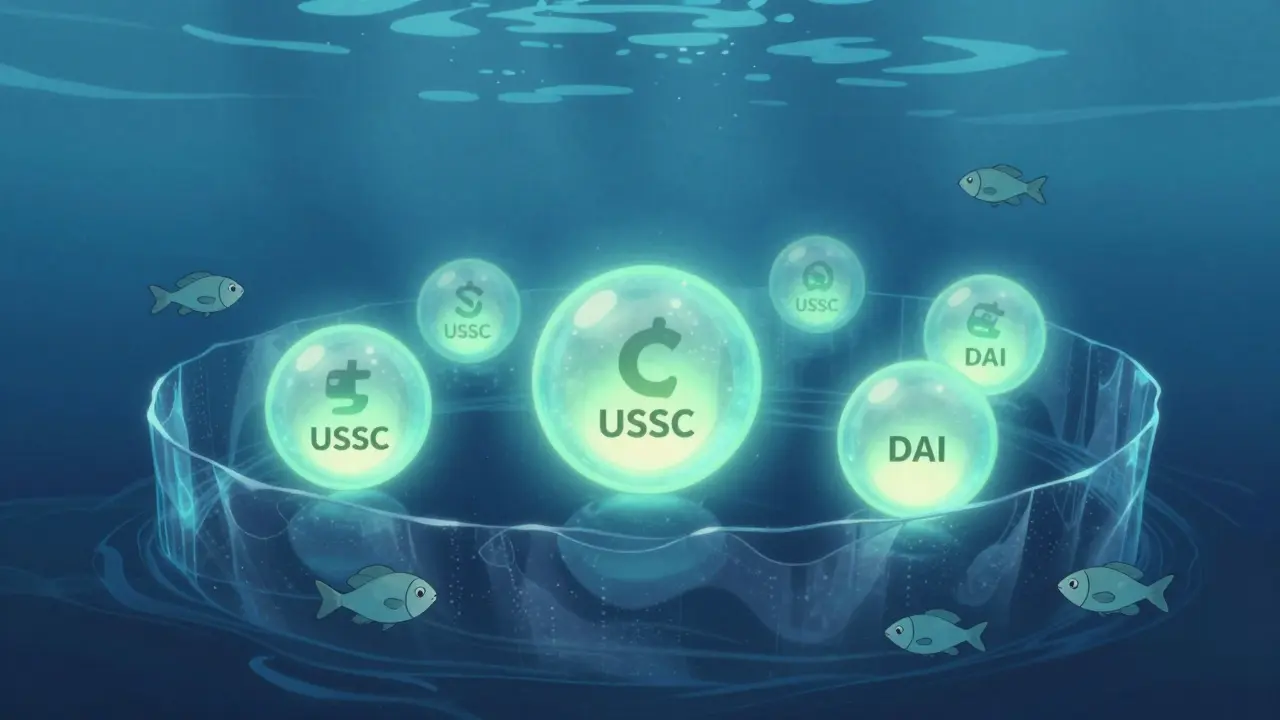
The collateral pool consists entirely of high-quality stablecoins such as USDC, DAI, USDT, and BUSD. These assets are deployed into lending protocols and liquidity pools on-chain. By avoiding exposure to volatile assets like Bitcoin or Ethereum directly, the protocol aims to minimize risk. Their goal is to stay "3-4 sigmas away from zero," a statistical term meaning they select strategies with a very low probability of loss under normal market conditions.
Crucially, USD+ avoids algorithmic stablecoins. After the collapses of Terra/Luna and other similar projects, the industry learned hard lessons about relying on complex math rather than real collateral. USD+ is fully backed 1:1 by these established stablecoins, providing a layer of safety that pure algorithmic models lack.
Why Optimism?
Overnight.fi launched on several chains, including Arbitrum and Polygon, but Optimism holds a special place in their strategy. The project technically deployed on Optimism in August 2022, with a commercial launch shortly after. Since then, Optimism has served as an "innovation hub" for Overnight.fi.
There are practical reasons for this focus. Optimism is a Layer-2 scaling solution for Ethereum, offering fast transactions and low fees. For a product that relies on daily rebasing and frequent interactions, high gas fees would eat up any profits. On Optimism, costs are negligible.
Furthermore, the ecosystem integration is deep. USD+ is heavily integrated into Velodrome and Balancer, two major decentralized exchanges (DEXs) on the network. Liquidity providers can pair USD+ with OP tokens or ETH, earning trading fees plus the inherent yield from the USD+ rebasing. This dual-income stream makes USD+ a powerful tool for capital efficiency within the Optimism DeFi stack.
| Feature | USDC / USDT | Overnight.fi USD+ (Optimism) |
|---|---|---|
| Peg Mechanism | Centralized Reserve | 1:1 Mint/Redeem against USDC |
| Yield Generation | None (unless staked elsewhere) | Built-in via Daily Rebase |
| Collateral Type | Treasuries/Cash Equivalents | On-chain Stablecoins (USDC, DAI, etc.) |
| User Action Required | Manual Staking/Lending | Passive (Balance Grows Automatically) |
| Primary Risk | Counterparty/Regulatory | Smart Contract/Strategy Risk |
Performance and Expected Returns
So, how much can you actually earn? Yields in DeFi fluctuate based on market conditions, liquidity demand, and interest rates. Historically, USD+ has targeted an annual percentage yield (APY) in the range of 8% to 12%. However, this is not guaranteed. Some days might see lower returns if lending markets are saturated, while others could spike during periods of high volatility or liquidity crunches.
Data from mid-2025 shows USD+ maintaining a tight peg around $1.00, with prices oscillating narrowly between $0.999 and $1.001. This stability confirms that the rebasing mechanism is working as intended: absorbing yield into the supply rather than pushing the price away from parity.
For context, traditional US bank savings accounts often offer significantly lower rates, especially before inflation adjustments. While USD+ carries different risks (as discussed below), it provides a competitive nominal return for those comfortable operating in the crypto ecosystem.
Risks You Cannot Ignore
No financial product is risk-free, and USD+ is no exception. Before allocating funds, you must understand three primary areas of concern:
- Smart Contract Risk: Like all DeFi protocols, USD+ relies on code. If there is a bug in the smart contracts governing the minting, rebasing, or collateral management, funds could be lost. To mitigate this, Overnight.fi undergoes regular audits. An audit by EtherAuthority was completed in early January 2026, demonstrating ongoing attention to security. However, past audits do not guarantee future immunity from exploits.
- Collateral Counterparty Risk: USD+ is backed by other stablecoins like USDC and USDT. If one of these underlying assets de-pegs or faces regulatory seizure, the value of the collateral supporting your USD+ could drop. While Overnight.fi diversifies across multiple stablecoins to reduce concentration risk, correlation risk remains.
- Strategy Risk: The "delta-neutral" strategies aim for low risk, but they are not risk-free. Impermanent loss, though minimized in stable-to-stable pools, can still occur in certain liquidity scenarios. Additionally, if the DeFi lending markets where the collateral is deployed fail, the yield generation stops, and principal could be threatened.

Who Should Use USD+?
USD+ is not a speculative coin meant for quick flips. It is a utility asset designed for specific use cases:
- DAO Treasuries: Decentralized organizations holding large amounts of stablecoins can park funds in USD+ to generate passive income without actively managing positions.
- Liquidity Providers: Users providing liquidity on Velodrome or Balancer can use USD+ to earn yield on their base asset while collecting trading fees.
- Conservative Crypto Investors: Those who believe in the long-term growth of crypto but want to avoid the volatility of BTC or ETH can use USD+ as a safer parking spot for capital.
If you are looking for 100x gains, look elsewhere. If you want steady, compounding growth on your stablecoin holdings with minimal effort, USD+ on Optimism is a strong contender.
Getting Started: A Quick Checklist
Ready to try it out? Here is how you can begin using USD+ on Optimism:
- Set Up a Wallet: Ensure you have a compatible wallet like MetaMask or Rabby installed and configured for the Optimism network.
- Acquire USDC: Buy USDC on a centralized exchange and bridge it to Optimism, or swap ETH for USDC directly on a DEX like Velodrome.
- Mint USD+: Visit the official Overnight.fi platform. Connect your wallet and swap your USDC for USD+ at a 1:1 ratio. Confirm the transaction.
- Monitor Growth: Check your wallet balance daily. You should see a slight increase in the number of tokens as the rebase occurs. No further action is needed.
- Optional Deployment: If you want extra yield, consider adding your USD+ to a liquidity pool on Velodrome, pairing it with OP or ETH.
Final Thoughts
Overnight.fi USD+ represents a maturation of the stablecoin sector. It moves beyond simple store-of-value functionality to provide active, automated yield. By leveraging the speed and low cost of Optimism, it offers a seamless experience for users seeking to maximize the efficiency of their capital. While risks exist-particularly regarding smart contracts and underlying collateral-the transparent, audited, and diversified approach of Overnight.fi makes it a credible option for modern DeFi portfolios.
Is Overnight.fi USD+ safe?
Like any DeFi product, it carries risks. It is not insured like a bank account. However, it uses fully collateralized, delta-neutral strategies and has undergone security audits, including one by EtherAuthority in 2026. The main risks are smart contract bugs and the stability of the underlying collateral assets like USDC and DAI.
How do I claim my yield from USD+?
You do not need to claim anything manually. USD+ uses a rebasing mechanism. This means the number of tokens in your wallet increases automatically every day to reflect the accrued yield. Your balance simply grows while the price stays near $1.
Can I lose money holding USD+?
Yes. If the underlying collateral assets (like USDC or USDT) lose their peg to the dollar, or if a smart contract exploit occurs, you could lose value. Additionally, if you trade USD+ during a rebase event, you might buy at a slightly inflated price before the next adjustment, resulting in a small immediate loss.
Why is USD+ specifically popular on Optimism?
Optimism offers low transaction fees and fast settlement, which is crucial for a token that rebases daily. Furthermore, Overnight.fi has deeply integrated USD+ into Optimism's top DEXs like Velodrome, allowing users to earn additional incentives in OP tokens when providing liquidity.
What is the difference between USD+ and USDC?
USDC is a standard stablecoin that maintains a $1 value but does not generate yield on its own. USD+ is minted against USDC but automatically invests that capital into low-risk DeFi strategies. As a result, your USD+ balance grows over time due to daily rebasing, whereas your USDC balance remains static unless you manually stake it elsewhere.