24
What is Sender (ASI) Crypto Coin? A Risk Assessment Guide
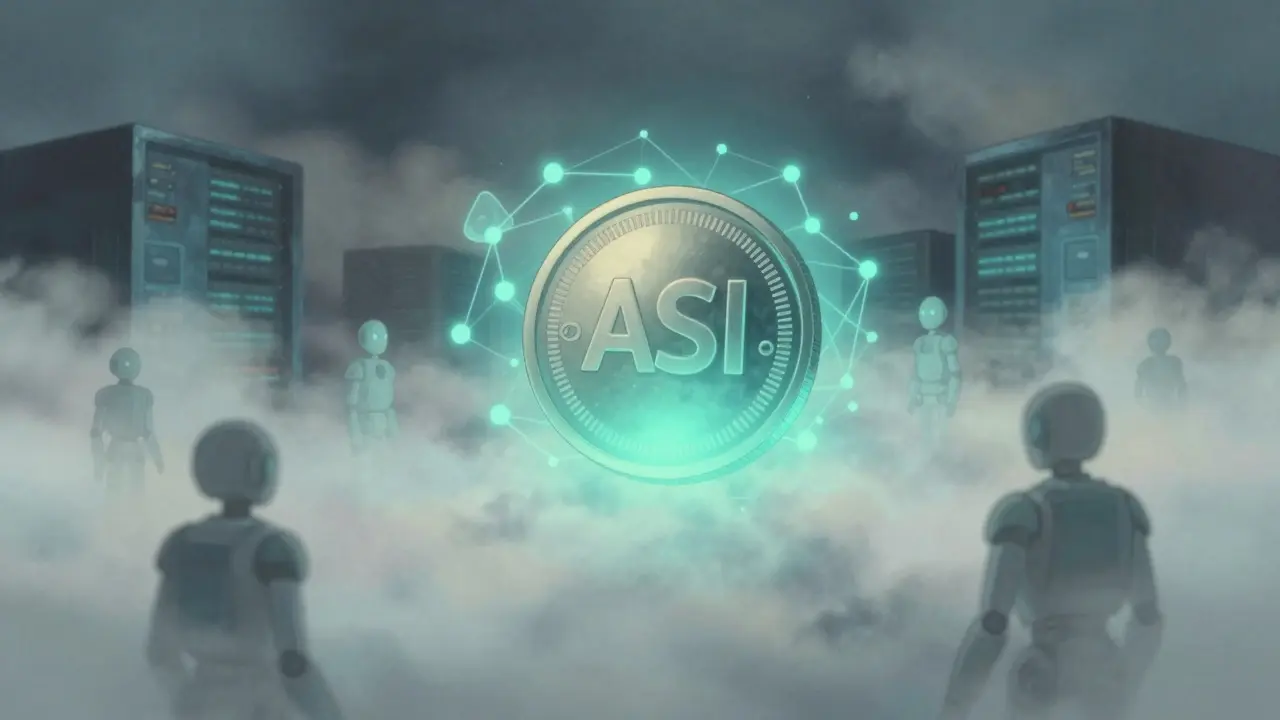
Have you ever stumbled upon a cryptocurrency with a catchy name like "Sender AI" and wondered if it’s the next big thing or just another digital ghost town? It’s a question that keeps many investors up at night. The crypto market is flooded with thousands of tokens, but few are as confusing-or as risky-as Sender AI, also known by its ticker symbol ASI. This token promises to merge artificial intelligence with blockchain technology, yet its actual existence in the real world feels more like a mirage than a solid investment opportunity.
If you’re reading this, you probably want to know one simple thing: Is Sender AI worth your money? The short answer might surprise you. While the project claims to be building a decentralized network for AI agents, the data tells a much grimmer story. From contradictory technical foundations to vanishingly low trading volumes, ASI exhibits nearly every red flag associated with high-risk, speculative assets. Before you even think about clicking "buy," let’s pull back the curtain on what Sender AI actually is, where it stands today, and why experts are largely ignoring it.
The Promise vs. The Reality of Sender AI
On paper, Sender AI aims to create a decentralized application network designed for AI agents within the blockchain ecosystem. The pitch sounds modern and relevant. Everyone wants AI integration these days. The project describes itself as having a dual-layer architecture: an "AI Agent network communication layer" and a "modular blockchain application interaction layer." In theory, this would allow AI bots to transact seamlessly across different blockchains without human intervention.
But here is where things get messy. If you dig into the technical documentation, you’ll find a glaring contradiction that no serious developer team would leave unresolved. One major tracking platform, CoinMarketCap, states that Sender Network is built on the OP Stack and receives support from Near Protocol. Yet, another platform, CoinSwitch, claims ASI is built on the Solana blockchain. How can a single token exist on two completely different infrastructure bases simultaneously? It usually can’t. This discrepancy isn’t just a minor error; it suggests a lack of technical clarity or, worse, a marketing team making up facts as they go along.
Let’s look at the numbers, because they don’t lie. As of late 2025, Sender AI sits at rank #4320 on global crypto rankings. That puts it in the bottom tier of cryptocurrencies. Its market capitalization hovers around $285,550. To put that in perspective, Bitcoin’s market cap is over $200 billion. Sender AI represents a microscopic fraction of the entire industry. When a coin has such a tiny market presence, it means there is very little liquidity. You might buy some ASI, only to find that when you try to sell it, there aren’t enough buyers to take your coins off your hands without crashing the price.
Tokenomics: A Supply Chain Problem
Understanding how many tokens exist is crucial. Sender AI has a total supply capped at 1 billion ASI tokens. However, only about 100 million of those are currently circulating. That means 90% of all ASI tokens are locked away, likely held by the founders, early investors, or venture capitalists. This is a common tactic in questionable projects. By keeping most tokens out of circulation, the current price looks artificially stable. But once those locked tokens are released-a process called vesting-the supply could flood the market, causing the price to plummet further.
| Metric | Value / Status | Risk Level |
|---|---|---|
| Total Supply | 1,000,000,000 ASI | High (Large potential dilution) |
| Circulating Supply | 100,000,000 ASI (10%) | Very High (Low float) |
| Market Cap | ~$285,550 | Extreme (Micro-cap volatility) |
| All-Time High | $0.0776 | N/A |
| Current Price (Est.) | $0.0028 - $0.0030 | Declining Trend |
| 24h Volume | ~$88,460 | Low (Hard to exit positions) |
Look at that table. The gap between the All-Time High of $0.0776 and the current price of roughly $0.0028 is staggering. That is a drop of over 96%. If you had bought ASI at its peak, you have lost almost everything. This isn’t just a "dip"; it’s a collapse. In the crypto world, recovering from a 96% loss requires a 2,400% gain just to break even. Do you really see a path for Sender AI to grow 24x from its current position? Most analysts say no.

The Development Void: Where is the Code?
In software development, code is king. If a project says it’s building something, you should be able to see the code being written. For legitimate blockchain projects, this happens on GitHub, a public repository where developers share their work. When researchers looked for Sender AI’s official GitHub repositories, they found… nothing. No open-source code, no recent commits, no active development logs.
This silence is deafening. GitLive, a service that monitors developer activity, assigns heavy weight to verifiable coding efforts. Without any visible code, how do we know the "AI Agent network" actually exists? It’s possible the product is entirely vaporware-a concept sold to raise funds without any intention of building it. Furthermore, the project’s website lacks technical depth. Instead of detailed whitepapers or API documentation, visitors find basic promotional pages filled with buzzwords. If you’re an engineer looking to build on Sender AI, you’d have nowhere to start.
Community health is another vital indicator. Healthy crypto projects have vibrant communities on Discord, Telegram, and Reddit. They discuss features, report bugs, and debate strategy. Sender AI’s community is virtually non-existent. Their Telegram channel has fewer than 1,500 members, with only a handful of messages per day. On Reddit, discussions about ASI are sparse and often negative. Users describe it as a "classic pump-and-dump" scheme. When the people behind the project aren’t talking, and the users are leaving, it’s time to pay attention.
Comparing ASI to Real AI Cryptos
Why does Sender AI struggle while other AI-themed coins thrive? Let’s compare it to established players in the same sector. Projects like Fetch.ai (FET) and SingularityNET (AGIX) have market caps in the hundreds of millions. They have working products, partnerships with major tech firms, and active developer ecosystems. Sender AI has none of these.
The difference lies in utility. Fetch.ai provides tools for automated machine learning and smart contracts. SingularityNET offers a marketplace for AI algorithms. Sender AI’s utility is vague. It claims to facilitate transactions for AI agents, but since there are no known AI agents using the network, the claim is unverified. Investing in ASI is like buying stock in a car company that hasn’t built a single engine. Meanwhile, competitors are already driving on the road.

Technical Analysis: The Downward Spiral
For those who rely on charts, the picture is equally bleak. Technical indicators measure momentum and trend strength. Currently, ASI is trading below its 50-day Simple Moving Average (SMA) and its 200-day SMA. When a price stays below these lines, it indicates strong bearish pressure-meaning sellers dominate the market. The Relative Strength Index (RSI) sits around 31, which is neutral-to-weak. It shows no sign of a reversal.
Bollinger Bands, which measure volatility, show the price squeezing near the lower band. This often precedes a breakout, but given the lack of news or volume, a downward breakout is more likely than an upward one. Analysts predict further declines, with some models suggesting a drop to $0.0021 in the coming months. With a 30-day volatility rate of nearly 10%, the price swings wildly, but always in a direction that hurts holders.
Regulatory Risks and Future Outlook
Finally, consider the legal landscape. Regulators like the U.S. Securities and Exchange Commission (SEC) have been cracking down on "AI-themed tokens with minimal utility." They view many of these as unregistered securities. Since Sender AI lacks clear utility and transparent governance, it falls squarely into this risky category. If regulators decide to target micro-cap AI tokens, ASI could be delisted from exchanges overnight, trapping investors’ funds forever.
Survival probability models assign Sender AI a mere 12% chance of remaining active beyond 2024. Compare that to the sector average of 47%. Experts warn that without immediate, verifiable progress, the project faces delisting within six to nine months. At that point, the token becomes worthless.
Is Sender AI (ASI) a scam?
While legally proving a "scam" requires court action, Sender AI exhibits many characteristics of fraudulent or failed projects. These include contradictory technical claims (Solana vs. OP Stack), zero visible code on GitHub, extremely low liquidity, and a massive drop in value from its all-time high. Many users label it a pump-and-dump due to its behavior.
Which blockchain is Sender AI built on?
There is conflicting information. Some sources state it uses the OP Stack with Near Protocol support, while others claim it is on Solana. This lack of consistency is a major red flag indicating poor documentation or misleading marketing.
What is the future price prediction for ASI?
Most technical analyses predict further decline. With the price trading well below key moving averages and showing weak momentum, forecasts suggest a continued drop toward $0.0021 or lower. Recovery to previous highs is considered highly unlikely without significant new developments.
Can I still make money investing in Sender AI?
It is extremely risky. The low market cap ($285k) and low volume mean you could easily get stuck holding the bag. Unless you are an expert in high-risk speculation, most financial advisors recommend avoiding micro-cap tokens with no clear utility or development history.
Are there better alternatives to Sender AI?
Yes. If you are interested in AI and blockchain, look at established projects like Fetch.ai (FET), SingularityNET (AGIX), or Render (RNDR). These have higher market caps, active development teams, verifiable code, and real-world use cases, making them significantly safer investments.