21
Wicrypt (WNT) NFT & Device Drop: Airdrop Details, History, and Current Status
Searching for the Wicrypt WNT airdrop details in 2026? You might be feeling a mix of hope and confusion. The crypto world moves fast, and old announcements often get buried under new hype. If you are looking to claim free tokens or devices from the "NFT & Device Drop" campaign, here is the hard truth: that specific event belongs to the past. Understanding what happened, why it ended, and where the project stands today is crucial before you invest any more time or money.
Wicrypt was once one of the most talked-about projects in the decentralized wireless space. It promised a simple idea: share your internet bandwidth using a physical device and earn cryptocurrency rewards. But like many ambitious blockchain ventures, its journey has been complex. This guide breaks down the history of the WNT token distribution, the reality of the hardware drops, and the current state of the network so you can make an informed decision.
The History of the WNT Token Distribution
To understand the current situation, we need to look back at how the Wicrypt Network distributed its native token, WNT. The project did not start with a massive public airdrop in the way many modern meme coins do. Instead, it followed a structured launch process typical of infrastructure projects.
The Token Generation Event (TGE) for WNT concluded on December 5, 2021. This was the moment the tokens officially went live on the blockchain. Prior to this, the team raised $1.5 million in private funding from strategic investors in the blockchain and telecommunications sectors. This capital was intended to fund the development of the hardware and the expansion of the network.
Many users confuse the Initial DEX Offering (IDO) with an airdrop. Wicrypt conducted its IDO on Cardano's OccamRazer platform. While some platforms offer small incentives for participants, this was primarily a sale mechanism, not a free giveaway. The token distribution was designed with vesting schedules to prevent immediate dumping by early investors. One portion of the supply unlocked linearly over two months, while another significant allocation was locked for 36 months. This structure was meant to ensure long-term stability, but it also meant that early adopters had to wait to access their full holdings.
| Date | Event | Significance |
|---|---|---|
| August 2, 2021 | Private Funding Announcement | Raised $1.5M from strategic partners |
| October 7, 2021 | IDO on OccamRazer | Public token sale on Cardano ecosystem |
| December 5, 2021 | TGE Conclusion | WNT tokens officially launched and tradable |
| September 2021 | Regulatory Approval | Preliminary approval from Nigeria's NBC |
The Reality of the "Device Drop" Campaign
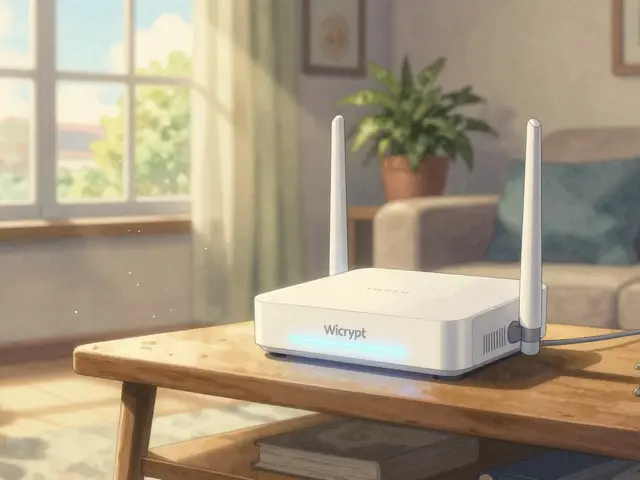
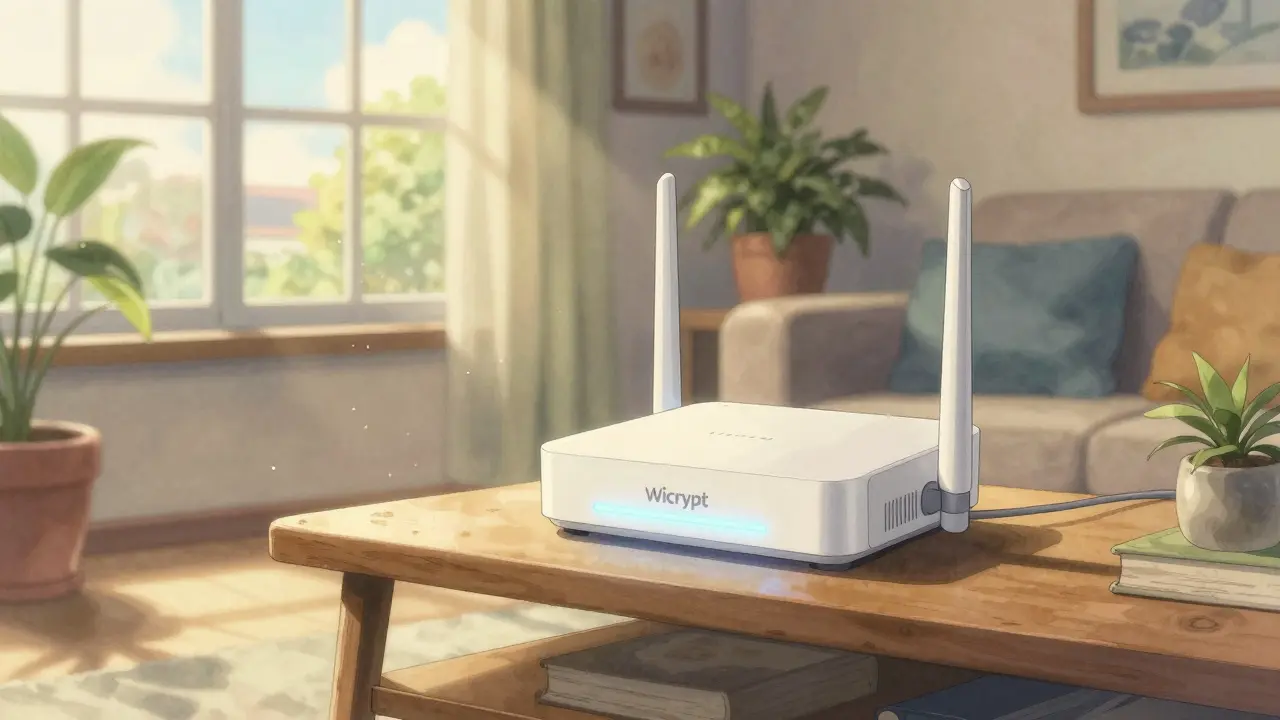
The term "Device Drop" refers to the distribution of Wicrypt's physical hardware routers. These devices were the core of the project's value proposition. Unlike software-only apps, Wicrypt required users to buy a specialized router to participate in the network. At launch, these devices were priced at $99.
Was there an airdrop of these devices? Not exactly. The campaign was more of a promotional sales drive than a free giveaway. Users who purchased the device early received bonuses in WNT tokens, which created the perception of a "drop." However, the hardware itself had to be bought. This model is common in decentralized physical infrastructure networks (DePIN), but it creates a high barrier to entry compared to pure software solutions.
The setup process was straightforward for tech-savvy users. You connected the router to your existing internet connection, and it began sharing unused bandwidth. In return, you earned WNT tokens based on the amount of data shared and the quality of the connection. The protocol used a reputation system to reward reliable nodes. For example, a user in Lagos reported earning approximately $3.50 daily by sharing 200GB of bandwidth monthly. This sounded promising, especially in regions where internet costs are high relative to income.
However, the reality on the ground was mixed. Hardware-dependent projects face unique challenges. Shipping delays were a major complaint, with some users waiting 6-8 weeks for delivery. Once the devices arrived, technical issues arose. Frequent reboots and overheating in tropical climates reduced actual earnings by nearly 40% for some users. These operational hurdles highlight the difficulty of scaling physical infrastructure globally.

Current Status of Wicrypt (WNT) in 2026
If you are reading this in May 2026, you need to know the current status of the project. Unfortunately, the activity levels have dropped significantly since the peak hype of 2021. The WNT token is no longer actively traded on major centralized exchanges. According to CoinGecko's delisted tokens database, the last recorded trading activity occurred in Q2 2022 on decentralized exchanges.
This lack of liquidity is a critical red flag. Without active trading, it becomes difficult to convert earned tokens into fiat currency or other cryptocurrencies. The project's GitHub repository shows minimal activity after March 2022, with the last commit dated March 14, 2022. This suggests a stagnation in development. While the team may still be working behind the scenes, the absence of code updates is concerning for a technology-driven project.
Community engagement has also dwindled. The primary Telegram group, which had around 8,500 members in late 2021, has seen a sharp decline. By October 2025, manual counts showed only about 1,200 active members. Trustpilot reviews from the early days highlighted customer support responsiveness, but the overall rating was modest at 3.2 out of 5. Many negative reviews cited limited geographical availability as the primary issue.
Industry analysts have noted that projects combining physical hardware with blockchain tokenomics face exceptional challenges. Messari's 2023 infrastructure report stated that over 70% of such projects fail to maintain operations beyond 18 months. Delphi Digital's 2024 retrospective analysis rated Wicrypt's chances of recovery at just 12%, citing insufficient hardware adoption and lack of continuous development. While the problem of expensive internet in emerging markets remains unsolved, Wicrypt appears to have struggled to find a sustainable path forward.
Comparing Wicrypt to Other Decentralized Wireless Projects
To put Wicrypt's journey into perspective, it helps to compare it with other players in the decentralized wireless space. Projects like Helium (HNT) and RightMesh (RMESH) have taken different approaches to solving connectivity issues.
Helium, for instance, focused on LoRaWAN technology for IoT devices rather than Wi-Fi for general internet access. This niche focus allowed Helium to scale rapidly, deploying over 500,000 hotspots globally by Q4 2021. Its market capitalization reached $1.2 billion at its peak. In contrast, Wicrypt aimed for broader consumer appeal by offering everyday internet connectivity. However, this broader scope made it harder to compete with established telecom providers in developed markets.
RightMesh took a peer-to-peer mesh networking approach, allowing users to create local networks without relying on traditional infrastructure. This model is less dependent on centralized hardware sales but requires dense user populations to function effectively. Wicrypt's reliance on individual home routers placed the burden of infrastructure on each user, which slowed down network growth.
| Feature | Wicrypt (WNT) | Helium (HNT) | RightMesh (RMESH) |
|---|---|---|---|
| Technology Focus | Wi-Fi Bandwidth Sharing | LoRaWAN for IoT | Peer-to-Peer Mesh |
| Hardware Requirement | Specialized Router ($99) | Hotspot Devices | Standard Mobile Devices |
| Peak Market Cap | Modest (Undisclosed) | $1.2 Billion (2021) | Low Single Digits |
| Primary Market | Nigeria/Africa | Global (USA/Europe) | Urban Areas Globally |
| Current Activity | Low/Stagnant | High/Active | Moderate/Niche |

Risks and Challenges for Participants
If you are still holding WNT tokens or considering buying hardware, it is essential to understand the risks involved. The first risk is liquidity. With the token delisted from major exchanges, selling your holdings can be difficult and may result in significant losses due to low volume and wide spreads on decentralized exchanges.
The second risk is hardware obsolescence. Blockchain technology evolves rapidly. If the Wicrypt network does not receive regular software updates, your device may become incompatible with newer protocols or security standards. Additionally, the physical wear and tear on the router, combined with potential overheating issues, means the hardware has a limited lifespan.
Regulatory uncertainty is another factor. While Wicrypt secured preliminary approval from Nigeria's National Broadcasting Commission, regulations around decentralized networks vary widely across countries. Changes in telecommunications laws could impact the ability to operate these devices legally in certain regions.
Finally, there is the opportunity cost. Time and money spent on a stagnant project could be invested in more active ecosystems. The decentralized wireless sector continues to evolve, with new projects launching regularly. Staying informed about the latest developments can help you identify better opportunities.
What Should You Do Next?
If you participated in the early Wicrypt campaigns, here are some practical steps to consider. First, audit your holdings. Check your wallet balance and verify if any tokens are still accessible. If you have hardware, assess its condition and whether it is still generating any revenue. Keep in mind that earnings may be negligible given the reduced network activity.
Second, stay cautious of scams. As projects lose momentum, scammers often target remaining community members with fake airdrops or recovery services. Never share your private keys or seed phrases with anyone claiming to help you recover assets. Official communications should come through verified channels only.
Third, explore alternative projects. If you are interested in decentralized wireless or DePIN sectors, look for projects with active development teams, transparent metrics, and strong community engagement. Research their tokenomics, hardware requirements, and regulatory compliance before investing time or money.
Lastly, document your experience. Your insights as an early participant can be valuable to others researching the history of decentralized infrastructure projects. Sharing your findings on forums or social media can help build a more accurate picture of the industry's evolution.
Is the Wicrypt WNT airdrop still active in 2026?
No, the Wicrypt WNT airdrop and associated "Device Drop" campaigns are no longer active. The primary token distribution occurred during the TGE in December 2021, and subsequent promotions were part of the initial launch phase. Current activity on the project is minimal.
Can I still trade WNT tokens?
Trading WNT tokens is extremely difficult. The token is no longer listed on major centralized exchanges. Any remaining trading activity occurs on decentralized exchanges with very low liquidity, which can lead to significant price slippage and loss of value when attempting to sell.
Did Wicrypt give away free devices?
Wicrypt did not give away free devices. The "Device Drop" referred to a promotional campaign where users purchased specialized routers for $99 and received bonus WNT tokens. The hardware itself had to be bought, and shipping delays were common during the initial rollout.
Why did Wicrypt's activity decline?
Several factors contributed to the decline, including challenges in scaling physical hardware, limited geographical coverage, and intense competition from established projects like Helium. Development activity on GitHub stalled after March 2022, and community engagement dropped significantly, leading to a lack of momentum.
Are there similar active projects today?
Yes, the decentralized wireless sector continues to grow. Projects like Helium (now split into Helium Mobile and Helium IoT) remain active with large networks. Newer DePIN projects are also emerging, focusing on various aspects of connectivity and infrastructure. Always research current projects thoroughly before participating.