1
Bitcoin and Crypto Adoption in Venezuela: Survival Amid Economic Crisis
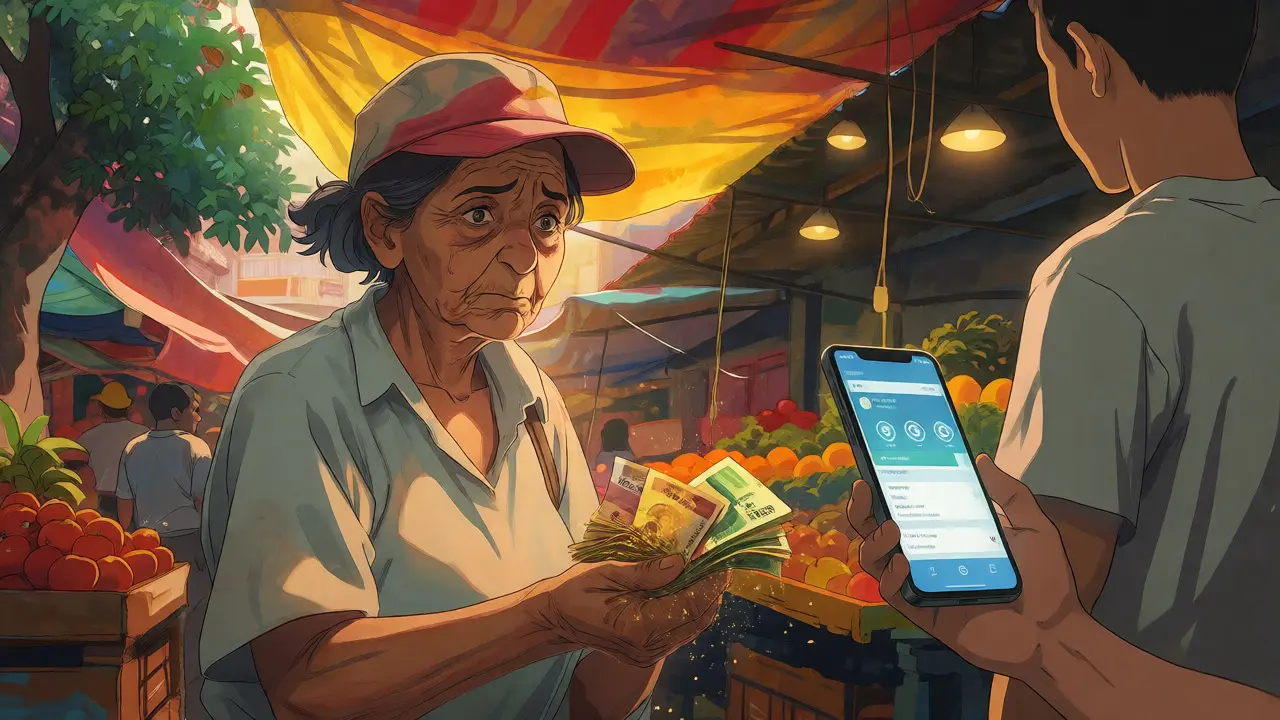
Imagine waking up to find your salary has lost half its purchasing power before you’ve even finished breakfast. For millions of Venezuelans, this isn’t a hypothetical nightmare; it’s Tuesday. While the rest of the world debates whether Bitcoin is digital gold or speculative bubble, Venezuelans have skipped the philosophy and gone straight to survival. They aren’t buying crypto to get rich-they’re buying it to eat.
The story of cryptocurrency in Venezuela is unique because it wasn’t driven by hype or tech enthusiasts. It was forced upon the population by an economic collapse so severe that traditional money became meaningless. With inflation hitting staggering levels and the local currency, the bolívar, losing value daily, citizens turned to digital assets as a lifeline. This article breaks down exactly how this shift happened, why stablecoins dominate over Bitcoin, and what it means for the future of finance in crisis-hit nations.
Why Venezuelans Turned to Digital Assets
You might ask, why not just use dollars? Historically, cash dollars were king in Venezuela. But physical dollar shortages, strict government controls on foreign exchange, and U.S. sanctions made accessing hard currency incredibly difficult. Banks couldn’t process international transfers easily, and getting your hands on actual greenbacks often meant paying huge premiums on the black market.
Cryptocurrency offered a workaround. It didn’t require a bank branch that might be closed due to political unrest. It didn’t need physical paper bills that could run out. It just needed an internet connection and a smartphone. According to economist Aarón Olmos, this shift wasn’t ideological-it was practical. People started using crypto because their wages were worthless, banks were unreliable, and they needed a way to preserve whatever value they had left.
The numbers back this up. The Venezuelan Finance Observatory reported annual inflation rates exceeding 200% in recent years. When your money evaporates that fast, holding onto it feels like trying to hold water in a sieve. Digital assets, particularly those pegged to the U.S. dollar, stopped being an investment option and became a necessity.
The Dominance of Stablecoins Over Bitcoin
Here is a common misconception: when people hear "crypto," they think Bitcoin. But if you walk into a shop in Caracas today, you are far more likely to see QR codes for Tether (USDT) than Bitcoin addresses. Why?
Stablecoins like Tether (USDT) offer the stability of the U.S. dollar with the speed of blockchain technology. Bitcoin is volatile. Its price can swing 5-10% in a day. If you are buying groceries, you don’t want the price of your milk to change while you are standing at the counter. You want certainty. USDT provides that certainty because it is pegged 1:1 to the USD.
Locals often refer to USDT as "Binance dollars" because the majority of these transactions happen through the Binance platform. This preference for stability over speculation highlights a key difference between Western crypto culture and the Venezuelan experience. In the U.S., people buy Bitcoin hoping it goes up. In Venezuela, people buy USDT hoping it stays equal to the dollar while the bolívar crashes.
| Feature | Bitcoin (BTC) | Stablecoins (USDT) |
|---|---|---|
| Primary Use Case | Long-term savings / Speculation | Daily transactions / Salary storage |
| Volatility | High (Price fluctuates significantly) | Low (Pegged to USD) |
| Transaction Speed | Slow (10-60 mins confirmation) | Fast (Under 2 mins on Tron network) |
| Adoption Rate | Niche among investors | Widespread among general public |

How P2P Trading Replaced Traditional Banking
If banks are failing, who processes the payments? The answer is Peer-to-Peer (P2P) trading platforms. These digital marketplaces allow users to trade directly with each other, bypassing traditional financial institutions entirely.
Binance P2P is the undisputed leader here, controlling roughly 63% of the market share. Here is how it works in practice: A worker receives their salary in bolívars. They log into Binance, sell their bolívars to another user who wants to buy them, and receive USDT in return. No bank transfer is needed. The transaction happens on the blockchain, but the settlement is instant enough for daily life.
This system effectively created a parallel banking sector. Since U.S. sanctions restrict many Venezuelan banks from interacting with global financial systems, P2P platforms became the bridge. They allowed citizens to access global liquidity without needing a visa-approved bank account. Other platforms like LocalBitcoins and Airtm also play roles, but Binance’s dominance is overwhelming due to its high liquidity and Spanish-language support.
The Human Side: Stories from the Ground
Data tells us about volume, but stories tell us about impact. Take Victor Sousa, a resident of Caracas. He uses USDT to buy phone accessories and pays his rent in crypto. "It is much more reliable than the bolívar," he notes. For him, and thousands like him, crypto isn’t a hobby; it’s the only way to participate in the economy.
Remittances are another critical area. Millions of Venezuelans live abroad, sending money home to family members. Traditionally, services like Western Union charged high fees and took days. Now, a significant portion of remittances flows through crypto channels. By 2023, nearly 9% of all remittance inflows-amounting to hundreds of millions of dollars-came via cryptocurrency. This allows families to receive funds instantly and convert them to stable value immediately, protecting them from overnight devaluation.
However, it’s not all smooth sailing. Internet connectivity remains a hurdle. Venezuela ranks poorly in global internet speed indices, averaging around 14 Mbps. For rural populations, getting online to check prices or complete a transaction can be a struggle. Additionally, technical glitches during network congestion can leave users waiting hours for transactions to confirm, creating anxiety when you are trying to buy food.

Government Stance: Confusion and Contradiction
You would think a government facing such a crisis would embrace tools that stabilize the economy. Instead, the Venezuelan state’s approach has been erratic. In 2018, the government launched its own cryptocurrency, the Petro, claiming it was backed by oil reserves. It largely failed, collapsing under allegations of corruption and lack of trust.
Meanwhile, the private sector continued to adopt Bitcoin and USDT regardless of government approval. The regulatory environment is murky. There is a law recognizing crypto assets, but enforcement is inconsistent. At times, the government cracks down on exchanges; at others, it ignores them. This uncertainty creates risk. Users worry that regulations could change overnight, potentially freezing accounts or banning specific platforms.
Economists warn that relying on crypto is a symptom of deeper structural failures. As Professor Carlos Hernández from the University of Zulia puts it, "Crypto adoption in Venezuela is a symptom of economic failure, not a solution." It patches the hole, but it doesn’t fix the ship. If the bolívar stabilizes, will people still want to deal with the complexity of crypto? Many suspect they won’t.
Risks and Challenges Ahead
While crypto has saved many Venezuelans from total financial ruin, it comes with distinct risks that outsiders often overlook.
- Centralization Risk: Most Venezuelans use USDT, which is issued by Tether Limited. If Tether faces regulatory trouble in the U.S. or loses its peg, Venezuelan savers lose their primary asset.
- Sanctions Exposure: U.S. sanctions can target specific wallets or platforms. If a major exchange like Binance restricts service to Venezuelan IPs or linked bank accounts, millions could be locked out of their funds.
- Technical Barriers: Not everyone is tech-savvy. Older generations struggle with wallet management. Losing a password or seed phrase means losing your money forever-there is no customer service hotline to call in a panic.
- Volatility Spreads: Converting crypto to local currency (or vice versa) involves spreads. During high demand, you might lose 3-4% just in the exchange rate difference, eating into already thin margins.
Despite these risks, the momentum seems unstoppable. With inflation projected to remain high until at least 2027, the incentive to hold dollars-or digital proxies of them-remains strong. Crypto has transitioned from a niche experiment to a fundamental part of the Venezuelan economic infrastructure.
Is Bitcoin legal tender in Venezuela?
Technically, yes, under the 2020 Crypto Assets Law, but it is rarely used for direct purchases. Most commerce relies on stablecoins like USDT rather than Bitcoin itself due to Bitcoin's price volatility.
Which cryptocurrency do Venezuelans use most?
Tether (USDT) is the dominant cryptocurrency. It is preferred because it maintains a 1:1 peg with the U.S. dollar, offering stability against the hyperinflationary bolívar.
How do Venezuelans buy crypto without banks?
They primarily use Peer-to-Peer (P2P) platforms like Binance P2P. These allow users to trade directly with other individuals, transferring bolívars via local bank apps or cash deposits in exchange for crypto sent directly to their digital wallets.
What are the main risks of using crypto in Venezuela?
Key risks include reliance on centralized issuers like Tether, potential restrictions due to U.S. sanctions, poor internet connectivity causing transaction delays, and the learning curve for non-tech-savvy users.
Did the government's Petro cryptocurrency succeed?
No, the Petro largely failed to gain widespread adoption. It suffered from credibility issues, lack of transparency regarding its oil backing, and competition from more trusted private cryptocurrencies like USDT.

![CPR Cipher [Old] 2021 Airdrop: What Happened and Is It Safe?](/uploads/2026/06/thumbnail-cpr-cipher-old-2021-airdrop-what-happened-and-is-it-safe.webp)