25
Crypto Arrests and Enforcement in Afghanistan: The Taliban's Crackdown Explained
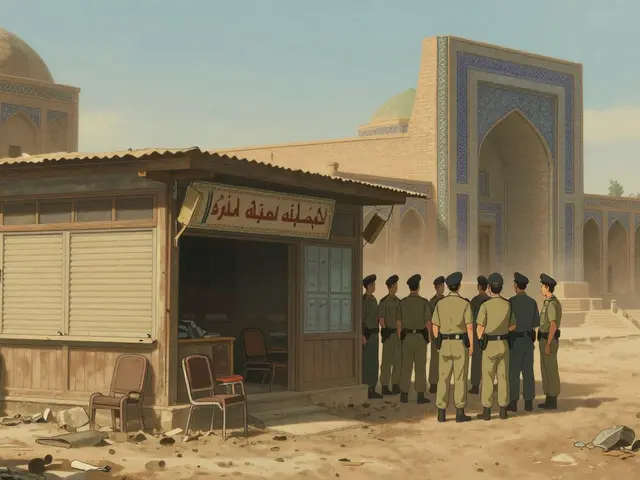
Imagine trying to send money to your family across the border, only to find that the banks are frozen, the wires are cut, and the digital wallets you rely on are now illegal. This is the reality for millions of people in Afghanistan. What started as a lifeline for ordinary citizens has turned into a high-stakes game of cat and mouse with the authorities.
In recent years, we have seen a dramatic shift. After taking control in August 2021, the Taliban regime initially looked the other way while crypto adoption surged. But by 2022 and 2023, the mood changed. The government launched aggressive enforcement actions, shutting down businesses and arresting traders. Today, holding or trading cryptocurrency can land you in prison. If you are looking at the situation from outside, it looks like a simple ban. But if you live there, it’s a matter of survival versus punishment.
The Sudden Shift: From Lifeline to Crime
To understand why the arrests are happening now, we need to look back at what happened right after the takeover. When the traditional banking system collapsed due to international sanctions, people didn't just stop moving money-they found another way. They turned to cryptocurrency.
Data from Chainalysis shows that between July 2020 and June 2021, on-chain transaction values in Afghanistan exceeded $962 million. In fact, the country ranked 20th globally for grassroots crypto adoption. Why? Because regular bank accounts were frozen. Assets were locked. For many families, Bitcoin and stablecoins like USDT (Tether) were the only way to receive remittances from relatives abroad or pay for basic needs.
But this independence threatened the central authority. By June 2022, the Da Afghanistan Bank (the central bank) issued a formal ban. A spokesman told Bloomberg that online foreign exchange trading was "illegal and fraudulent" and had no basis in Islamic law. This wasn't just a warning; it was a regulatory foundation for the crackdowns that followed. The confusion was real-some thought it only applied to large exchanges, but the net cast by the authorities quickly widened to include anyone facilitating these trades.
Herat Province: The Epicenter of Enforcement
If you want to see where the rubber meets the road, look at Herat province. As the third-largest city in Afghanistan and a major trading hub near the Iranian border, Herat became the testing ground for the new strict policies.
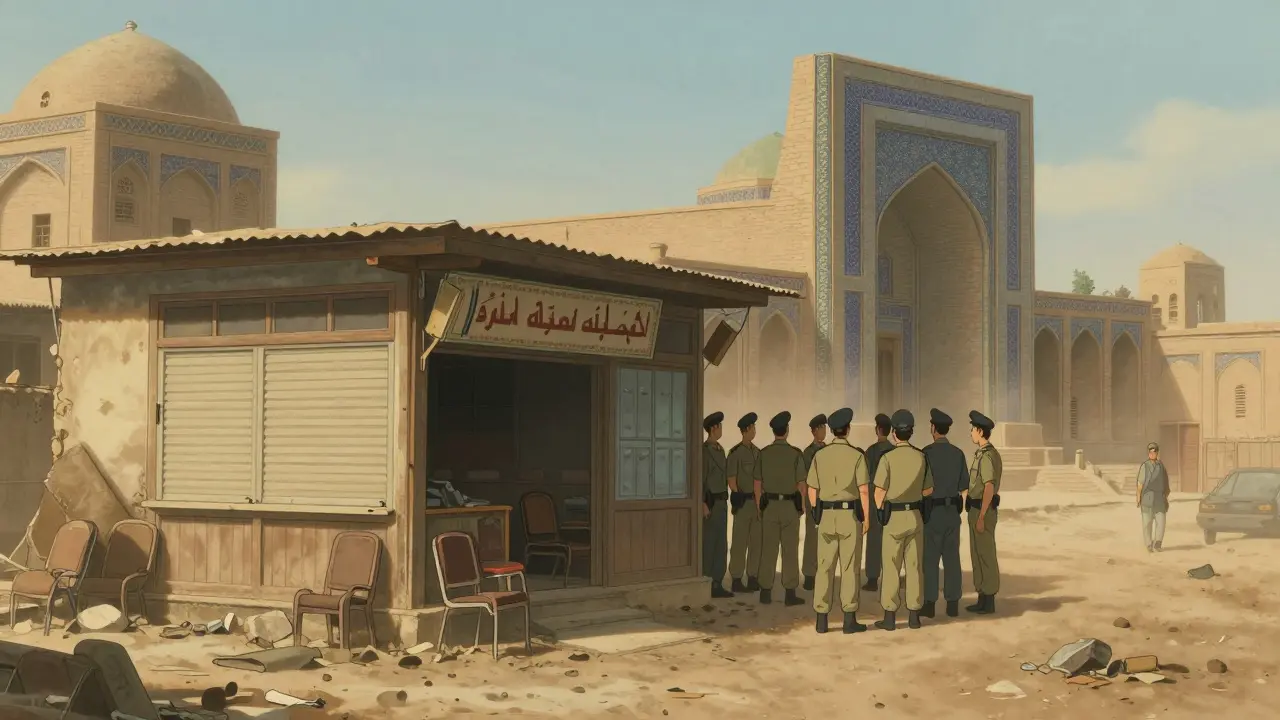
In September 2023, police forces in Herat shut down 16 cryptocurrency exchanges. Sayed Shah Sa'adat, the head of the police's counter-crime unit there, publicly confirmed these closures. He stated clearly that digital currency trading was causing problems and scamming people. But it wasn't just about closing shops. It was about making an example.
Here is what the enforcement looks like on the ground:
- Business Closures: By August 2022, more than 20 crypto-related businesses were shut down in Herat alone. This represented a massive drop from the estimated 40-50 active exchanges operating during the peak of 2021.
- Arrests and Detention: In May 2023, eight traders were arrested in Herat and detained for 28 days in the central prison. Authorities indicated that continued violations could lead to sentences of up to six months.
- Bail and Release: While some were jailed, others, like the 13 people mentioned by Mr. Saadaat, were released on bail. However, the financial cost of bail and the loss of business income often devastated these traders regardless of their eventual release.
This pattern suggests a strategy of attrition. The goal isn't just to punish individuals but to dismantle the infrastructure that allows money to move outside state control.
| Date | Action | Impact |
|---|---|---|
| August 2021 | Taliban Takeover | Banking collapse leads to surge in crypto adoption. |
| June 2022 | Central Bank Ban | Crypto trading declared "illegal and fraudulent." |
| August 2022 | Herat Crackdown Begins | Over 20 businesses closed; initial arrests made. |
| May 2023 | Imprisonment Escalation | Traders detained for 28 days; threats of 6-month sentences. |
| September 2023 | Mass Exchange Shutdowns | 16 exchanges shut down in Herat; staff arrested. |

The Human Cost: Survival vs. Law
Behind every statistic is a person trying to feed their family. The humanitarian crisis in Afghanistan is severe. According to UNICEF, over one million children were at risk of severe malnutrition in 2023. In this context, banning cryptocurrency isn't just a financial regulation-it’s a barrier to food and medicine.
Consider the story of a trader who spoke to Coinspeaker. Before the ban, he earned a modest 1-2% margin on USDT transactions. It wasn't a fortune, but it was enough to support his household. After the crackdown, he lost his livelihood. "I could no longer afford to feed my family," he said. Another citizen explained that his entire family’s survival depended on Bitcoin remittances from his brother in the United States. "There's no other way," he admitted, acknowledging the personal risk he took every time he transferred funds.
This creates a paradoxical situation. The World Bank reported in April 2023 that 97% of Afghans live below the poverty line. The very people who need financial tools the most are being punished for using them. International aid organizations had even tried to use crypto to help. For instance, the Women's Entrepreneurship Day Organization (WEDO) partnered with Opengrants.io to distribute weekly food payments in cryptocurrency to 100,000 women. These initiatives were halted or severely hampered by the regulatory environment.
Religious Rationale and Counterterrorism Concerns
Why is the Taliban so opposed to crypto? The official justification rests on two pillars: religious law and national security.
From a religious standpoint, authorities cite prohibitions against gharar (uncertainty) and gambling. Some Islamic scholars argue that because cryptocurrencies are volatile and lack intrinsic value, they resemble gambling. However, this view is not universal among Islamic finance experts. Many fatwas (religious rulings) from other countries consider Bitcoin permissible if used responsibly. The Taliban’s interpretation is stricter, declaring any approval of such assets absent from Islamic law.
Then there is the security angle. The Islamic State Khorasan Province (ISKP), a rival militant group, has been linked to cryptocurrency usage. TRM Labs’ 2025 Crypto Crime Report highlights growing concerns about ISKP using crypto for financing, including transactions linked to attacks in Moscow and the UK. While this provides a legitimate counterterrorism reason for scrutiny, the Taliban’s enforcement appears broad rather than targeted. Instead of focusing solely on terrorist networks, they are netting ordinary citizens who are simply trying to survive.

What Happens to Your Assets?
If you are arrested, what happens to your crypto? This is one of the biggest fears for traders. The information is conflicting, which adds to the anxiety.
Some detainees told Crypto.news that their digital assets were not seized during arrest. Others report that the Taliban has confiscated all holdings from arrested traders. This ambiguity is dangerous. In a regulated market, you know the rules. Here, the rule of law is replaced by the discretion of local officials. Whether you keep your wallet keys or lose everything depends largely on who you talk to and where you are located.
Furthermore, the crackdown has driven activity underground. Precise measurements of current crypto usage are difficult because users have shifted to discreet peer-to-peer (P2P) transactions and privacy-focused tools. This doesn't mean the demand has disappeared; it means it has gone invisible. Experts suggest that driving crypto underground increases the risks of fraud and criminal activity, ironically undermining the safety goals of the ban.
Will the Ban Hold?
The long-term viability of this ban is questionable. Afghanistan remains financially isolated. With 97% of the population in poverty and limited access to global banking, the economic incentives to circumvent restrictions are powerful. Money finds a way.
International monitoring groups like Chainalysis and TRM Labs warn that the crackdown may not eliminate crypto use but will instead push it deeper into the shadows. This deprives ordinary citizens of a vital financial tool while potentially increasing exposure to scams and illicit actors. For the average Afghan, the choice isn't between legal compliance and crime-it's between starvation and risk.
As of mid-2026, the situation remains tense. The Taliban continues to enforce its ban, but the underlying economic conditions that drove crypto adoption in the first place have not changed. Until the banking system is restored or international sanctions are lifted, cryptocurrency will remain a necessary evil for many, despite the very real threat of arrest.
Is cryptocurrency completely banned in Afghanistan?
Yes, effectively. The Da Afghanistan Bank declared online foreign exchange and cryptocurrency trading illegal in June 2022. While enforcement varies by region, the legal status is prohibited, and engaging in trade can lead to fines, asset seizure, or imprisonment.
How long can you be imprisoned for crypto trading in Afghanistan?
Authorities have indicated potential sentences of up to six months for continued violations. In documented cases, such as those in Herat in May 2023, traders were detained for 28 days, though some were later released on bail.
Why did Afghanistan have high crypto adoption before the ban?
After the Taliban takeover in 2021, international sanctions froze Afghan bank accounts and assets. Cryptocurrency became the primary method for receiving remittances from abroad and conducting daily transactions, leading to a surge in grassroots adoption.
Are crypto assets seized when someone is arrested?
Reports are inconsistent. Some detainees claim their assets were not taken, while others report full confiscation by Taliban authorities. The lack of clear legal procedure means outcomes depend heavily on local enforcement discretion.
What is the role of Herat province in the crypto crackdown?
Herat has been a focal point for enforcement. Due to its location near the Iranian border and status as a major trading hub, it saw significant action, including the shutdown of 16 exchanges and multiple arrests in 2023.