24
LakeBTC Review 2026: Fees, Security & Withdrawal Risks
Imagine logging into a platform that promises low fees and peer-to-peer freedom, only to find your withdrawal request stuck in 'pending' for over a month. That is the reality many users have faced with LakeBTC, a peer-to-peer cryptocurrency exchange founded in 2013 that primarily serves Asian markets. While it once positioned itself as a major player, the landscape has shifted dramatically since its early days. If you are considering moving funds here or wondering if it is still safe, you need more than just the marketing claims. You need to know what is actually happening behind the scenes.
This review cuts through the noise to give you the straight facts on LakeBTC in 2026. We will look at the real costs, the security setup, and the red flags that might keep you up at night. By the end, you will have a clear picture of whether this exchange fits your needs or if you should stick to the bigger, more established platforms.
The Core Facts: What LakeBTC Actually Is
At its heart, LakeBTC operates differently from the giants like Binance or Coinbase. It is a P2P exchange, meaning you trade directly with other users rather than against the platform's order book. This model was popular in the early days of crypto for its simplicity and lower entry barriers. However, it also means the platform acts more as a middleman for trust than a liquidity provider.
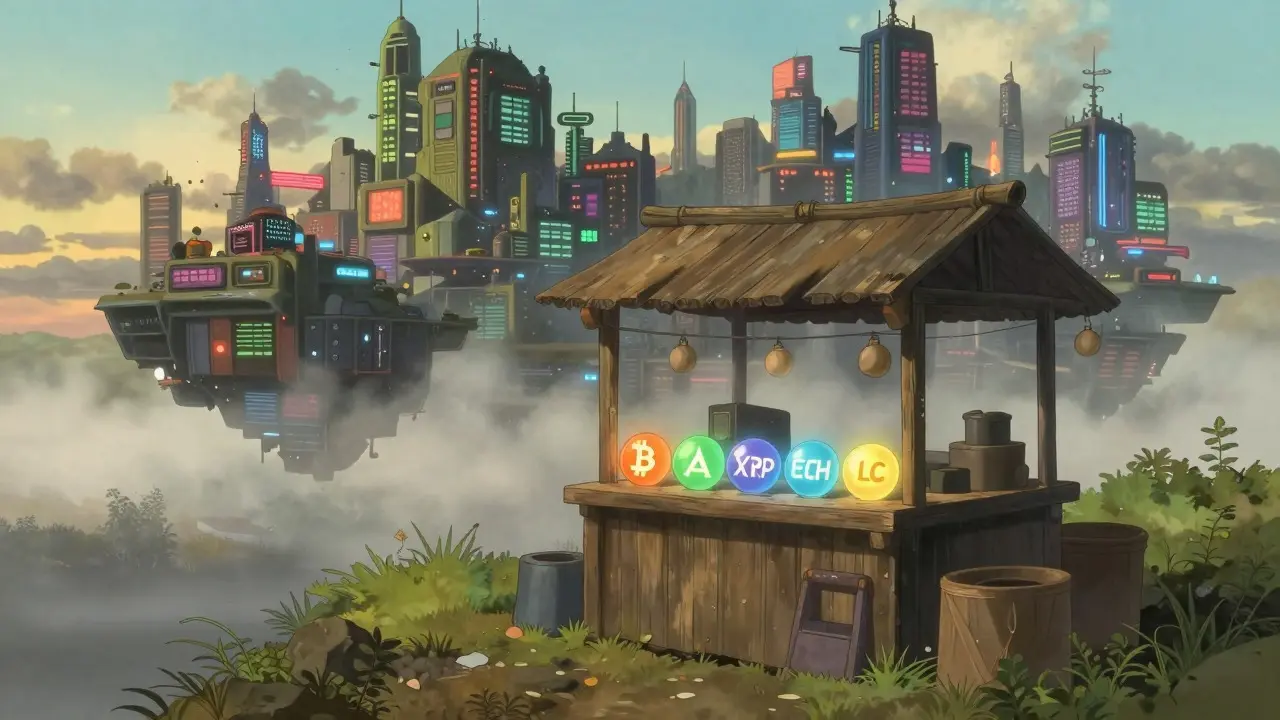
Founded in 2013, the exchange has seen better times. It currently supports only five cryptocurrencies: Bitcoin (BTC), Ethereum (ETH), Ripple (XRP), Bitcoin Cash (BCH), and Litecoin (LTC). Compare that to Coinbase, which offers over 235 coins, or Kraken with 350+. If you are looking to diversify your portfolio with altcoins, LakeBTC is going to feel extremely restrictive. It is essentially a utility vehicle for moving these specific five assets, not a full-service investment hub.
| Feature | LakeBTC | Binance | Coinbase |
|---|---|---|---|
| Supported Coins | 5 | 400+ | 235+ |
| Taker Fee | 0.20% | 0.10% - 0.60% | 0.60% - 1.00% |
| 24h Volume (Approx) | $4.5M | $10B+ | $2B+ |
| Social Media Activity | Inactive since 2017 | Daily Updates | Daily Updates |
| Support Channels | Email Only | Live Chat + Email | Live Chat + Phone |
Fees and Trading Costs: The Good and the Bad
Let’s talk money, because that is usually why people choose an exchange. On paper, LakeBTC looks competitive. The taker fee is 0.20%, and the maker fee is 0.15%. For context, the industry average for takers hovers around 0.25%. So, you are saving a few basis points compared to the standard rate. If you are a high-volume trader moving large amounts of BTC or ETH, those small savings can add up over time.
However, fees are just one part of the equation. Withdrawal fees matter just as much. Currently, withdrawing Bitcoin costs 0.001 BTC. Depending on the current price of Bitcoin, that could be anywhere from $50 to $100+ per transaction. If you are making smaller withdrawals, this fixed cost eats into your profits significantly. Plus, depositing via credit card often carries higher fees than wire transfers, so you need to check the specific rates for your region before you commit.
One thing to note is that LakeBTC used to offer zero fees during its early years. That changed after regulatory pressures, particularly following China’s 2017 exchange ban. Now, the fees are standard, but they lack the tiered structure found on competitors. You pay 0.20% whether you move $100 or $100,000. For institutional traders, this flat rate might feel less flexible than volume-based discounts offered by larger platforms.
Security and Fund Safety: Where Do Your Assets Go?
When dealing with any crypto exchange, the big question is: "Will I get my money back?" LakeBTC claims to store 95% of user funds in cold wallets. Cold storage means the keys are kept offline, away from hackers. This is a solid security practice and aligns with what reputable exchanges do. They also use two-factor authentication (2FA) and SMS confirmations for sensitive transactions, which adds another layer of protection for your account access.
But security isn't just about hacking; it's about operational reliability. Here is where things get tricky. Recent user reports from forums like Bitcointalk indicate significant delays in processing withdrawals. One user reported a Bitcoin withdrawal submitted in October 2022 was still pending in November. Another mentioned issues with executing withdrawals unless they 'reminded' the team. If your funds are stuck in a pending state for weeks, even if they are technically safe in a cold wallet, you don't have access to them. That is a functional failure, not just a security one.
Furthermore, the lack of active social media presence raises eyebrows. The official Twitter account hasn't tweeted since October 2017. In today's fast-moving crypto market, silence can mean neglect. While the website news section shows updates as recently as March 2025, the gap between then and now suggests minimal ongoing maintenance. You are trusting a platform that seems to be running on autopilot.

User Experience and Support: A Dated Interface
Logging into LakeBTC feels like stepping back in time. The interface is functional but undeniably dated. Reviews from 2023 described it as 'somewhat dated' and needing significant UI/UX updates. For new users, this can create friction. The registration process requires basic KYC documentation, which reportedly takes 24-48 hours for verification. That is slower than instant sign-ups on modern apps, but acceptable for most.
The real pain point, however, is customer support. There is no live chat. There is no phone line. You have email only. And based on user experiences, response times can exceed 72 hours. Imagine having a critical issue with a trade or a withdrawal, and waiting three days just to hear back. In a volatile market, that delay can cost you real money. Larger exchanges invest heavily in support teams to minimize this risk, but LakeBTC appears to be operating with a lean, perhaps under-resourced, team.
On the positive side, the OTC (Over-The-Counter) service interface is noted as being well-designed for institutional traders. If you are moving very large sums and prefer to negotiate directly with a counterparty, this feature works well. But for the average retail investor, the lack of advanced order types and the slow support make it a less attractive option.
Market Position and Long-Term Viability
Where does LakeBTC stand in 2026? Honestly, it has fallen off the radar of major rankings. As of July 2025, it wasn't even listed in the top 25 global exchanges by Koinly. Its 24-hour trading volume sits around $4.5 million. To put that in perspective, Binance processes billions daily. Less than 0.1% of the market share is a tough position to hold.
The crypto market has consolidated. The top 10 exchanges now control 85% of global trading volume. This consolidation favors platforms with strong regulatory compliance, massive liquidity, and active development roadmaps. LakeBTC lacks all three. Industry analysts suggest that exchanges without active development and strong compliance face a high probability of exiting the market within three years. With no visible roadmap and dormant social channels, the risk is real.
Is it dead? Not quite. The website is up, and trades are happening. But it is surviving on inertia and a niche user base, likely in Asia, who value the P2P model or specific fiat gateways like SGD. If you are outside that niche, you are competing against giants who offer better tools, faster support, and deeper liquidity.

Who Should Use LakeBTC (And Who Should Avoid It)
So, who is this exchange actually for? It is best suited for:
- Asian Market Users: Those who need specific fiat currency gateways (like SGD) and prefer P2P trading structures.
- Low-Frequency Traders: People who move funds occasionally and don't mind waiting 24-48 hours for KYC or longer for support responses.
- Institutional OTC Traders: Those who utilize the dedicated OTC desk for large block trades and appreciate the simplified interface for negotiations.
Conversely, you should probably avoid LakeBTC if you are:
- A Diversified Investor: You want to trade more than just BTC, ETH, XRP, BCH, and LTC.
- A High-Frequency Trader: You need instant execution, advanced order types, and deep liquidity to slippage-proof your trades.
- Risk-Averse: You prefer platforms with transparent audit trails, active community engagement, and multi-channel support.
Final Verdict: Proceed with Caution
LakeBTC is not a scam, but it is not a modern powerhouse either. It is a legacy platform holding onto its relevance through low fees and a specific regional focus. The security measures are standard, but the operational risks-specifically withdrawal delays and slow support-are significant. If you decide to use it, keep your holdings modest. Don't park your entire life savings here. Use it as a tool for specific P2P trades or fiat conversions, and keep the rest of your portfolio on more robust, actively managed exchanges.
The crypto world moves fast. Platforms that stop innovating tend to fade into obscurity. LakeBTC is showing signs of that fade. Watch closely, verify every transaction personally, and never rely solely on their support team to save the day.
Is LakeBTC safe to use in 2026?
It is moderately safe regarding hacking risks due to cold storage, but operationally risky. Users have reported long withdrawal delays and slow email-only support. Keep balances low and monitor transactions closely.
What are the trading fees on LakeBTC?
The taker fee is 0.20% and the maker fee is 0.15%. Withdrawal fees vary by coin, with Bitcoin currently costing 0.001 BTC per withdrawal.
How many cryptocurrencies does LakeBTC support?
LakeBTC supports only five cryptocurrencies: Bitcoin (BTC), Ethereum (ETH), Ripple (XRP), Bitcoin Cash (BCH), and Litecoin (LTC).
Does LakeBTC have live chat support?
No, LakeBTC offers email-only support. Response times can exceed 72 hours, which is significantly slower than major competitors offering live chat and phone support.
Why is LakeBTC's social media inactive?
The official Twitter account has been inactive since October 2017. This suggests limited marketing efforts and potentially reduced resources dedicated to community engagement and platform updates.