11
How NFT Royalties Work: A Game-Changer for Digital Artists
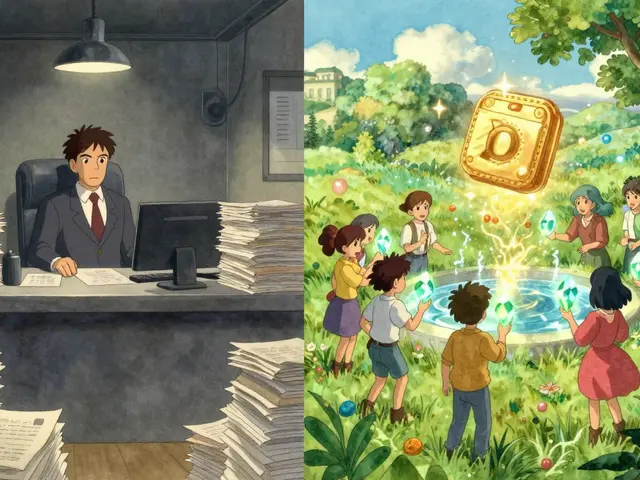
For decades, artists have dealt with a frustrating reality: they sell a piece for a few hundred dollars, only for it to be flipped years later at an auction for millions, while the original creator doesn't see a single cent of that profit. It's a broken system that rewards the middleman and the lucky collector, not the person who actually did the work. But NFT royalties is a blockchain-based mechanism that allows digital creators to earn a percentage of every secondary sale their work makes throughout its entire digital life. This isn't just a new feature; it's a total rewrite of the economic rules for creators.
The End of the One-Time Paycheck
In the traditional art world, your payday happens once. Whether you're selling a painting to a local gallery or a digital commission to a client, the financial relationship usually ends when the money hits your account. If the value of that work skyrockets, you're essentially a spectator to your own success. Non-Fungible Tokens (or NFTs) change this by embedding the payment terms directly into the asset itself. Instead of hoping a future buyer is generous, the artist programs a permanent cut of the profit into the work.
Imagine a world where every time your work is resold, a notification pops up on your phone and funds are instantly deposited into your wallet. This creates a perpetual revenue stream. For a digital artist, this means the focus shifts from just making a quick sale to creating work that holds long-term value. When the collector wins, the artist wins too. This alignment of interests is something the art world has never seen at this scale.
How the Tech Actually Handles the Money
The magic behind this isn't magic at all-it's code. Specifically, it's powered by Smart Contracts, which are self-executing contracts with the terms of the agreement directly written into lines of code on the blockchain. When an artist "mints" an NFT, they aren't just uploading a file; they are deploying a contract. This contract acts as an automated accountant that never sleeps and never takes a mistake.
Here is how the process typically flows in a real-world scenario:
- Minting: The artist sets a royalty percentage-usually between 5% and 10%-during the creation process.
- Primary Sale: The artist sells the NFT to Collector A for 1 ETH. The artist keeps the full amount (minus platform fees).
- Secondary Sale: Collector A sells the piece to Collector B for 10 ETH.
- Automatic Trigger: The smart contract instantly detects the transfer. If the royalty was set at 10%, the contract automatically diverts 1 ETH to the artist's wallet and 9 ETH to Collector A.
This happens in seconds. There are no invoices to send, no chasing down galleries for checks, and no need to trust that the new buyer will do the right thing. The code enforces the payment.
Comparing Old Art Sales vs. NFT Royalties
To understand why this is such a big deal, we have to look at the numbers. In the old model, the artist's income is a flat line after the first sale. With NFT royalties, the income potential is an ascending curve that tracks the artist's growing reputation.
| Feature | Traditional Art Sales | NFT Royalty Model |
|---|---|---|
| Initial Profit | Paid once to artist | Paid once to artist |
| Secondary Market Gains | Go entirely to collector/gallery | Percentage split between artist and collector |
| Payment Speed | Manual, often delayed | Instant and automatic |
| Transparency | Private transactions | Publicly verifiable on blockchain |
Real-World Impact: From Audio Loops to Empires
This isn't just theoretical. We've seen creators make an entire living from a few seconds of work. Take the case of musician Jacques Greene. He sold a 6-second audio loop and a GIF as an NFT. The royalties from that single tiny piece of art earned him over $16,000-which is nearly half of what he made from 7 million plays of a full song on Spotify. When you realize how many streams it takes to make a living on traditional platforms, the power of a 10% secondary cut becomes obvious.
On a larger scale, the Ethereum blockchain has seen over $1.8 billion distributed in royalties. Major projects like the Bored Ape Yacht Club (by Yuga Labs) have turned royalties into a massive corporate revenue stream, with earnings crossing the $140 million mark. While not every artist will reach those heights, many independent creators report earning thousands of dollars monthly in passive income, allowing them to take more creative risks without worrying about where their next meal is coming from.
The "Gotchas": Why It's Not Perfect Yet
If it's so great, why isn't everyone doing it? Because the technology is still fighting a battle with human greed. Not every marketplace plays by the rules. Some platforms, like Magic Eden, have experimented with optional royalty fees. This is a nightmare for artists because it allows buyers to bypass the creator's cut to save money.
Then there is "NFT wrapping." This is a technical workaround where a savvy user wraps an NFT in a different contract to strip away the royalty requirements before selling it. It's the digital equivalent of a buyer sneaking out the back door of a gallery to avoid paying the artist's commission. This has led to a tension in the community: if royalties are too high (say, 15%), buyers are more likely to look for loopholes. Most creators find that a "sweet spot" of 5% to 7% keeps the market liquid while still providing a meaningful income stream.
How to Set Your Royalties for Success
If you're an artist stepping into this space, you don't need to be a computer scientist to set up your royalties. Most platforms like OpenSea provide a simple box during the minting process where you enter your wallet address and the percentage you want. However, there are a few strategic moves you should consider to maximize your earnings.
- Be Reasonable: Don't price your royalties so high that investors are scared off. A 7.5% royalty is generally seen as fair and professional.
- Diversify Your Minting: If you use a platform that doesn't enforce royalties across other sites, consider using a dedicated smart contract that you own, which gives you more control over how the royalties are handled.
- Build a Community: Royalties depend on volume. The more people who trade your work, the more checks you get. Focus on a loyal collector base who wants to see you succeed.
As we move forward, we'll likely see more standardized enforcement. The goal is a world where the Blockchain acts as a universal law for creator rights, making it impossible to sell a piece of intellectual property without the creator getting their fair share. We are moving toward a creator-centric economy where the artist is no longer just a vendor, but a long-term stakeholder in their own legacy.
Are NFT royalties guaranteed on every single sale?
Unfortunately, no. While the smart contract handles the payment, the marketplace where the sale happens must actually trigger that contract. Some marketplaces allow buyers to ignore royalty settings or offer a "zero royalty" option, which means the artist gets nothing on those specific trades.
What is the standard royalty percentage for digital art?
Most artists set their royalties between 5% and 10%. 7.5% is a very common industry standard. Setting it too low might leave money on the table, but setting it too high (above 12%) can discourage professional traders and investors from buying the piece.
Do I need to be a coder to set up royalties?
No, you don't. Most modern NFT platforms have a user-friendly interface. During the "minting" process (when you create the NFT), there is typically a field where you simply type in the percentage you want to receive from secondary sales.
How are royalties different from the initial sale price?
The initial sale price is the amount you get when you first sell the work to a buyer. Royalties only kick in during "secondary sales," which happen when that buyer sells the work to someone else. It's essentially a recurring commission on the work's future growth.
Can I change my royalty percentage after the NFT is minted?
In most cases, no. Because the royalty is written into the smart contract on the blockchain, it is immutable (cannot be changed). You should decide on your percentage carefully before you finalize the minting process.