9
The Environmental Cost of Proof of Work: Bitcoin's Energy Crisis

Imagine a digital currency that consumes more electricity than the entire nation of Argentina. It sounds like science fiction, but it is the reality of Proof of Work, a consensus mechanism used by Bitcoin and other major cryptocurrencies to secure their networks through intensive computational tasks. This technology powers the world’s most famous cryptocurrency, yet its environmental price tag is staggering. As we move through 2026, the debate over whether this security model is worth the ecological damage has never been louder.
You might wonder why a digital ledger needs so much power. The answer lies in how these networks agree on who owns what. Unlike a bank where a central authority checks your balance, decentralized blockchains rely on thousands of independent computers to verify transactions. In Proof of Work systems, these computers-called miners-compete to solve complex mathematical puzzles. The first one to solve the puzzle gets to add the next block of transactions to the chain and earns a reward. This process, known as mining, requires massive amounts of computing power running 24 hours a day, seven days a week.
The Scale of Energy Consumption
To understand the sheer magnitude of this energy use, you have to look at the numbers. Recent data indicates that Bitcoin alone consumes approximately 112 terawatt-hours (TWh) of electricity annually. To put that into perspective, that is enough energy to power millions of homes for a year. Some studies place Bitcoin’s annual carbon dioxide emissions at around 62 metric tons. When you compare this to national energy grids, Bitcoin’s footprint rivals countries like the Netherlands or Poland.
This isn’t just about total consumption; it is also about efficiency per transaction. A single Bitcoin transaction can require up to 707 kilowatt-hours of electricity. That is roughly eleven times more energy than an Ethereum transaction before its transition to a greener model. If you were to send money using traditional banking systems like Visa or PayPal, the energy cost would be negligible in comparison. The contrast highlights a fundamental inefficiency in how Proof of Work validates value.
| Payment Method | Annual Energy Use (Est.) | CO2 Emissions (Est.) | Consensus Mechanism | |
|---|---|---|---|---|
| Bitcoin | 112 TWh | ~62 Mt CO2 | Proof of Work | High |
| Ethereum (Post-Merge) | <0.01 TWh | <0.01 Mt CO2 | Proof of Stake | Negligible |
| Visa Network | ~0.03 TWh | Minimal | Centralized Database | Low |
Why Proof of Work Is So Hungry
The root of the problem is the design itself. Proof of Work was created by Satoshi Nakamoto in 2009 to solve the "double-spend" problem without trusting a central bank. It does this by making attacks economically unfeasible. To take over the network, a hacker would need to control more than 51% of the total computing power. This makes the network incredibly secure, but it comes at a steep environmental cost.
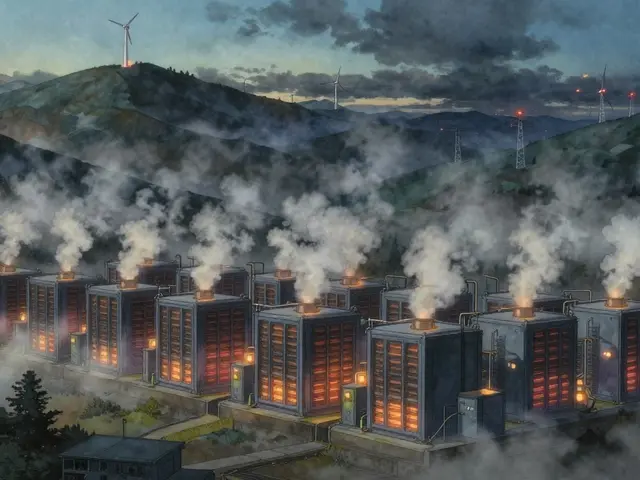
Miners are constantly upgrading their hardware to stay competitive. They use specialized machines called ASICs (Application-Specific Integrated Circuits) designed solely for mining Bitcoin. These machines generate immense heat and require powerful cooling systems, further driving up energy usage. Because the difficulty of the puzzles adjusts automatically based on the total computing power in the network, adding more miners doesn't speed up transactions-it just increases the overall energy consumption while keeping block times steady at roughly ten minutes.
Critics argue that this is a waste of resources. Even if miners use renewable energy, there is an opportunity cost. That solar or wind power used for mining could otherwise support hospitals, schools, or residential grids. Furthermore, renewable sources like wind and solar are intermittent. Mining operations run continuously, meaning they often rely on fossil fuels when the sun isn't shining or the wind isn't blowing.

The Ethereum Example: A Green Transition
If you think Proof of Work is inevitable, look at what happened with Ethereum. In September 2022, Ethereum underwent a historic upgrade known as "The Merge." The network switched from Proof of Work to Proof of Stake, a consensus mechanism where validators lock up cryptocurrency as collateral to propose and validate blocks, eliminating the need for energy-intensive mining.
The results were immediate and dramatic. Ethereum’s energy consumption dropped by approximately 99.95%. Its annual power usage fell from 8.5 gigawatts to less than 85 megawatts. This real-world case study proves that blockchain technology does not have to be environmentally destructive. By removing the need for competitive mining, Proof of Stake maintains security while drastically reducing the carbon footprint. Today, Ethereum emits less than 0.01 million tons of CO2 annually, a tiny fraction of Bitcoin’s output.
Regulatory Pressure and Corporate Response
Governments are starting to pay attention. The Organisation for Economic Co-operation and Development (OECD) has published reports urging stricter scrutiny of digital assets' environmental impacts. Several jurisdictions are exploring carbon taxes on mining operations or even banning them outright due to strain on local power grids. In regions facing energy shortages, PoW mining is increasingly viewed as a threat to public infrastructure stability.
Corporations are reacting too. Environmental, Social, and Governance (ESG) investment criteria now often exclude Proof of Work cryptocurrencies. Tesla, for example, paused Bitcoin payments in 2021 citing concerns over coal-powered mining. While they later resumed accepting Bitcoin, the sentiment among large institutional investors remains cautious. Many prefer investing in Proof of Stake networks or green blockchain projects that align with sustainability goals. This shift in capital flows suggests that market forces may eventually pressure PoW networks to adapt or face marginalization.

Can Mining Go Green?
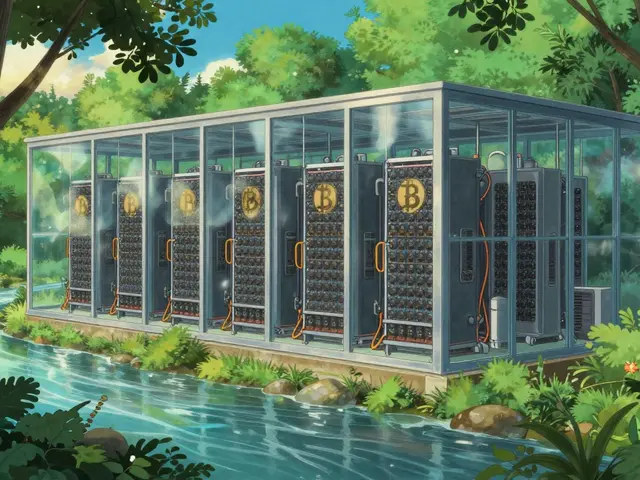
Proponents of Proof of Work argue that mining can be part of the solution. Some mining farms locate themselves near stranded renewable energy sources, such as hydroelectric dams in remote areas or flare gas sites in oil fields. By using excess energy that would otherwise go to waste, they claim to provide economic value without increasing net emissions. Additionally, some miners invest in new renewable infrastructure, arguing that the revenue from mining helps subsidize the development of clean energy projects.
However, experts remain skeptical. Relocating mines to areas with cheap renewables doesn't address the fundamental issue of high consumption. It merely shifts the geographical location of the impact. Moreover, the demand for constant power means that even renewable-heavy grids must maintain backup fossil fuel plants for reliability. The argument that mining drives renewable adoption is compelling in theory, but in practice, it often locks in long-term contracts for power that could serve broader societal needs.
The Future of Blockchain Consensus
As we look ahead, the industry is clearly moving away from pure Proof of Work. New blockchain networks are predominantly launching with Proof of Stake or hybrid models that aim to balance security with sustainability. Innovations like Proof of Authority and Proof of History offer alternative ways to achieve consensus without the energy drain. For established networks like Bitcoin, change is slow due to community resistance and the desire to maintain decentralization. However, the growing gap between Bitcoin’s environmental impact and its competitors’ efficiency poses a significant challenge for long-term adoption.
For users and investors, the choice is becoming clearer. If sustainability is a priority, Proof of Stake networks offer a viable path forward. They provide similar benefits in terms of transparency and decentralization without the ecological baggage. As regulatory frameworks tighten and consumer awareness grows, the era of unchecked energy consumption in blockchain may be coming to an end. The question is no longer whether Proof of Work *can* work, but whether it *should* continue to dominate the landscape.
How much electricity does Bitcoin use compared to a country?
Bitcoin uses approximately 112 terawatt-hours (TWh) of electricity annually. This amount is comparable to the total annual electricity consumption of medium-sized nations like Argentina, the Netherlands, or Poland. It represents a significant portion of global energy demand, highlighting the scale of its operational requirements.
What is the difference between Proof of Work and Proof of Stake?
Proof of Work (PoW) relies on miners solving complex mathematical puzzles using high-powered computers, which consumes vast amounts of energy. Proof of Stake (PoS), on the other hand, selects validators based on the amount of cryptocurrency they hold and are willing to "stake" as collateral. PoS eliminates the need for energy-intensive mining, reducing energy consumption by over 99% compared to PoW.
Did Ethereum really reduce its energy use by 99.95%?
Yes. After Ethereum completed "The Merge" in September 2022, transitioning from Proof of Work to Proof of Stake, its energy consumption dropped dramatically. Research confirms that the network now uses less than 0.001% of the energy it previously consumed, making it one of the most energy-efficient major blockchains in existence.
Is Bitcoin mining bad for the environment if it uses renewable energy?
Even if Bitcoin mining uses renewable energy, critics point out the "opportunity cost." Renewable energy is a finite resource. Using it for mining means it is unavailable for other essential services like healthcare, education, or residential heating. Additionally, because mining runs 24/7, it often requires backup fossil fuel power when renewable sources are intermittent, limiting the true environmental benefit.
Will governments ban Proof of Work mining?
Some regions have already implemented bans or strict regulations on Proof of Work mining, particularly where it strains local power grids. International bodies like the OECD are recommending increased scrutiny and potential carbon taxation for crypto-asset markets. While a global ban is unlikely, regulatory pressure will likely increase, making compliance more difficult and expensive for PoW operators.