27
Is Proof of Work Still Relevant in 2025? The Real State of Bitcoin Mining
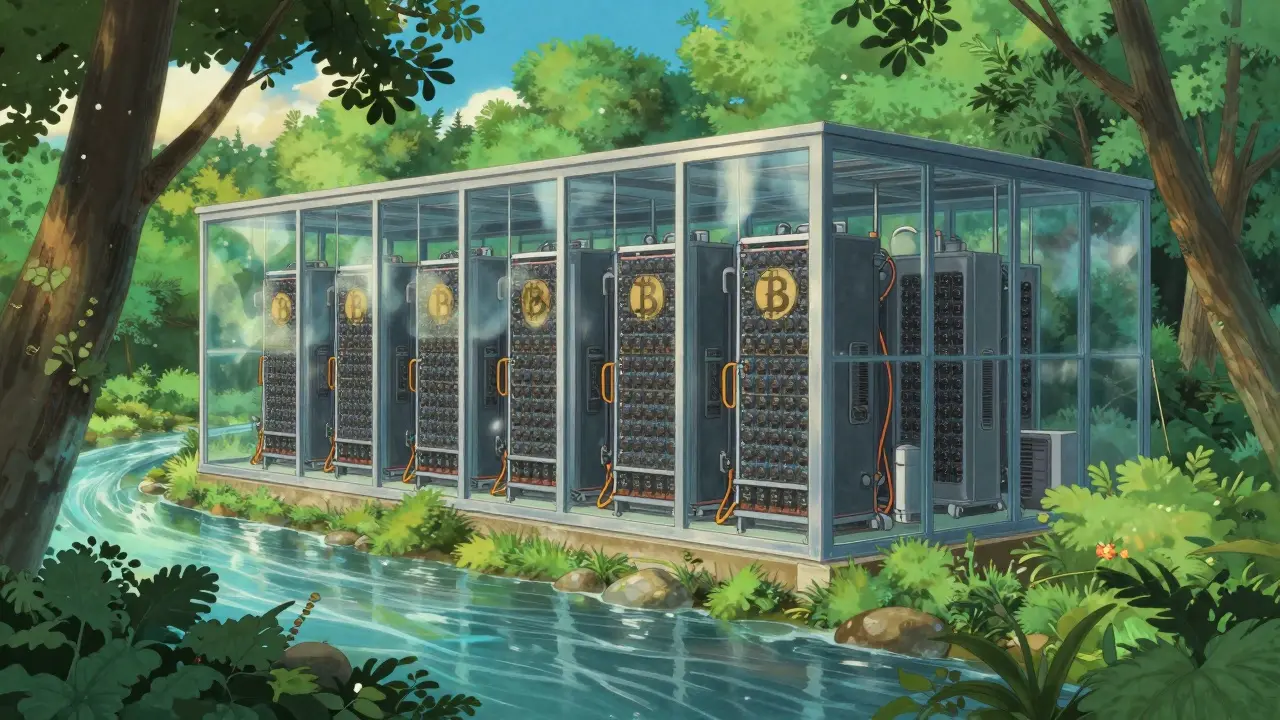
Back in the early days of crypto, everyone talked about mining like it was the only way to make money. Fast forward to mid-2026, and the conversation has shifted. With Ethereum moving to Proof of Stake (PoS) years ago and environmental concerns mounting, you might be wondering: is Proof of Work still relevant in 2025?
The short answer is yes, but not for the reasons it used to be. It’s no longer the default choice for new blockchains. Instead, it has become a specialized tool-like a tank in a world of sports cars. It’s heavy, expensive, and slow, but nothing else can take that kind of punishment. Here is what is actually happening with PoW right now.
The Security Fortress: Why Bitcoin Still Uses PoW
Let’s start with the big one: Bitcoin. As of July 2025, Bitcoin remains the undisputed king of Proof of Work. Fidelity’s analysis from that summer highlighted a crucial point: Bitcoin has operated without a single successful blockchain attack for over 15 years. That is an incredible track record in the tech world.
Why does this matter? Because security in PoW isn’t just code; it’s physics. To attack the network, you need real-world resources-electricity and hardware. Michael Casey, a blockchain research lead at Fidelity, noted in 2025 that manipulating Bitcoin would require controlling a majority of the computer chip supply chain plus massive electricity infrastructure. That makes large-scale attacks practically impossible.
Compare this to some Proof of Stake networks. While PoS is efficient, it has seen consensus failures, like the Ethereum Shanghai outage in March 2024. For institutions holding billions in assets, that physical barrier provided by PoW is worth the cost. You are paying for peace of mind.
| Feature | Proof of Work (Bitcoin) | Proof of Stake (Ethereum) |
|---|---|---|
| Energy Use | High (~121 TWh/year) | Low (>99% reduction post-Merge) |
| Security Model | Physical resource expenditure | Economic stake (slashing risks) |
| Transaction Speed | 4-7 TPS | 15-30 TPS (Layer 1), higher with L2s |
| Hardware Barrier | Very High (ASICs required) | Low (Standard servers) |
| Attack Cost | Extremely High (51% hash rate) | High (51% staked tokens) |
The Energy Elephant in the Room
You cannot talk about PoW without talking about energy. Critics point to the Cambridge Bitcoin Electricity Consumption Index, which measured Bitcoin’s annual consumption at approximately 121.72 terawatt-hours in Q1 2025. That is more than many countries use.
This is the main reason PoW’s market share has shrunk. CoinLaw’s 2025 report projects that PoW’s share of the total crypto market cap will drop to 12% by 2027. ESG (Environmental, Social, and Governance) regulations are tightening globally. By July 2025, 28 countries had implemented explicit energy limits affecting mining operations.
However, the narrative is shifting slightly. Many miners are now locating in regions with excess renewable energy or using flared gas. But for most new projects, the energy bill is a dealbreaker. If you are building a decentralized app for social media or gaming, PoW is simply too slow and expensive. This is why PoS dominates the development space today.

Mining in 2025: A Professional Game
If you were thinking about buying a GPU to mine some coins in your garage, stop. That era is over. Solo mining Bitcoin in 2025 is virtually impossible for individuals. The learning curve has steepened, and the hardware requirements are industrial.
Modern ASIC miners like the Antminer S21 (released in late 2024) require minimum 2.5 MW power capacity and specialized cooling systems. According to CryptoSlate’s 2025 guide, beginners now need 6-8 weeks of dedicated study just to understand the basics of operating a competitive rig.
The economics have changed too. The average time to recoup mining hardware investments increased to 14.3 months in Q2 2025, up from 8.2 months in 2021. Global electricity costs for mining averaged $0.085/kWh. Consequently, 63% of mining operations surveyed by HashrateIndex in Q2 2025 reduced their capacity due to rising costs.
Instead of solo mining, most participants now join pools or use platforms like Luxor and NiceHash, which handle 68% of Bitcoin’s current hash rate. It’s less romantic, but it’s how the industry survives.
Regulatory Clarity: A Win for Miners
Despite the energy concerns, there was a major positive development for PoW in 2025. On March 21, 2025, the U.S. SEC issued a statement clarifying that protocol mining activities on public blockchains do not involve the offer and sale of securities.
This removed a huge cloud of legal uncertainty. Before this, many investors and miners were hesitant because they feared regulatory crackdowns similar to those faced by other crypto sectors. Neel Maitra, from the SEC’s Division of Corporation Finance, made it clear that mining itself is not a security. This gave institutional players the confidence to keep investing in PoW infrastructure, particularly in the United States.
Where Does PoW Go From Here?
So, is PoW dead? No. Is it growing? Not really. It is stabilizing as a niche technology. Gartner’s 2025 forecast predicts that while blockchain technology will reach over $1 trillion in value by 2030, PoW will contribute only 15% of that value. PoS is expected to take 70%.
PoW is becoming specialized. It is best suited for:
- Store of Value: Bitcoin continues to dominate here. People want digital gold, not fast transactions.
- Secure Oracles: Some next-generation architectures may use PoW layers for verification where absolute immutability is required.
- Hybrid Models: Protocols like Decred blend PoW security with PoS efficiency, offering a middle ground.
We also see innovations like the proposed Drivechain protocol for Bitcoin, expected in late 2025, which aims to enable sidechains while maintaining PoW security. This suggests PoW will evolve rather than disappear.
For the average user, PoW means you trust Bitcoin’s ledger implicitly. For developers, it means you likely won’t build your next dApp on a PoW chain unless security is your only priority. The relevance of Proof of Work in 2025 lies not in its versatility, but in its unbreakable reliability.
Is Proof of Work environmentally friendly?
Compared to Proof of Stake, no. Bitcoin’s network consumes around 121 TWh annually, which is significant. However, many miners are increasingly using renewable energy sources and stranded power (like flared gas) to mitigate this impact. Regulatory pressure is also pushing the industry toward greener practices.
Can I still mine Bitcoin at home in 2025?
It is highly unlikely to be profitable. Modern Bitcoin mining requires industrial-grade ASIC hardware, massive electricity capacity (minimum 2.5 MW for serious operations), and specialized cooling. Most individual miners have moved to mining pools or alternative cryptocurrencies.
Why hasn't Bitcoin switched to Proof of Stake?
Bitcoin prioritizes security and decentralization over speed and efficiency. PoW ties security to physical reality (energy and hardware), making it extremely resistant to attacks. Changing to PoS would fundamentally alter Bitcoin's economic model and security assumptions, which its community values highly.
What did the SEC say about mining in 2025?
In March 2025, the SEC clarified that protocol mining activities on public blockchains do not constitute the offer and sale of securities. This provided significant regulatory clarity for miners in the United States, reducing legal risks associated with operating mining equipment.
Which is better: PoW or PoS?
It depends on your needs. PoW (like Bitcoin) offers superior, battle-tested security and is ideal for store-of-value applications. PoS (like Ethereum) is much more energy-efficient, faster, and better suited for smart contracts, DeFi, and high-throughput applications. There is no single "better" option, only different tools for different jobs.










stalin brian
May 28, 2026 AT 12:15so basically poW is like that old reliable truck u keep in the garage even though it guzzles gas? makes sense to me. i always thought mining was just for nerds but now it sounds like a whole industrial complex. kinda cool how they use flared gas tho, turning waste into security is pretty clever stuff.
kamal ifrani
May 28, 2026 AT 12:31absolute garbage narrative here. you are ignoring the fact that PoS has had zero major outages since the merge and the energy argument is dead on arrival. the SEC statement is just regulatory capture at its finest, protecting the miners who lobby them. dont be fooled by this 'security fortress' bullshit, its just expensive nostalgia for people who cant adapt to modern consensus mechanisms. the market will correct itself when institutions realize PoW is a liability not an asset.
Crystal Davis
May 29, 2026 AT 05:28let me educate you on why your take is flawed. first off, the Shanghai outage was a network upgrade hiccup not a consensus failure, so your comparison is technically illiterate. second, the physical barrier of PoW is what gives Bitcoin its monetary premium, something PoS chains can never replicate because their security is tied to token price which creates a death spiral during bear markets. if you think controlling 51% of staked ETH is harder than buying ASICs, you clearly havet looked at the liquidation cascades we saw in 2022. PoW is the only true neutral security model.
Christina Pearce
May 29, 2026 AT 13:04i appreciate the detailed breakdown here. it really helps to see the numbers side by side especially the TPS difference. i guess for most apps speed matters more than absolute immutability but for storing value i can see why people stick with bitcoin. thanks for clarifying the SEC part too, that was confusing before.
Diana Morris
May 31, 2026 AT 03:27stop crying about energy consumption. bitcoin secures trillions in value while burning less than 0.1% of global electricity. meanwhile data centers for AI and cloud computing are eating the grid alive and nobody complains. if you care about environment switch to renewables like the miners are doing instead of whining about hash rates. get over it
trisya hazriyana
June 2, 2026 AT 00:59the philosophical underpinning of proof of work is essentially gamified thermodynamics where entropy becomes truth. its ironic how the 'environmentalists' ignore the embodied carbon in manufacturing all those ethereum validators servers. plus the jargon around slashing conditions is just economic theater designed to scare retail investors away from self-custody. btc is the only honest money because it costs real joules to produce not just code promises.
Debbie Lewis
June 3, 2026 AT 21:15just watching this unfold. interesting how the hardware requirements have shifted so much. i remember trying to mine litecoin with my gaming pc back in the day and it barely paid for the electricity. now its completely inaccessible for regular folks which is both good for security and bad for decentralization i suppose.
Eric Grosso
June 5, 2026 AT 08:38wait so ur saying i cant just buy a gpu and start making money anymore? that sucks lol. i guess i'll just hodl then since mining is basically impossible for normal people now. the table in the post is pretty helpful tho thanks for sharing that info.
Edith Mair
June 6, 2026 AT 19:38the article misses a crucial point about the geopolitical implications of PoW mining. by moving operations to regions with excess renewable energy or flared gas, miners are actually providing grid stability services that traditional power plants cannot match. this is not just about security anymore it is about infrastructure resilience. we need to stop viewing mining through the narrow lens of energy consumption and start seeing it as a flexible load balancing mechanism for the global energy grid.
Sam Dashti
June 7, 2026 AT 19:31its like comparing a tank to a sports car one is built for war the other for showing off at parties. bitcoin isn't trying to be fast its trying to be unkillable. i love how the SEC finally stepped up and gave some clarity after years of silence. feels like a win for the little guy even if the big players were already figuring it out. lets hope the hybrid models mentioned at the end actually deliver on their promises.
Joe Clements
June 8, 2026 AT 01:58great read! i was worried about the environmental impact but hearing about the shift to flared gas and renewables makes me feel better. its nice to know that technology is evolving to be more sustainable. thanks for breaking down the technical stuff in a way that makes sense.
Rosie Morris
June 8, 2026 AT 17:27i totally agree with the part about solo mining being dead. its so sad really because it was such a fun hobby. now its just big corporations playing monopoly. but hey at least the security is top notch right? just wish there was a middle ground for us small timers.
lorna erni
June 10, 2026 AT 03:37everyone needs to calm down and look at the facts. yes PoW uses energy but it provides unparalleled security. no amount of coding elegance can replace the brute force reality of physics. if you want fast transactions go use ethereum layer 2s. if you want digital gold stick with bitcoin. stop mixing the two use cases and causing confusion for newbies.
Joshua Alcover
June 11, 2026 AT 01:20It is imperative to recognize that the Proof of Work paradigm represents the ultimate expression of decentralized sovereignty against state-controlled fiat manipulation. The energy expenditure is not a bug but a feature ensuring that the ledger remains immutable against any centralized authority. Those who critique the environmental impact fail to grasp the deeper philosophical necessity of anchoring digital scarcity in physical reality. This is the bedrock of true freedom.
Dianne Wright
June 12, 2026 AT 23:14i feel like everyone here is missing the emotional toll of constantly defending btc against these endless attacks. its exhausting. and yet here we are still holding strong. the SEC news is great but i worry about the centralization of mining pools. does anyone else feel uneasy about luxor controlling such a large chunk of the hash rate?
saradee dee
June 13, 2026 AT 14:50oh my god this is so dramatic! i mean literally the world could end if bitcoin crashed but it wont because physics is real. okay that was intense. but seriously the part about using flared gas is amazing. imagine taking all that wasted methane and turning it into secure blocks. it's like magic but with computers. i hope more countries allow this kind of innovation.
Craig Swanson
June 14, 2026 AT 09:57look i get that mining is hard now but let's not forget the community aspect. joining a pool is like being part of a team sport again. you might not score every goal but you contribute to the win. also the SEC ruling is huge for legal certainty. if you are thinking about getting into crypto this is a green light for infrastructure investment. don't let the haters discourage you from understanding the tech.