23
Grassroots Crypto Adoption Despite Government Bans: How Citizens Bypass Restrictions

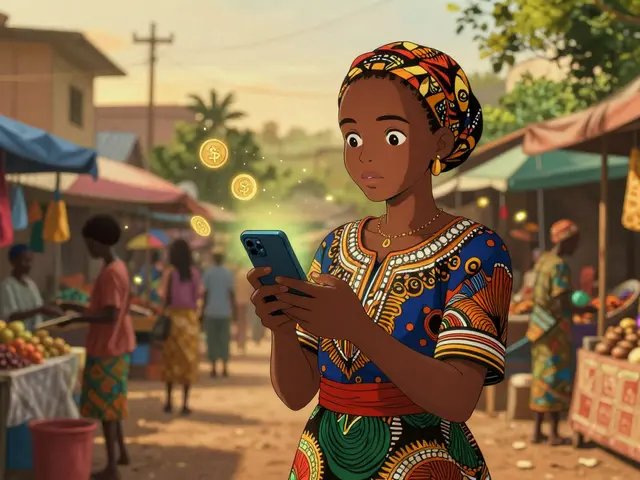
Imagine living in a country where your savings lose half their value every year. The bank won't let you send money to family abroad without charging you 8 percent in fees. You try to buy dollars, but the government says no. What do you do? In places like Nigeria, millions of people aren't waiting for permission. They are turning to cryptocurrency. This isn't about getting rich quick or trading memes on Twitter. It is about survival. It is about keeping food on the table and sending rent money home when the traditional system fails.
Government bans on cryptocurrency often sound absolute. Leaders declare digital assets illegal, block access to exchanges, and threaten fines. Yet, in many developing nations, these restrictions have done little to stop usage. Instead, they have pushed adoption underground, creating a resilient, grassroots network that thrives despite official hostility. This phenomenon reveals a hard truth: when economic reality clashes with policy, people choose survival over compliance.
The Economic Pressure Cooker
To understand why citizens ignore bans, you have to look at the math. In Nigeria, the economy has faced severe turbulence. As of 2023, inflation surged past 24 percent. Since 2016, the local currency, the naira, has lost more than three-quarters of its value against the US dollar. For a regular person, this means prices at the grocery store jump weekly. Salaries stay flat while costs skyrocket. Holding cash becomes a losing game.
This instability creates a perfect storm for alternative finance. When your national currency cannot hold its value, you need a hedge. Bitcoin and other cryptocurrencies offer a way to preserve wealth outside the failing local banking system. It is not just Nigeria. Countries with similar issues-high inflation, capital controls, and weak currencies-see the same pattern. People do not adopt crypto because they love blockchain technology; they adopt it because they hate poverty and uncertainty.
The banking infrastructure adds another layer of frustration. Approximately 36 percent of Nigerian adults remain unbanked. Many others are underbanked, meaning they have accounts but lack access to credit, loans, or reliable transfer services. Traditional banks are slow, expensive, and often exclude those who need them most. Cryptocurrency offers a parallel system that anyone with a smartphone can access. No branch visits. No paperwork. Just a wallet app and an internet connection.
How Grassroots Networks Operate
If governments ban crypto, how does it still move? The answer lies in peer-to-peer (P2P) networks. These are informal systems where individuals trade directly with each other. One person buys Bitcoin using naira via mobile money, while another sells it for US dollars. No centralized exchange is involved. No bank account is flagged. The transaction happens between two neighbors, connected through social media groups or dedicated P2P platforms.
Social media plays a huge role here. WhatsApp groups, Telegram channels, and Twitter threads serve as classrooms and marketplaces. Experienced users teach newcomers how to secure wallets, avoid scams, and navigate price volatility. This community-driven education replaces institutional guidance. It is organic, fast, and highly effective. Young people, in particular, lead this charge. With high youth unemployment and limited job prospects, many Nigerians turn to crypto trading and freelancing paid in digital assets as a primary income source.
Remittances are another major driver. Families separated by borders rely on sending money home. Traditional services like Western Union charge steep fees and take days to process. Crypto transfers happen in minutes, often for a fraction of the cost. A worker in London can send funds to Lagos instantly, bypassing banking intermediaries entirely. This efficiency makes crypto indispensable for millions of households.
| Feature | Traditional Banking | Grassroots Crypto |
|---|---|---|
| Access Barrier | High (ID, proof of address, minimum balance) | Low (Smartphone + Internet) |
| Transfer Speed | Days (Cross-border) | Minutes (Global) |
| Fees | Up to 8% for remittances | Often under 1% |
| Currency Protection | None (Exposed to local inflation) | Yes (Hedge via USD-pegged assets) |
| Regulatory Oversight | Strict (KYC/AML enforced) | Minimal (Peer-to-peer anonymity) |

The Stablecoin Revolution
While Bitcoin gets the headlines, stablecoins are the workhorses of grassroots adoption. Stablecoins are cryptocurrencies pegged to stable assets, usually the US dollar. Tokens like Tether (USDT) and USD Coin (USDC) allow users to hold value in dollars without leaving the crypto ecosystem. This is crucial for countries with volatile currencies. You can convert your naira into USDT, preserving your purchasing power until you need to spend it.
In Nigeria, stablecoins dominate daily transactions. Merchants accept them for goods. Freelancers get paid in them. Even some informal businesses use them for payroll. This widespread use creates a shadow economy that runs parallel to the official one. The government may ban crypto, but it cannot ban the demand for dollar-denominated stability. Stablecoins fill that gap efficiently.
The rise of stablecoins also highlights a shift in regulatory thinking globally. In the United States, the GENIUS Act passed in July 2025 with bipartisan support. This legislation created a federal framework for payment stablecoins, requiring issuers to back tokens 1:1 with US currency or short-term liquid assets. While this law applies to regulated entities, it signals a broader acceptance of stablecoins as legitimate financial tools. For emerging markets, this global trend validates what locals already knew: stablecoins are essential for financial resilience.
Why Bans Fail
Government bans on cryptocurrency rarely succeed in the long term. Why? Because they address the symptom, not the disease. The disease is economic instability, lack of access, and poor banking infrastructure. Banning crypto does not fix inflation. It does not create jobs. It only pushes activity underground, making it harder to monitor and tax.
Nigeria’s experience illustrates this clearly. Initial resistance from regulators gave way to grudging acceptance as adoption reached critical mass. By 2024, Nigeria ranked second globally in cryptocurrency adoption. You cannot ban something that millions of people depend on for their livelihoods. Eventually, governments realize that regulation is more effective than prohibition. They start to ask: How can we harness this technology instead of fighting it?
This shift is evident in other regions too. The United States saw a policy turnaround in 2025, with new administrations supporting responsible growth of digital assets. Presidential orders emphasized innovation over restriction. Regulatory agencies paused lawsuits against crypto companies. This evolution from resistance to regulation mirrors the path likely ahead for restrictive regimes elsewhere. When grassroots adoption becomes too big to ignore, policy follows.

Risks and Realities
Despite its benefits, grassroots crypto adoption carries risks. Without institutional oversight, users face threats like scams, hacking, and price volatility. Phishing attacks target inexperienced users. Fake investment schemes promise guaranteed returns and disappear overnight. Educational gaps leave many vulnerable. Community-led learning helps, but it is not foolproof.
There is also the risk of regulatory backlash. If governments decide to crack down harder, they might block internet access to crypto sites or freeze bank accounts linked to P2P traders. This creates uncertainty. Users must constantly adapt, moving between platforms and methods to stay safe. It is a cat-and-mouse game that requires vigilance.
Furthermore, the lack of consumer protection is real. If you send money to the wrong address, it is gone forever. There is no customer service line to call. This responsibility falls entirely on the user. For those unfamiliar with digital security, this can be daunting. However, as tools become more user-friendly and communities grow stronger, these barriers are lowering.
The Future of Financial Freedom
The trajectory points toward continued growth. As long as economic conditions favor alternative systems, grassroots crypto will expand. Smartphones are becoming cheaper. Internet access is spreading. More people gain the technical ability to participate. Meanwhile, traditional banking remains stuck in outdated models that exclude the very populations it should serve.
Governments will eventually have to choose: continue futile bans or embrace regulation that protects consumers while enabling innovation. Nigeria’s story suggests the latter is inevitable. Other emerging markets facing similar challenges will follow suit. The genie is out of the bottle. Digital finance is here to stay.
For the individual, this means empowerment. You no longer need a bank’s permission to save, send, or earn money. You have options. But with freedom comes responsibility. Educate yourself. Secure your keys. Verify your sources. The system is resilient, but you must be smarter than the risks.
Is it legal to use crypto in countries with bans?
Technically, no. If a government explicitly bans cryptocurrency, using it violates local laws. However, enforcement varies widely. In many cases, authorities focus on large institutions rather than individual users. Peer-to-peer networks operate in a gray area, making detection difficult. Users should understand the legal risks in their specific jurisdiction before participating.
Why do people prefer stablecoins over Bitcoin in restricted markets?
Stablecoins are pegged to fiat currencies like the US dollar, offering price stability. Bitcoin fluctuates significantly in value, which is risky for daily transactions or saving wages. In high-inflation environments, people want to preserve purchasing power, not gamble on price swings. Stablecoins provide a reliable store of value without the volatility of other cryptocurrencies.
How do users avoid detection when using crypto illegally?
Users rely on decentralized peer-to-peer platforms that do not require identity verification. Transactions occur between individuals using mobile money or cash pickups, avoiding bank trails. Social media groups facilitate connections without linking to formal financial records. While this offers privacy, it also increases exposure to fraud and lacks legal recourse if disputes arise.
Can government bans ever stop crypto adoption?
Bans can slow adoption temporarily but rarely stop it permanently. When economic necessity drives usage, people find workarounds. History shows that prohibitions often push activity underground, making it less transparent but more resilient. Eventually, most governments shift from banning to regulating as the technology becomes integral to the economy.
What are the biggest risks for grassroots crypto users?
The primary risks include scams, phishing attacks, and loss of private keys. Without institutional backing, there is no insurance or customer support. Users must manage their own security. Additionally, regulatory crackdowns can lead to frozen assets or legal penalties. Price volatility affects non-stablecoin holdings. Education and caution are essential to mitigate these dangers.