26
The Future of NFT Data Storage: Beyond the JPEG
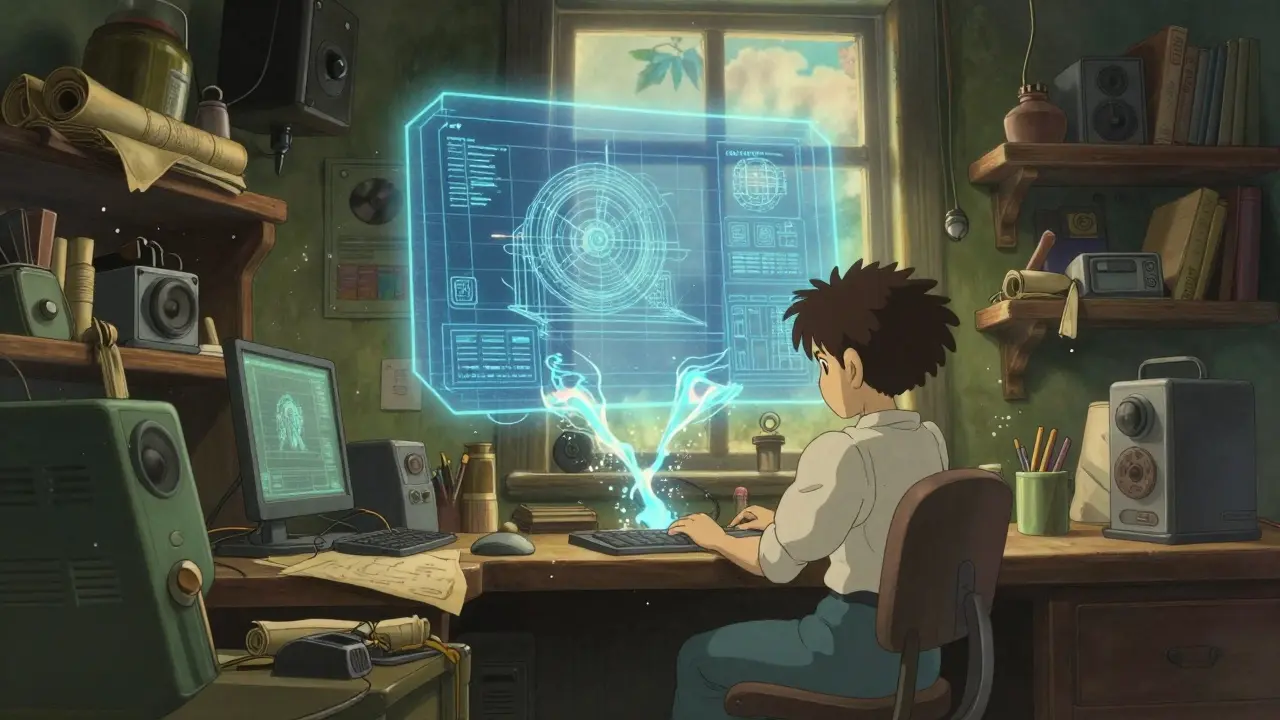
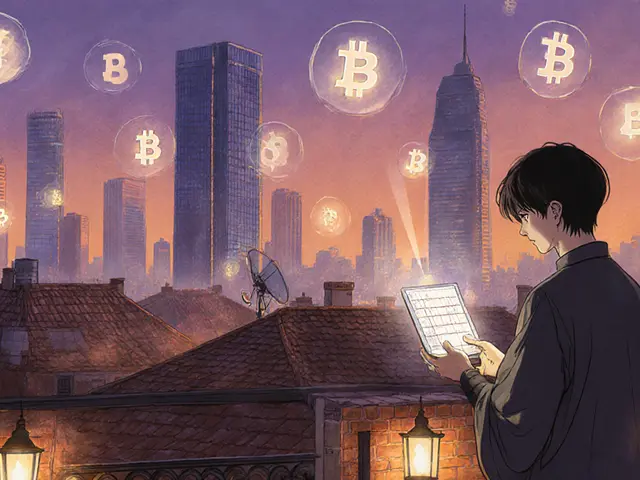
Most people still think of an NFT as a digital image stored on a blockchain. The truth is, almost no one actually stores the image on the chain-it's far too expensive. Instead, the blockchain usually holds a tiny piece of text (a URL) that points to a file hosted elsewhere. This fragile link is the Achilles' heel of the digital art world. If the server hosting that image goes dark, your expensive NFT becomes a broken link to a 404 page. As we move through 2026, the industry is shifting from these fragile links to robust, decentralized infrastructure that can handle more than just static pictures.
The Core Struggle: On-Chain vs. Off-Chain
To understand where we're going, we have to look at why we're here. Storing data directly on a blockchain is like trying to rent a billboard in Times Square to store your personal diary; it's wildly overpriced and inefficient. This is why the industry relies on a hybrid model. The ERC-721 is the foundational smart contract standard for non-fungible tokens on Ethereum, providing the framework for unique asset identification. While it handles the ownership record perfectly, the actual content-the art, the music, the 3D model-usually lives off-chain.
The goal for the next few years is to move away from centralized servers (which can be deleted) toward decentralized storage. We aren't just talking about "saving files," but ensuring that the data is immutable, meaning it cannot be changed or deleted by a single entity. This shift is essential as the market moves away from speculative flipping and toward actual utility, such as gaming assets and digital identities.
The Big Three of Decentralized Storage
If you're wondering where your digital assets actually live, they likely reside in one of three ecosystems. Each handles data differently, and the choice depends on whether the creator wants a "permanent" record or a "flexible" network.
| Platform | Mechanism | Primary Value | Best Use Case |
|---|---|---|---|
| IPFS | Content Addressing | Peer-to-peer distribution | Standard digital art |
| Arweave | One-time Payment | Permanent storage (Permaweb) | Historical archives |
| Filecoin | Storage Market | Cost-effective scaling | Enterprise-level data |
IPFS (InterPlanetary File System) doesn't store files in one place; it identifies them by their content (a hash). If the file changes, the hash changes. Arweave takes a different approach by allowing users to pay a one-time fee to ensure data is stored for centuries. Then there's Filecoin, which essentially acts as a decentralized Airbnb for hard drive space, where providers rent out their unused storage to users.
The Rise of Intelligent NFTs (iNFTs)
The biggest disruption in 2025 and 2026 has been the convergence of AI and blockchain. We are moving past static collectibles into the era of Intelligent NFTs. These aren't just images; they are programmable digital entities that can evolve, learn, and react. For example, an iNFT character in a game might change its appearance based on how many battles you've won or the weather in your real-world city.
This creates a massive storage headache. How do you store a "living" asset? Traditional static storage doesn't work for data that changes every hour. The introduction of the ERC-7857 standard by 0G Labs has been a game-changer here. It allows for the secure transfer of AI agents, meaning when you sell an iNFT, the AI's "brain" and its sensitive data are re-encrypted for the new owner. This requires storage systems that support mutable data structures-essentially, folders that can be updated without breaking the blockchain's proof of authenticity.
Gaming: The Ultimate Stress Test
Gaming is where NFT data storage is being pushed to its limit. With the NFT gaming market projected to climb toward nearly $943 billion by 2029, the industry can no longer rely on slow, clunky loading screens and centralized databases. If you own a piece of virtual real estate or a rare sword, you want that asset to work across different games. This is the dream of interoperability.
Right now, most games are "walled gardens." If you have a skin in Game A, you can't use it in Game B. To fix this, storage providers are developing unified standards that allow different game engines to read the same metadata. Imagine a world where your avatar's gear is stored in a decentralized cloud, and every game you log into simply "calls" that data to render your character. This requires high-speed, low-latency storage that can handle millions of real-time requests without crashing.
Privacy and the Off-Chain Trade-off
One of the most overlooked aspects of this evolution is privacy. Blockchains are public by design. If your NFT contains sensitive information-like a digital deed to a house or a medical record-you don't want that data visible to everyone with an internet connection. This is why off-chain storage is actually a privacy feature.
By keeping the bulk of the data in a private, encrypted off-chain environment and only putting a cryptographic hash (a digital fingerprint) on the blockchain, users get the best of both worlds. You can prove you own the document without showing the document to the world. As regulations like GDPR become more strictly enforced in the digital asset space, this "selective disclosure" model will become the industry standard.
What Happens Next?
By the end of 2026, we will likely stop calling them "NFTs" and start calling them "programmable assets." The shift from speculative bubbles to utility means the winners in the storage space won't be the ones with the flashiest marketing, but the ones with the most reliable uptime and fastest retrieval speeds. We are moving toward a "virtual economy" that could surpass $50 billion, and that economy needs a foundation that doesn't crumble when a single server in Virginia goes offline.
The future is a world where your digital assets are truly yours-not because a company says so, but because the data is distributed across a thousand nodes globally, independent of any single corporation. Whether it's an AI-driven avatar that grows with you or a cross-platform gaming sword, the storage is finally catching up to the vision.
What happens to my NFT if the storage provider disappears?
If your NFT uses a centralized server (HTTP link) and that server goes down, the metadata and image disappear, leaving you with a useless token. However, if the NFT is stored on decentralized networks like IPFS or Arweave, the data is mirrored across many nodes, meaning as long as one node exists, your data remains accessible.
Is on-chain storage even possible for images?
Yes, but it is incredibly expensive. Some projects use "on-chain" art by converting images into SVG code or utilizing highly compressed pixel data. This ensures the art lives forever on the blockchain, but it limits the complexity and size of the artwork significantly.
What is the difference between IPFS and Arweave?
IPFS is a protocol for routing and discovering content; it doesn't guarantee that a file will be stored forever unless someone "pins" it. Arweave is a blockchain specifically designed for permanent storage, where a one-time payment ensures the data is kept indefinitely via a sustainable endowment fund.
How do AI NFTs change storage requirements?
Traditional NFTs are static. AI NFTs (iNFTs) require dynamic storage because their data changes as the AI learns or interacts. This requires a system that can track versions and state changes while still maintaining a permanent record of the asset's ownership on the blockchain.
Can I move my NFT data from one storage system to another?
Generally, no. The smart contract points to a specific location (a hash or URL). If you want to change the storage, the creator must update the token's metadata URI in the smart contract, which often requires the contract to be "upgradable." This is why choosing the right storage at launch is critical for creators.

Noel Mandotah
April 27, 2026 AT 09:10Right, because paying a one-time fee for 'forever' is totally a thing that works in a world where hard drives fail every few years. Pure comedy.
Rain Richardsson
April 28, 2026 AT 10:45IPFS seems like a solid middle ground.
Felix Eduardo Velasquez
April 29, 2026 AT 15:12The conceptual shift from ownership of a static image to ownership of a state-machine is the only way this technology survives the hype cycle. If we don't solve the data persistence layer, we're just trading digital receipts for imaginary paintings. True decentralization requires a symbiotic relationship between the consensus layer and the storage layer, where the cost of maintenance is baked into the asset's economic model.
Livvy Cooper
May 1, 2026 AT 05:07Who cares about this stuff anyway. Just a bunch of fancy words for expensive pixels.
Sri Astuti
May 2, 2026 AT 09:13It is absolutely laughable that people actually believe Arweave is the 'silver bullet' for permanence when they ignore the sheer thermodynamic impossibility of maintaining data across centuries without constant, active human intervention, and frankly, the way this post glosses over the massive energy overhead of these decentralized networks just proves that the NFT community is living in a delusional fantasy land where physics don't apply and everything is magically 'immutable' as long as someone keeps paying the bill 🙄🙄🙄.
Nitin Gupta
May 3, 2026 AT 12:34I think Filecoin provides a very practical approach for those needing larger scale storage solutions.
Kara Spadone
May 4, 2026 AT 08:34The energy is just... off. Like, why are we obsessing over digital swords when the real world is crumbling? 🌀
Veronica Bago
May 5, 2026 AT 01:08Cool to see where this is heading!
Elle Kharitou
May 6, 2026 AT 07:52I truly love the idea of an avatar that evolves with our own personal growth and experiences! 🌟 It opens up such a beautiful philosophical doorway into how we define identity in a virtual space, and if we can actually achieve that cross-game interoperability, we're not just talking about gaming assets but a portable digital soul that travels with us across different realities 🌈✨. It's so inspiring to think about the kinship we can build when our digital footprints are truly ours and not owned by some corporate entity in a skyscraper 💖!
Robert Smith
May 7, 2026 AT 07:45Game gear in every game would be sick 🎮🔥
Ralph Espinosa
May 7, 2026 AT 18:07The ERC-7857 standard is definitely the way to go here!!! It handles the re-encryption process so smoothly... really impressive work by 0G Labs!!!
Arun Prabhu
May 8, 2026 AT 17:42The sheer audacity to suggest that a 'virtual economy' of fifty billion is a milestone worth celebrating is quaintly naive. This is mere digital trinketry for the nouveau riche who lack the refinement to appreciate actual tangible art.
Lex Harley
May 10, 2026 AT 16:28Wait so the hsh is like a pointer? If the state changes in the iNFT does it mean we need a new CID on IPFS every time? Thats sounds like a huge bottleneck for the L1
Iestyn Lloyd
May 10, 2026 AT 23:43The point regarding selective disclosure for GDPR compliance is quite pertinent for enterprise adoption.
Wayne Gillis
May 11, 2026 AT 19:56I bet the devs are just making this up as they go 🤣 a 'brain' for an NFT? sounds wild!
Tracy McBurney
May 12, 2026 AT 02:36The technical optimism here is nauseating. You're pretending that 'decentralized' means 'safe' when in reality it just means your data is scattered across a bunch of random nodes with no one to sue when it actually vanishes.
April D Thompson
May 13, 2026 AT 18:23Imagine the cosmic irony! We spend our lives trying to be remembered, and now we're just paying for a one-time fee on Arweave to make sure a pixelated cat lives forever in the void! It's just so dramatic and wonderfully absurd that we've reached this peak of human existence where our legacy is a cryptographic hash! 🎭✨
Amanda Macy
May 14, 2026 AT 02:52The intersection of privacy and transparency is the most critical part of this discussion.
Chloe Fletcher
May 15, 2026 AT 16:52Keep pushing for these standards! 🚀 The community really needs this to move away from the scams and toward real utility! You got this! 💪✨
Mitali Rajvanshi
May 16, 2026 AT 07:01It's nice to see the focus shifting toward actual use cases.
Emily A
May 18, 2026 AT 02:49The assertion that gaming is the 'ultimate stress test' is a gross oversimplification. Real-world legal deeds are far more demanding of storage integrity than a digital sword.
Jehan ZA
May 18, 2026 AT 19:57I find the distinction between content addressing and permanent storage to be a very useful clarification for the reader.
Tony Phan
May 19, 2026 AT 09:22Yo this iNFT stuff is insane! I need a sword that levels up based on my gym gains lol! Imagine the hype when the metadata actually changes in real time! Pure gas!
Lloyd I
May 20, 2026 AT 12:46Totally agree! Once the storage is sorted, the creativity will just explode. Let's keep the momentum going!